
Teacher Portal:
Properties of Compounds
Investigation 4
Investigation Four: pH and Compounds
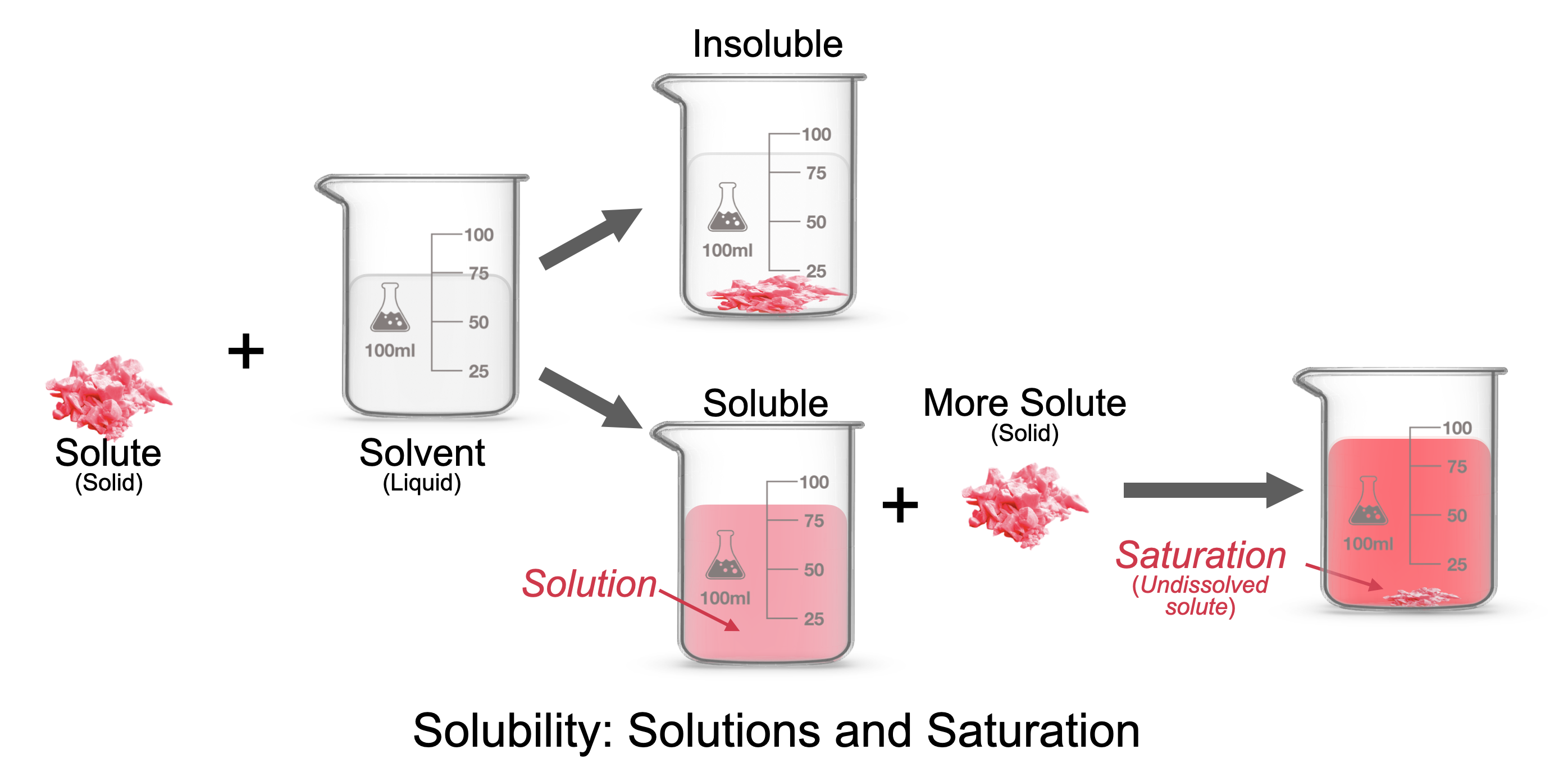
In Investigation One, students explored the differences and similarities in qualitative and quantitative properties of compounds. Students concluded that a compound’s properties are determined by its elemental composition. In 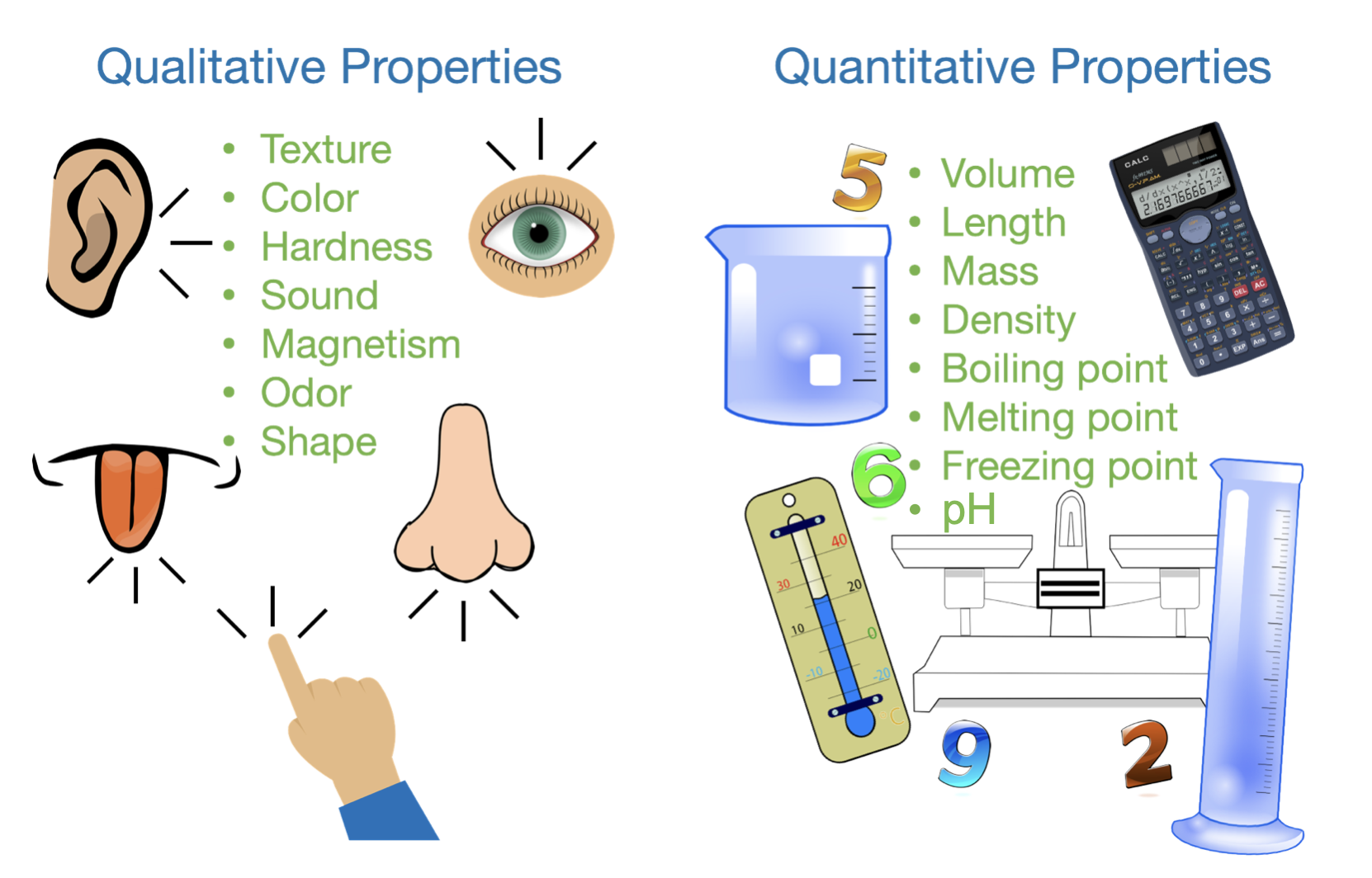 Investigations Two and Three, students determined that solubility varies from compound to compound. Students also discovered that solubility is affected by temperature and stirring. Students learned that the maximum amount of compound that can be dissolved in a liquid is called the saturation point of that compound. During these two Investigations, students learned that the ratio of the mass of solute to the volume of solvent is called the solution’s concentration. Students will continue their examination of properties of compounds in this Investigation by determining the pH of various compounds.
pH
Scientists use many different criteria to classify compounds on the basis of their chemical properties. One such method is to identify whether a compound is an acid or base. Acids are the compounds that give certain foods their acidic taste. For example, vinegar is a dilute solution of acetic acid. Citrus fruits get their tang from citric acid. Acids are known for their preservative qualities. Bases are bitter and have a slippery texture. Household drain cleaner gets its characteristic slimy appearance from the presence of sodium hydroxide. Sodium hydroxide is a very strong base.
Chemicals should never be tasted to determine if they are acidic or basic. However, scientists must have some method of quantifying acidity or basicity. One way scientists do this is by using behavior of chemicals in solution to determine 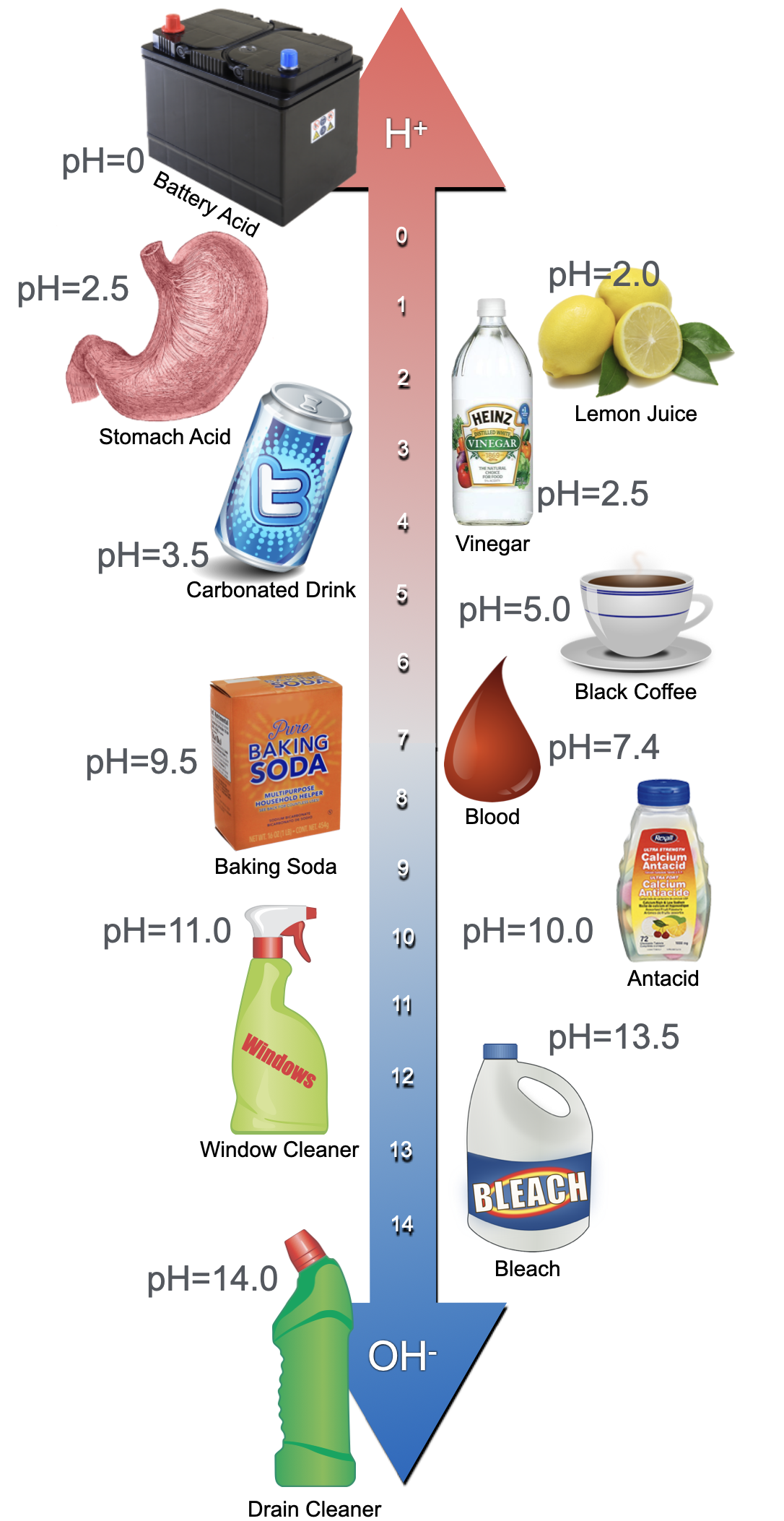 acidity or basicity. Strong acids and bases completely dissolve in solution. Weak acids and bases do not completely dissolve.
Scientists also measure acidity with a pH scale (see illustration to the right). The pH scale ranges from 0 to 14. A substance with a pH less than 7 is acidic. A substance with a pH greater than 7 is basic.
A pH of seven is neutral. A substance becomes more acidic or basic as its pH moves farther away from 7. Scientists use distilled, deionized water as the standard for neutral pH. Drinking water such as spring or tap water does not have a pH of 7. Tap and spring water are slightly acidic due to the presence of dissolved minerals. Scientists can test pH by using pH paper or a pH meter. In this CELL, students will use pH paper.
pH varies due to concentration as well as strength. With respect to the pH scale, those acids with a pH closer to 1 than 6 are often described as strong acids, while those with a pH closer to 7 than 1 are often described as weak acids. For bases, those bases with pH closer to 14 than 7 are often described as strong bases, and those with a pH closer to 7 than 14 as weak bases. Students’ understanding of acids and bases at this level with provide a foundation on which to later build a more complex understanding of the chemical nature of acids and bases. In LabLearner middle school, an entire CELL is devoted to pH.
In this Investigation, students will explore pH by testing the pH of different substances. Students will compare the pH of different liquids and learn that solids must be dissolved before pH can be determined. Students will also investigate whether compounds with the same properties have similar pH and those with different properties have different pH. Through experimentation, students will discover that the pH of a compound depends on the unique elemental composition of the compound.
Properties of Compounds: Investigation 4 - Mathematics Concepts
Prelab
- classifying
- quantitative properties
- continuum scale
- (in)direct relationships
Lab
- classifying
- volume in mL
- quantitative properties
- continuum scale
- (in)direct relationships
- data table
Postlab
- quantitative properties
- classifying
- continuum scale
- data table
- data analysis
- (in)direct relationships
- comparing (non)measurable characteristics
Properties of Compounds: Investigation 4 - Procedural Tools

Properties of Compounds: Investigation 4 - Cognitive Tools

Properties of Compounds:
Investigation 4 Quiz

