
Teacher Portal:
Chemistry, Matter and Interactions
Investigation 2
Chemistry, Matter and Interactions: Investigation 2
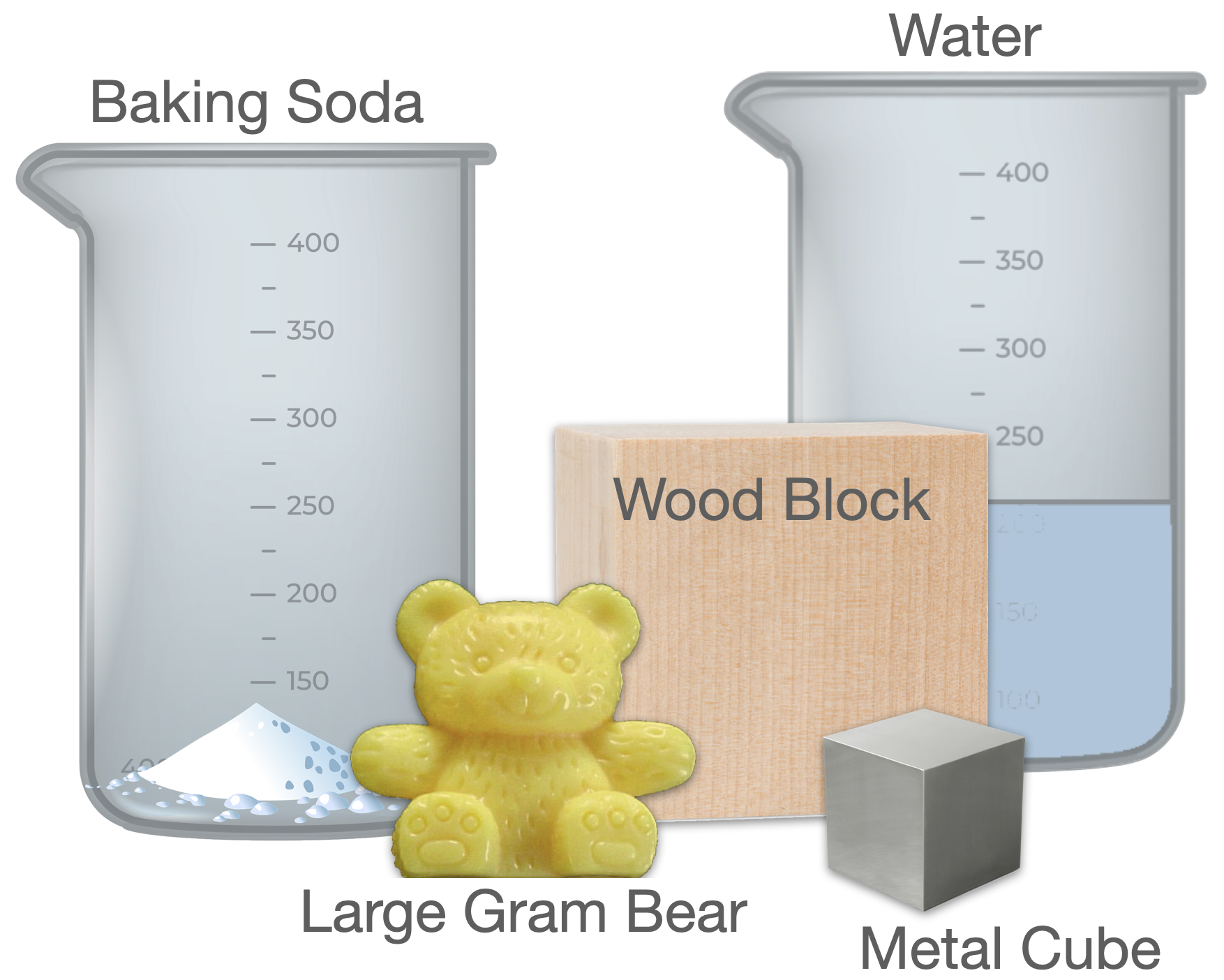 In Investigation One, you explored the differences between qualitative and quantitative properties and learned that scientists need to know both types of a substance’s properties before they can be positively identified. You also discovered that in order to accurately compare quantities of different substances, you needed to be able to quantify the amount of matter, as quantity alone is not an adequate method of comparing the amount of matter in two different types of matter. This was demonstrated by providing you with one woodblock, one metal cube, and one large gram bear. The quantities were equal, but you discovered through the use of the pan balance that the amount of matter contained in the three items was significantly different. One way to quantify the amount of matter in a sample is to determine its mass. The triple beam balance, a new Procedural Tool, was introduced as an appropriate tool for determining mass.
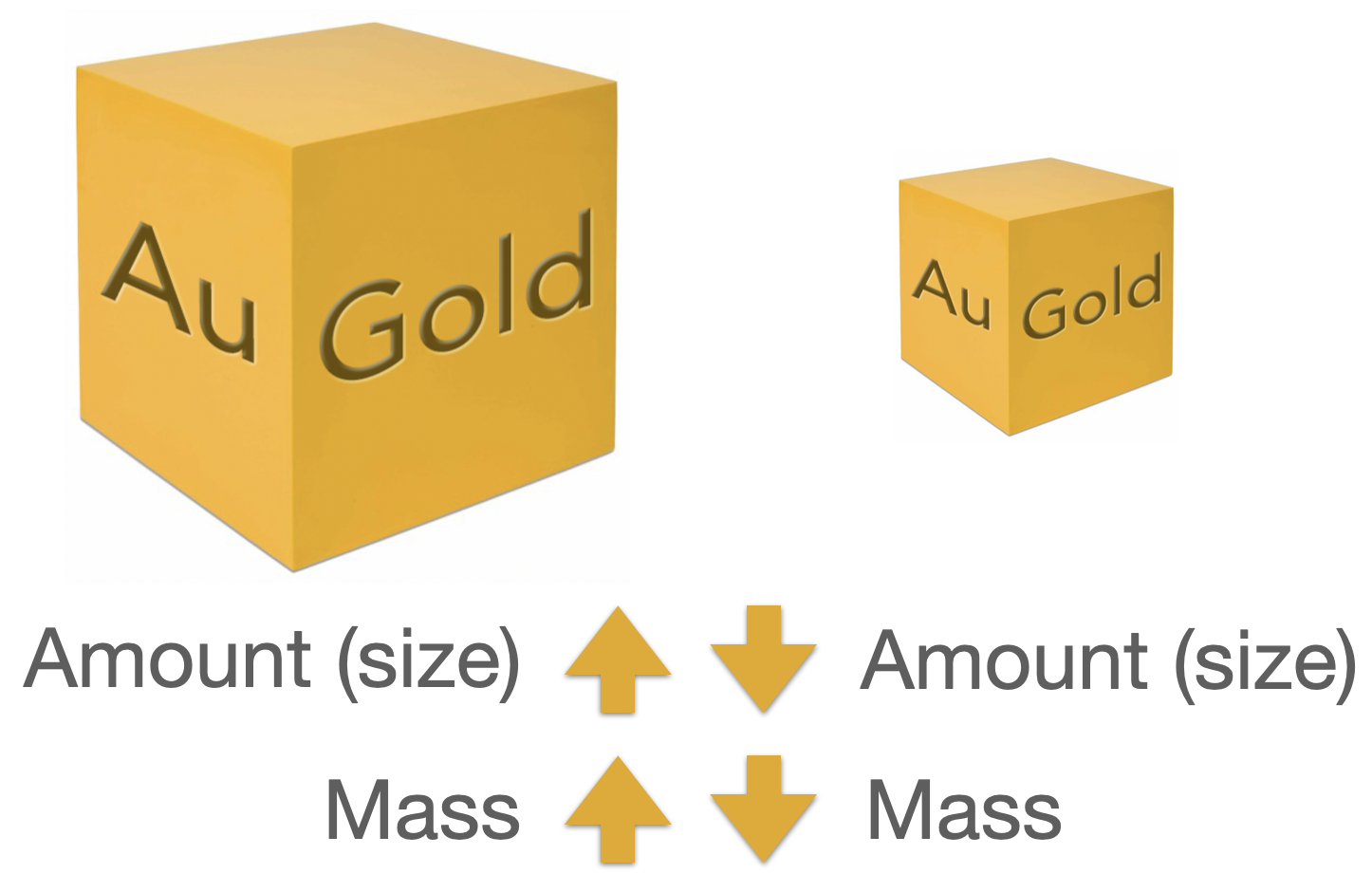
Mass is a useful property of matter. The mass of any sample is directly proportional to the sample size (see illustration of gold cubes below, Au is the symbol for gold on the Periodic Table of the Elements). As the amount of matter increases, mass increases. Conversely, as the amount of matter decreases, so does its mass. This concept is important, as it relates to the Law of Conservation of Matter. Just as matter can neither be created nor destroyed, mass can neither be created nor destroyed.
The same holds true when solutions are created. When a sample of salt is dissolved in a sample of water, the mass of the solution is equal to the mass of the salt plus the mass of the water.
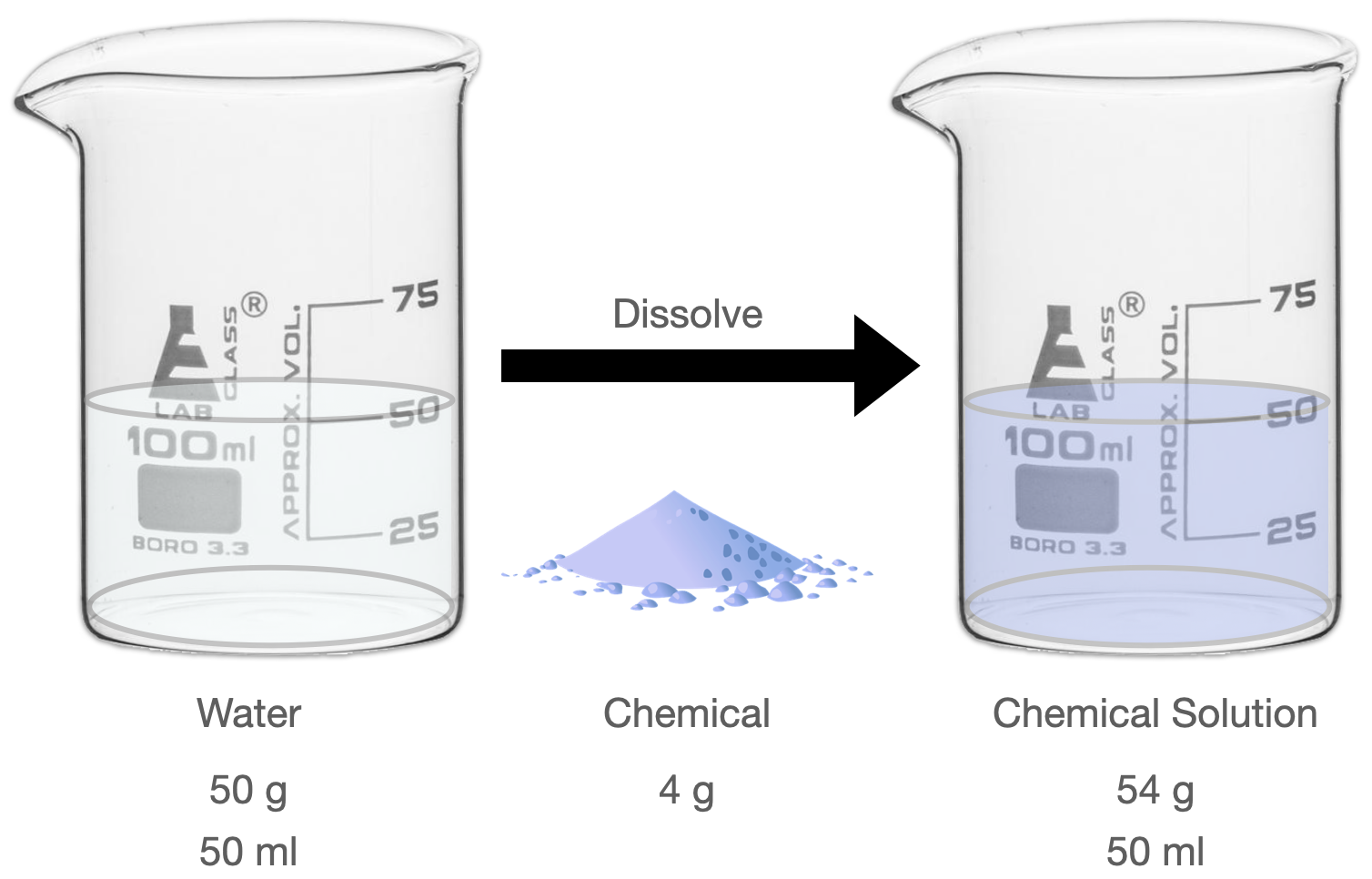 However, the same is not true of volume. If the amount of salt has a volume of 3 ml, and the water has a volume of 60 ml, the total volume of the solution of the two would be 60 ml rather than 63 ml, because when the salt dissolves, the sodium and chloride ions separate from each other and move into the spaces between the water molecules. Instead of taking up additional space in the vessel and increasing the volume, the ions fill space left empty as a result of the arrangement of the water molecules.
Mass is also conserved even if the combination of substances leads to a reaction which forms a gas as one of its products. Gas is matter and therefore has mass. Combining baking soda (sodium bicarbonate) and vinegar (a weak solution of acetic acid) results in the release of 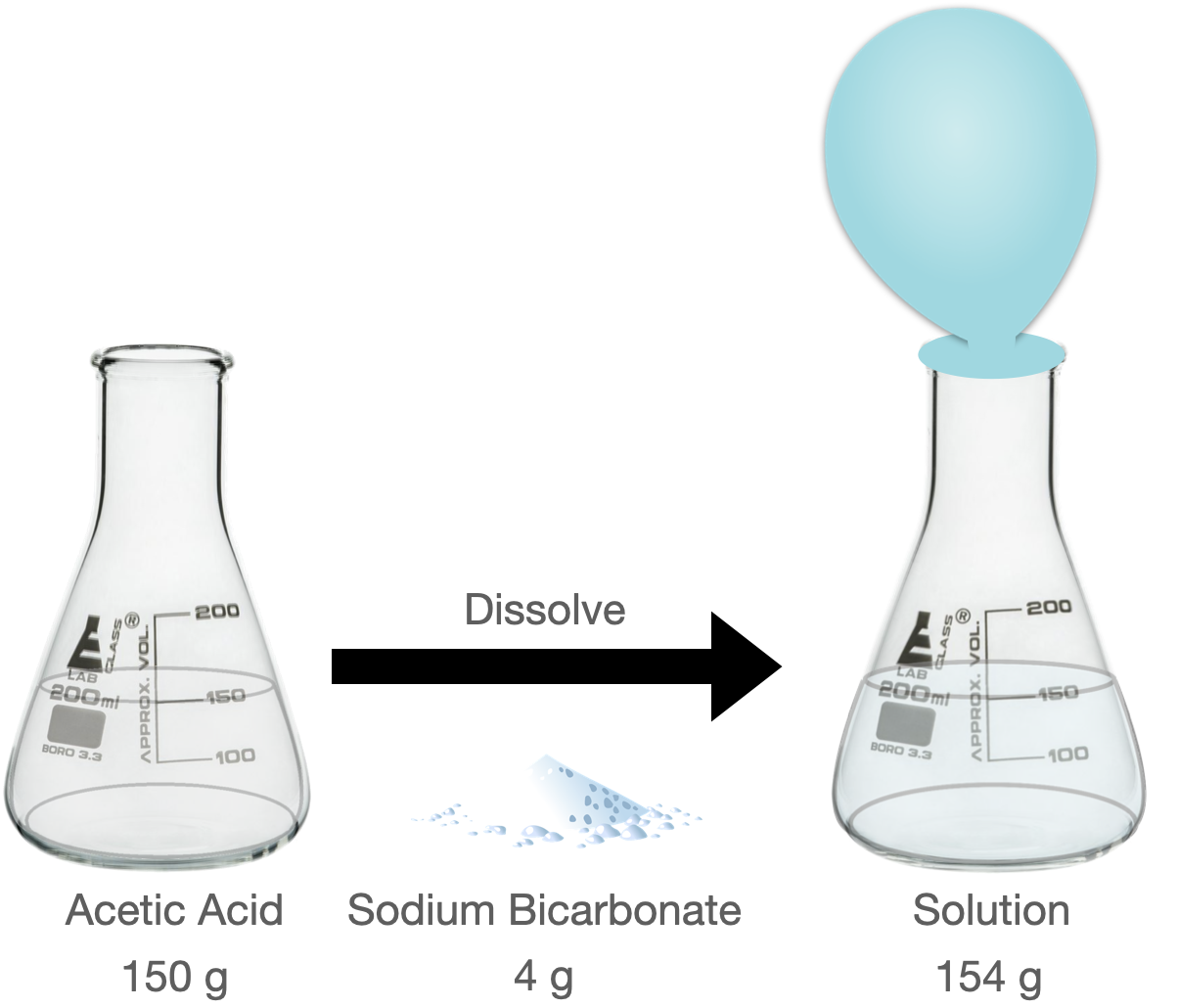 carbon dioxide gas and a liquid solution of sodium acetate. If this reaction were carried out in an open container, the escape of the gas would leave the impression that the mass of the resulting substance is less than the total mass of the baking soda and vinegar before they were combined. However, if the reaction is carried out in a sealed vessel the mass of the gas plus the remaining solution is equal to the combined mass of the initial substances. This is evidence that like matter, mass is neither created nor destroyed.
Investigation Two will provide you with additional opportunities to explore the property of mass and its measurement. You will discover through a series of experiments that mass is dependent on sample size and that the mathematical attribute of mass allows you to determine the exact mass of a sample even when a container is used.
Chemistry, Matter and Interactions: Investigation 2 - Mathematics Concepts
Prelab
- qualitative/quantitative properties
Lab
- mass in grams
- whole numbers (nearest tenth)
- greater than/less than/equal to
- addition/subtraction
- volume in mL
- data table
Postlab
- data table
- qualitative/quantitative properties
- mass in grams
- volume in mL
- greater than/less than/equal to
Chemistry, Matter and Interactions: Investigation 2 - Procedural Tools

Chemistry, Matter and Interactions: Investigation 2 - Cognitive Tools

Chemistry, Matter and Interactions:
Investigation 2 Quiz

