Teacher Portal:
Chemistry, Matter and Interactions
Performance Assessment – Lab
 BE PREPARED
Materials
Class materials:
- 175 g baking soda
- 325 ml vinegar
- 40 ml vegetable oil
- 12 g sugar
- 5.8 L water
- 5 400 ml beakers
- 1 100 ml beaker
Table materials
- 1 triple beam balance
- 6 clear plastic cups, 2.5 oz.*
- 1 liter pitcher
- 1 pH paper dispenser
Pair materials
- 2 15 ml falcon tubes
- 1 weigh dish
- 2 400 ml beakers
- 2 100 ml beakers
- 2 glass stir rods
- 1 lab scoop
- 1 100 ml graduated cylinder
- 1 20 cm length of masking tape for labeling
Individual materials
- Student Data Record
- Pair of safety goggles
*Note: The use of plastic cups is suggested to decrease post-lab clean-up. However, 100 ml beakers may replace the plastic cups if desired.
TEACHER PREPARATION
1. For each table, prepare the following materials:
a. 1 plastic cup filled with approximately 20 ml of vinegar. Label each cup Unknown 1.
b. 1 plastic cup filled with approximately 20 g of baking soda. To do this, fill each cup so that it is approximately as full as the cups containing vinegar. Label each cup Unknown 2.
2. Distribute the filled plastic cups so that each table has a cup labeled Unknown 1 and a cup labeled Unknown 2.
3. Prepare four mixtures that will be provided as known solutions at each table. To do this, follow the directions below.
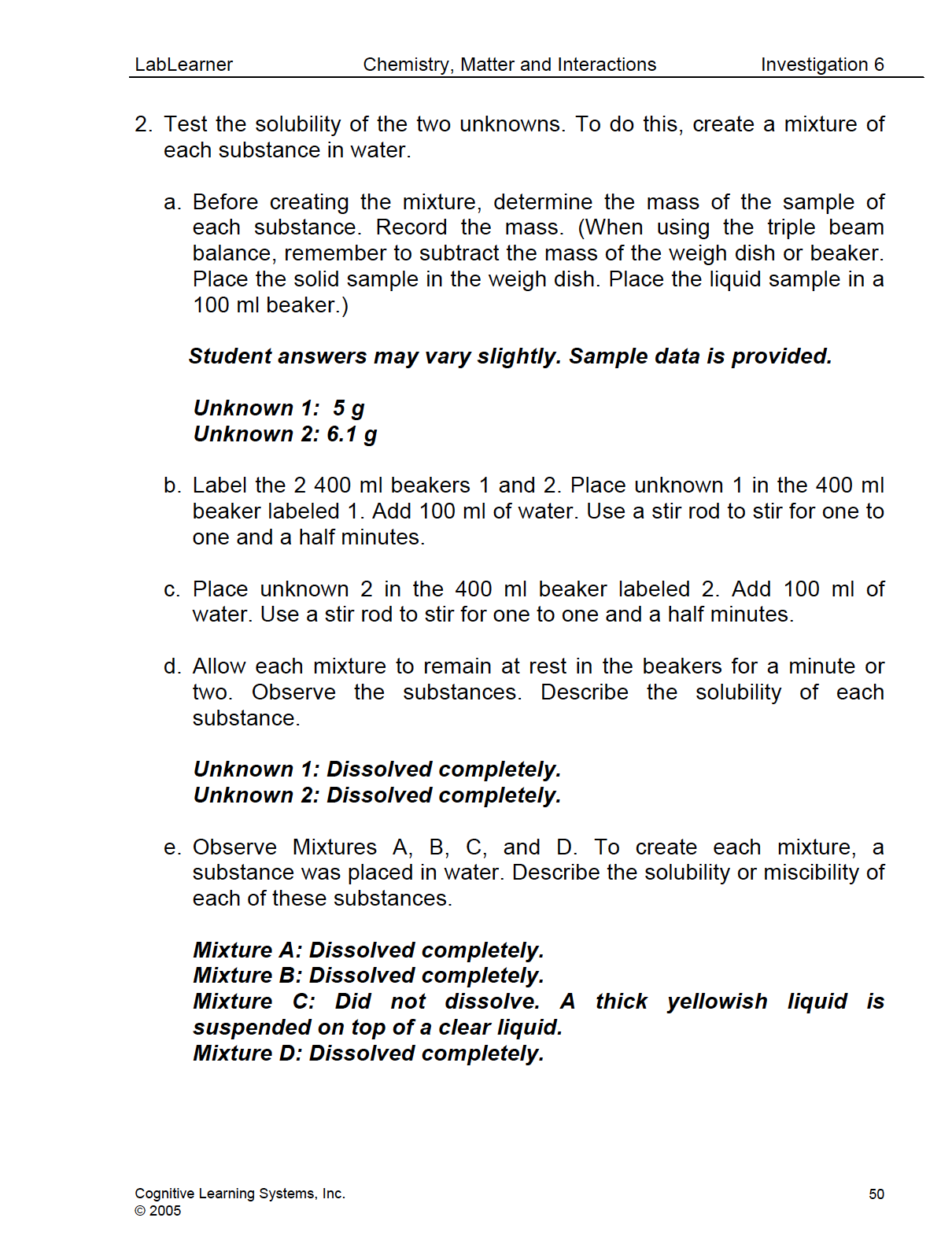
a. Obtain a 12 gram sample of baking soda. Pour 200 ml of water into a 400 ml beaker and add the baking soda sample. Stir until dissolved.
b. Obtain a 12 gram sample of sugar. Pour 200 ml of water into a 400 ml beaker and add the sugar sample. Stir until dissolved.
c. Obtain a 40 ml sample of vegetable oil. Pour 160 ml of water into a 400 ml beaker and add the 30 ml of vegetable oil. Vegetable oil is not miscible in water, so stir until mixed but not dissolved.
d. Obtain a 10 ml sample of vinegar. Pour 200 ml of water into a 400 ml beaker and add the vinegar sample. Stir until dissolved.
4. Divide the solutions so that each table receives a plastic cup filled with approximately 40 ml of solution. These four mixtures will provide students with standards (or known mixtures) to which they will compare their unknowns. Label the cups in the following manner and place one on each table:
-
-
-
- baking soda solution: Mixture A
- sugar solution: Mixture B
- vegetable oil and water mixture: Mixture C
- vinegar and water solution: Mixture D
-
-
5. Pour 200 ml of vinegar into a 400 ml beaker. Label the beaker Unknown 1 and place it at the distribution point.
6. Fill a 100 ml beaker to the 50 ml line with baking soda. Label the beaker Unknown 2 and place it at the distribution point.
7. Place one triple beam balance on each table.
8. Fill each of the five (5) liter pitchers with water. Place one on each table.
9. Organize the remaining required materials at a distribution point.
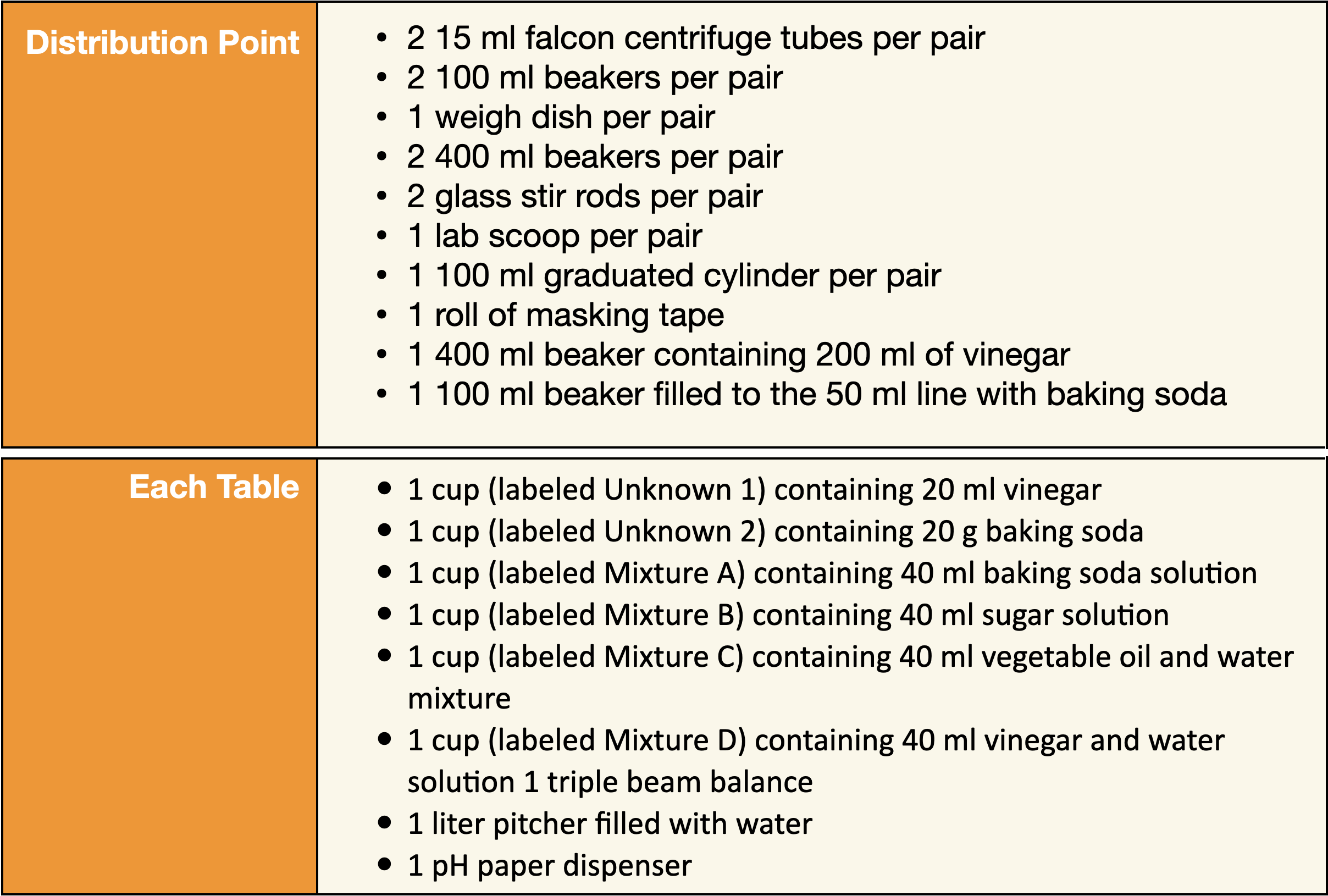
10. Use the following chart to verify that the proper materials are organized on each table and at the distribution point:
11. Separate the class into pairs.
INSTRUCTION
Direct each student pair to obtain the following necessary materials from the distribution point: two (2) falcon tubes, one (1) weigh dish, two (2) 100 ml beakers, two (2) 400 ml beakers, two (2) glass stir rods, one (1) lab scoop, one (1) 100 ml graduated cylinder, and one (1) 15 cm length of masking tape for labeling.
PROCEDURE
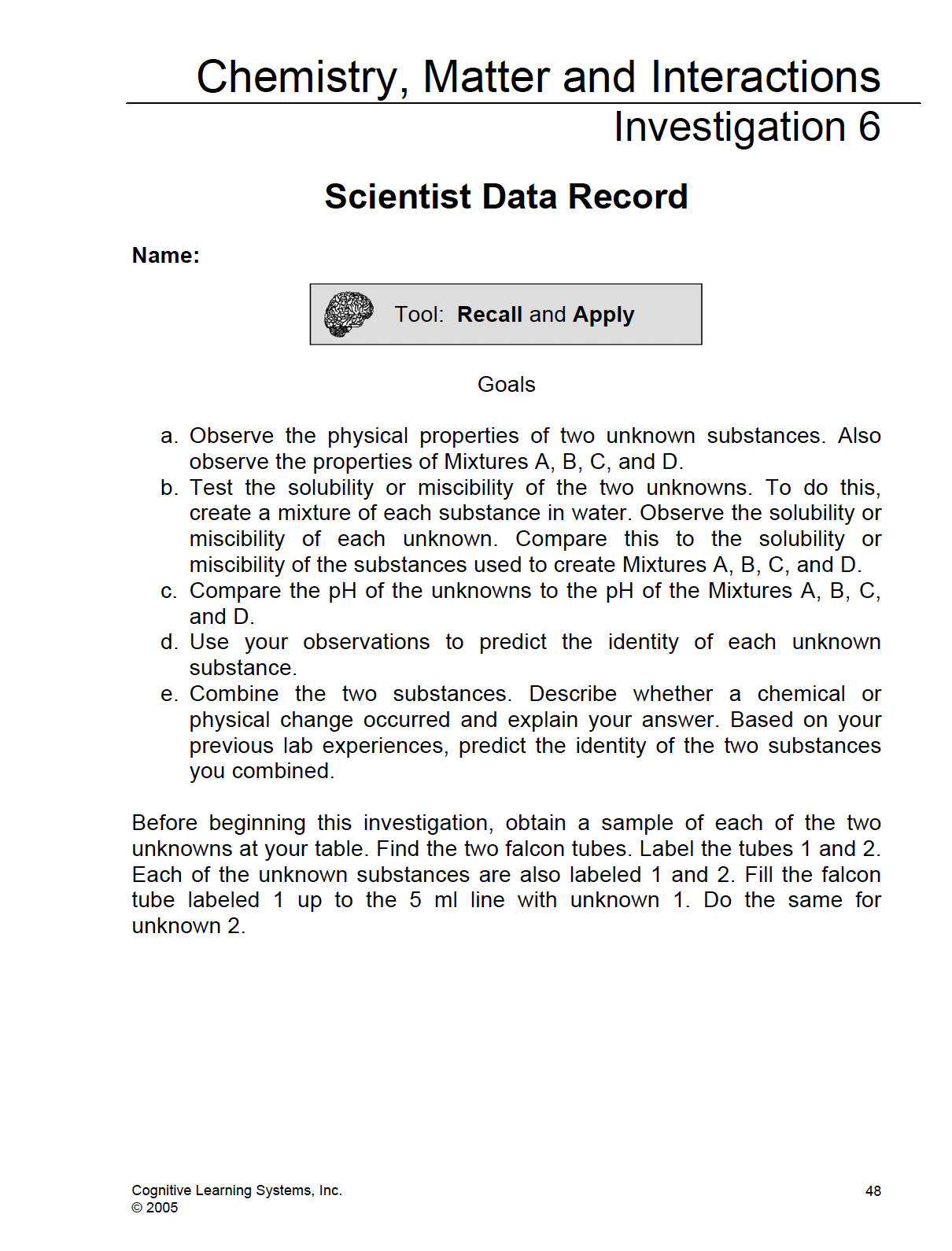
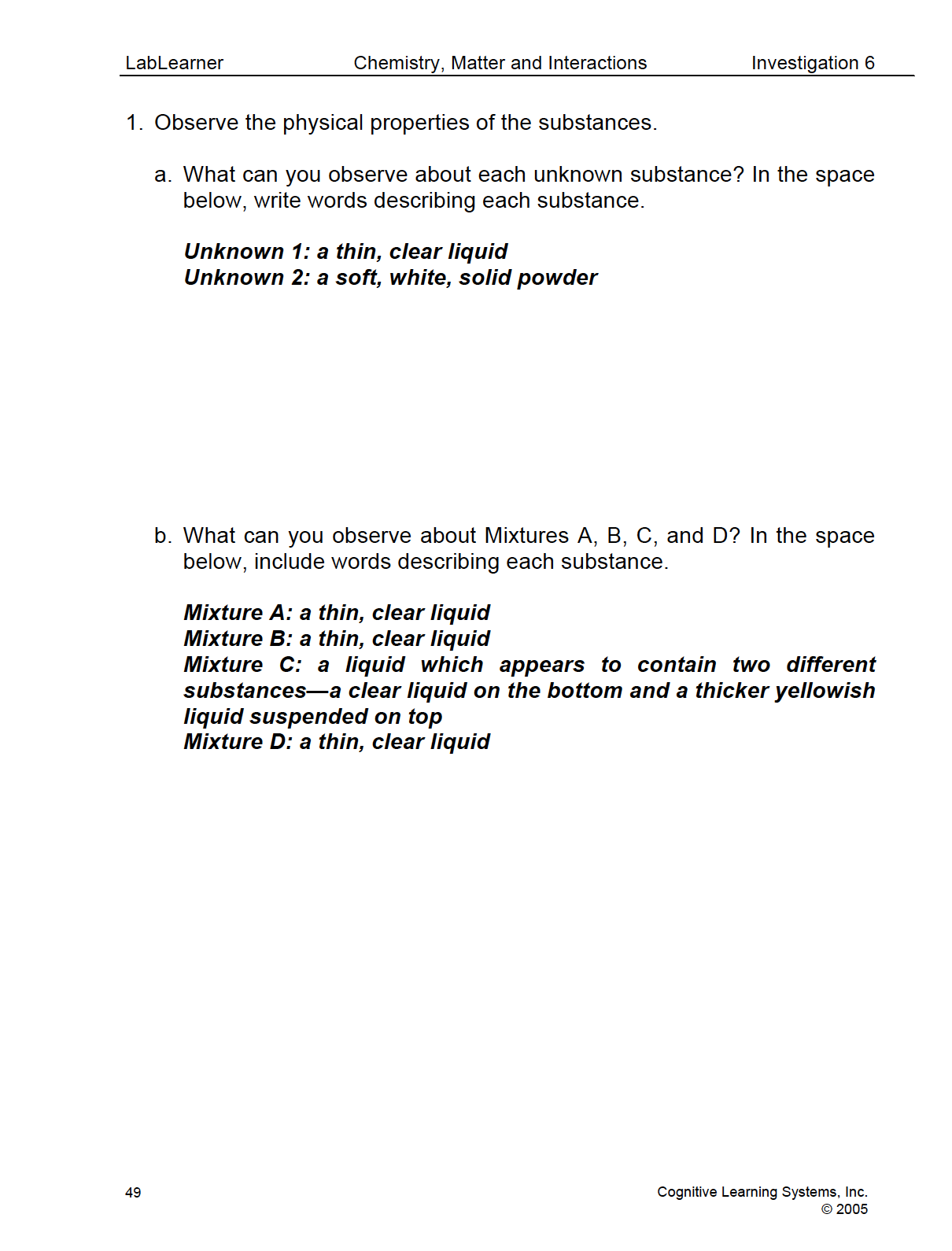
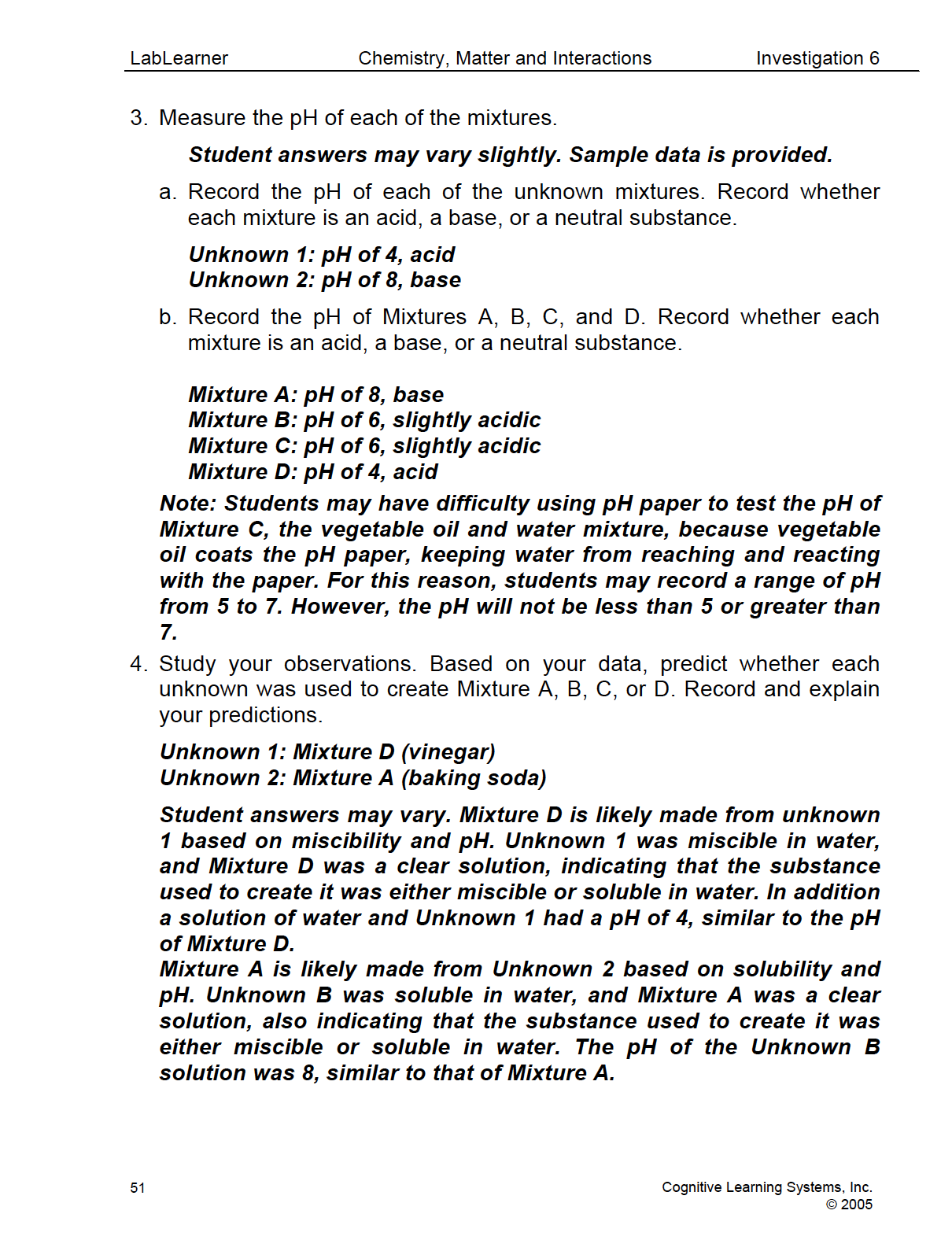
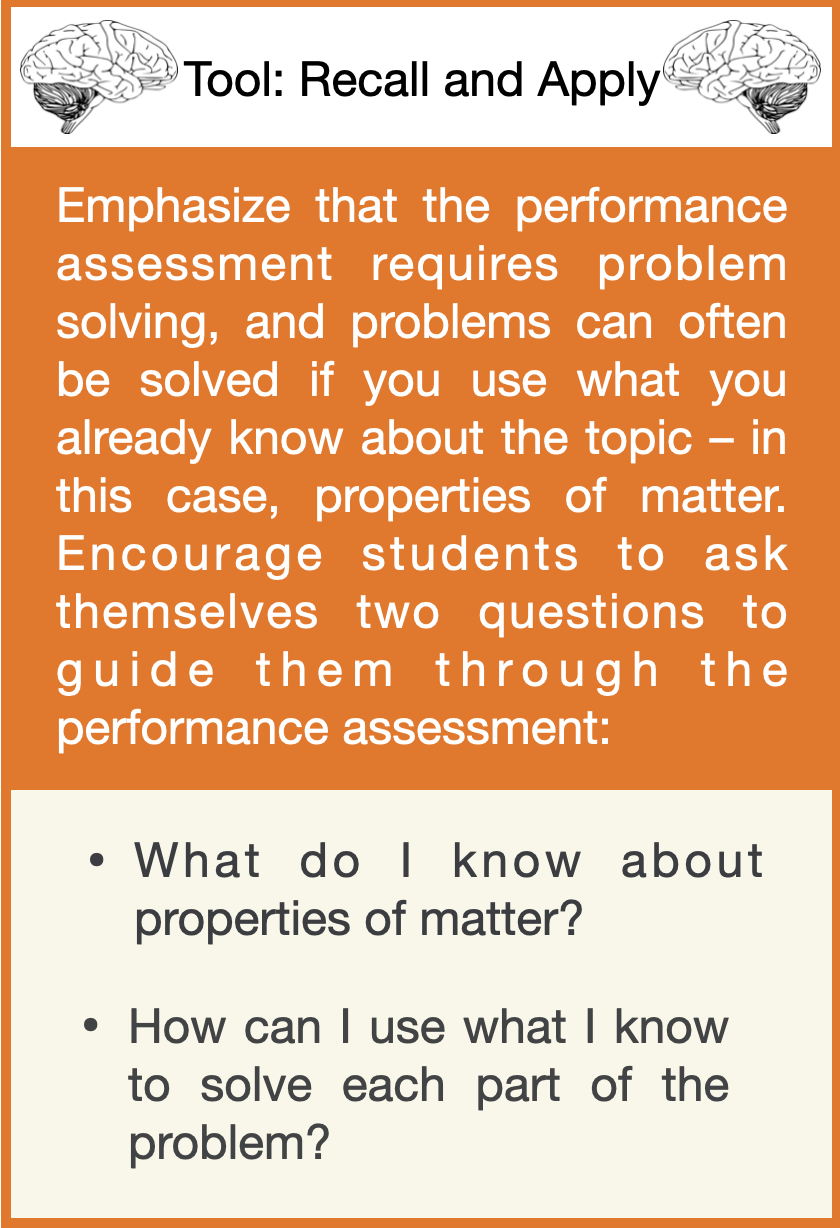 1. Tell students that their main goal in this investigation is to use what they know about the properties of substances to solve a mystery. Two unknown substances have been placed at their tables. In addition, four substances labeled Mixtures A, B, C, and D have been placed at their table. Based on their observations, students will determine which mixture was made using each unknown substance.
2. Briefly outline the specific goals of this project to the class. Read aloud the goals from the list on the Scientist Data Record.
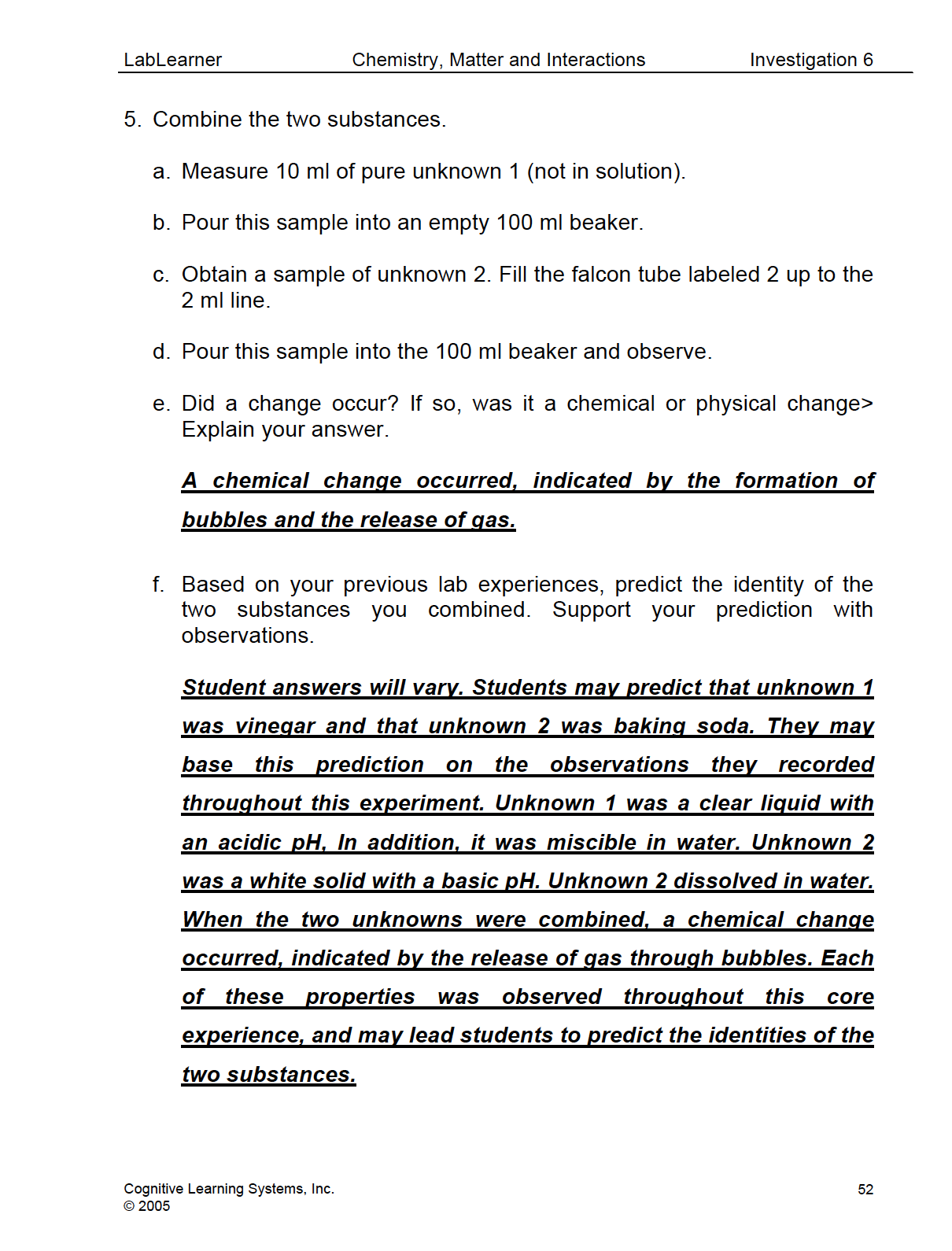
3. With the students, walk through the five steps in the project. Encourage students to draw on their understanding of the properties of matter from the first five Investigations.
Note: Because students at a table will be sharing one triple beam balance, you may wish to instruct some student pairs to begin their Investigation with Problem 2 of their Student Data Record rather than Problem 1. Problem 2 involves student use of the triple beam balance and may require some time for students to complete.
4. Allow students to complete their Performance Assessments. You may wish to informally or formally evaluate students as they work on their Performance Assessments. An evaluation rubric for the Performance Assessment has been provided to aid in the evaluation process.
5. Upon completion of the project, permit enough time to clean up the lab and return the materials and equipment to their assigned location.
CLEAN UP
Let students know your expectations and instruct them to clean up their lab bench after the Performance Assessment.
KEYS: PERFORMANCE ASSESSMENT