
Teacher Portal:
Science and Art
Investigation 1 – Lab
 BE PREPARED
Supplies and Equipment:
Group Materials:
- 2 meter sticks
- 2 metric rulers
- 1 flashlight
- 1 wood block
Individual Materials:
- 1 Student Data Record
Teacher Preparation:
1. Organize the required materials at a distribution point.
2. Divide students into 5 cooperative groups.
Instruction:
1. Direct each student group to obtain the following necessary materials from the distribution point: two (2) meter sticks, two (2) metric rulers, one (1) flashlight, and one (1) wood block.

GET FOCUSED
Investigation One introduces students to the concept of perspective in nature and, more specifically, perspective in art. In addition, students will explore point of view and learn that any scene will look different depending on the position and perspective of the viewer.
INVESTIGATE
 1. The Trials in this Investigation focus on how objects appear from different points of view, including those objects that are near to the observer and those that are farther from the observer. Each Trial includes steps that are used to set up the experiment. In following the directions for set-up, students may be tempted to focus more on the steps of the procedure and less on the observations they will make after the experiment design has been prepared.
Trial 1
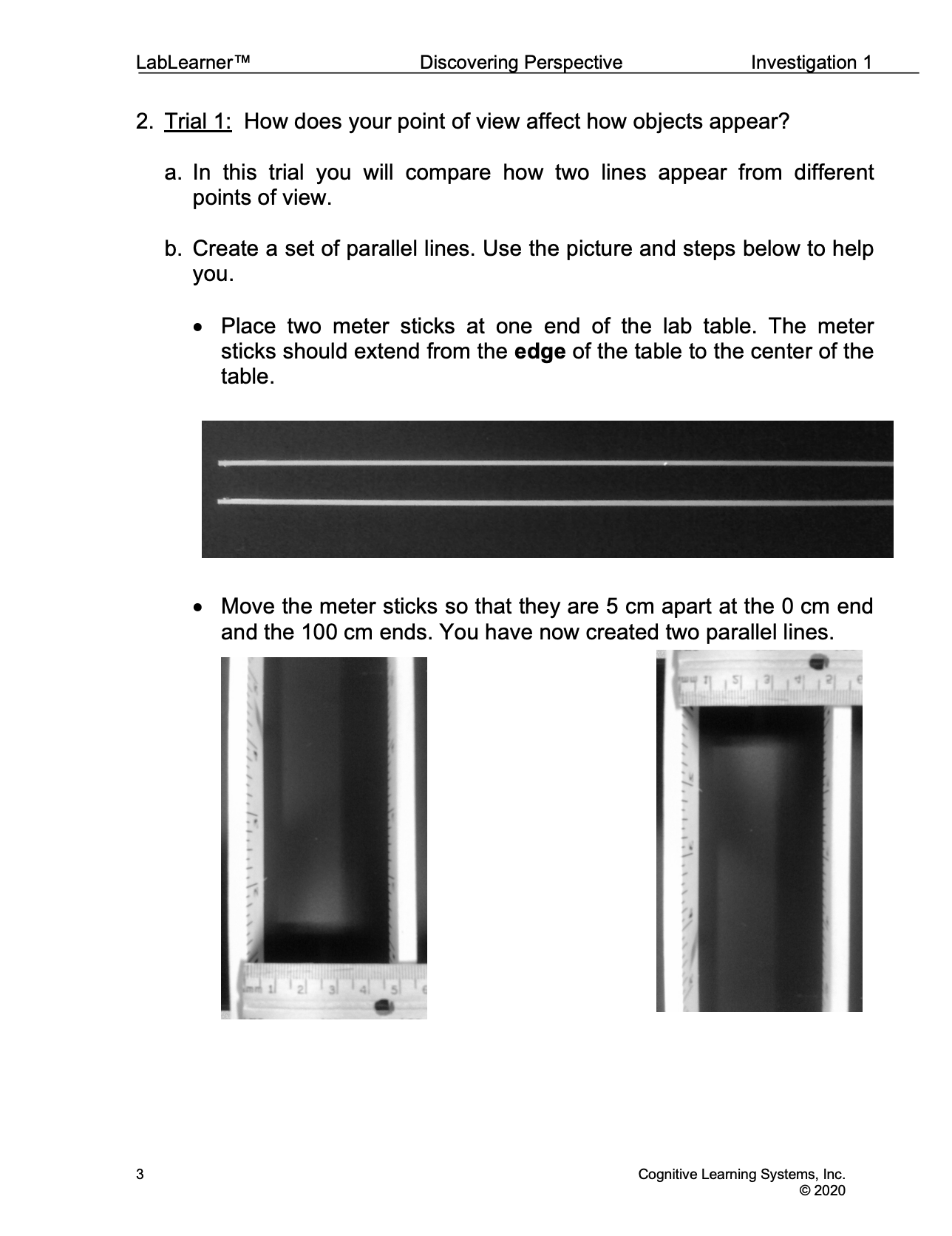
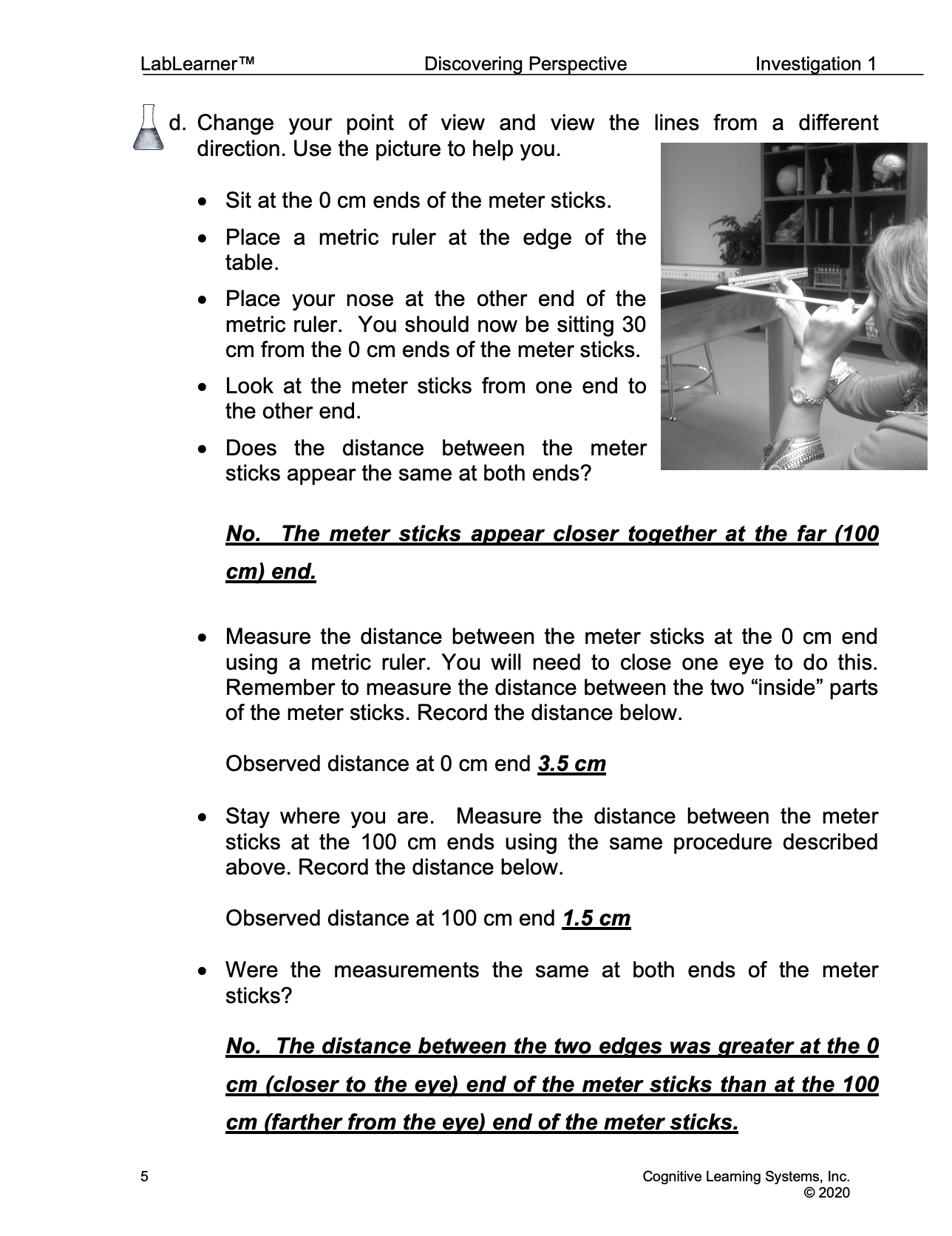
2. In Trial 1, students will create two parallel lines using meter sticks and compare how both ends of the meter sticks appear when viewed from different points of view.
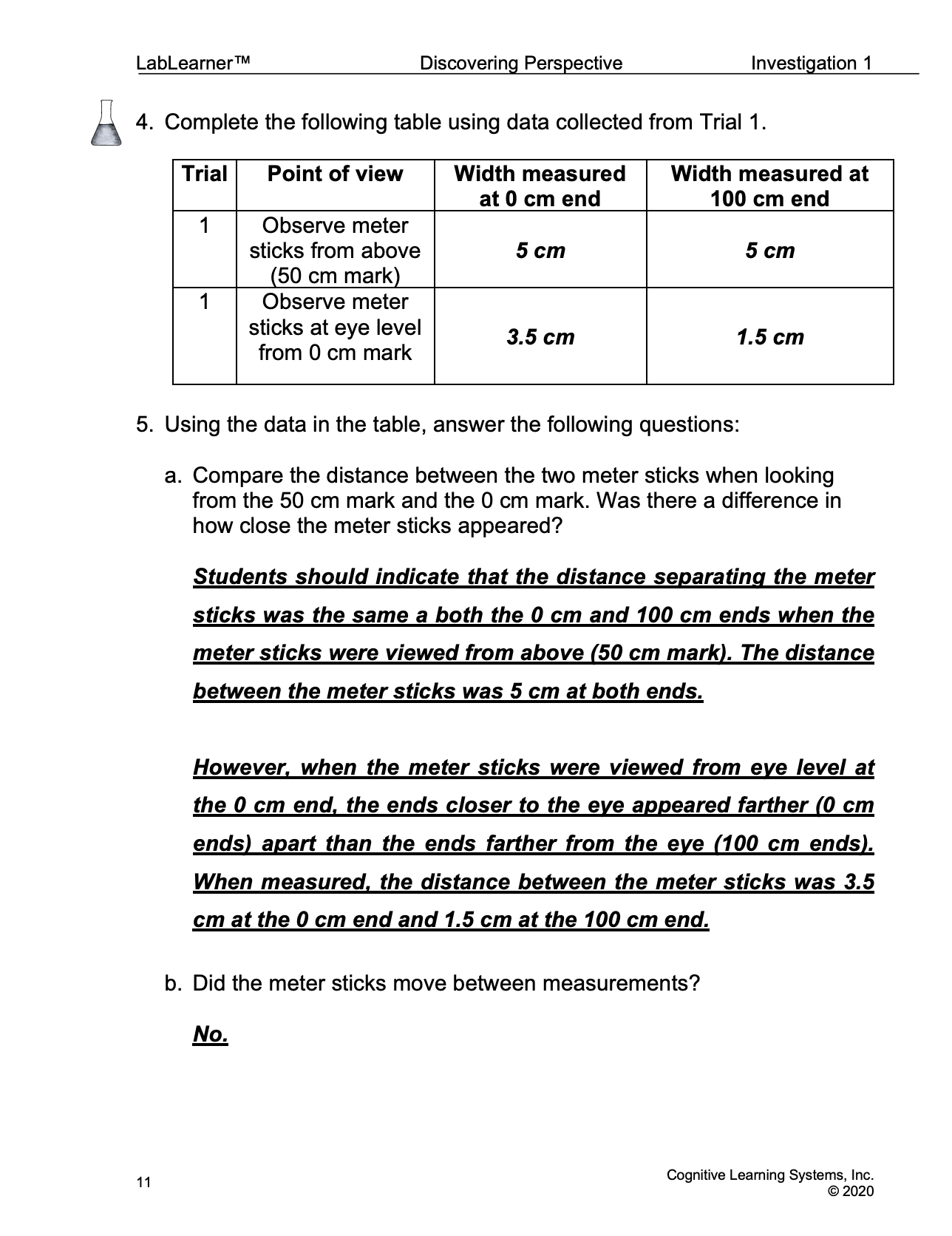
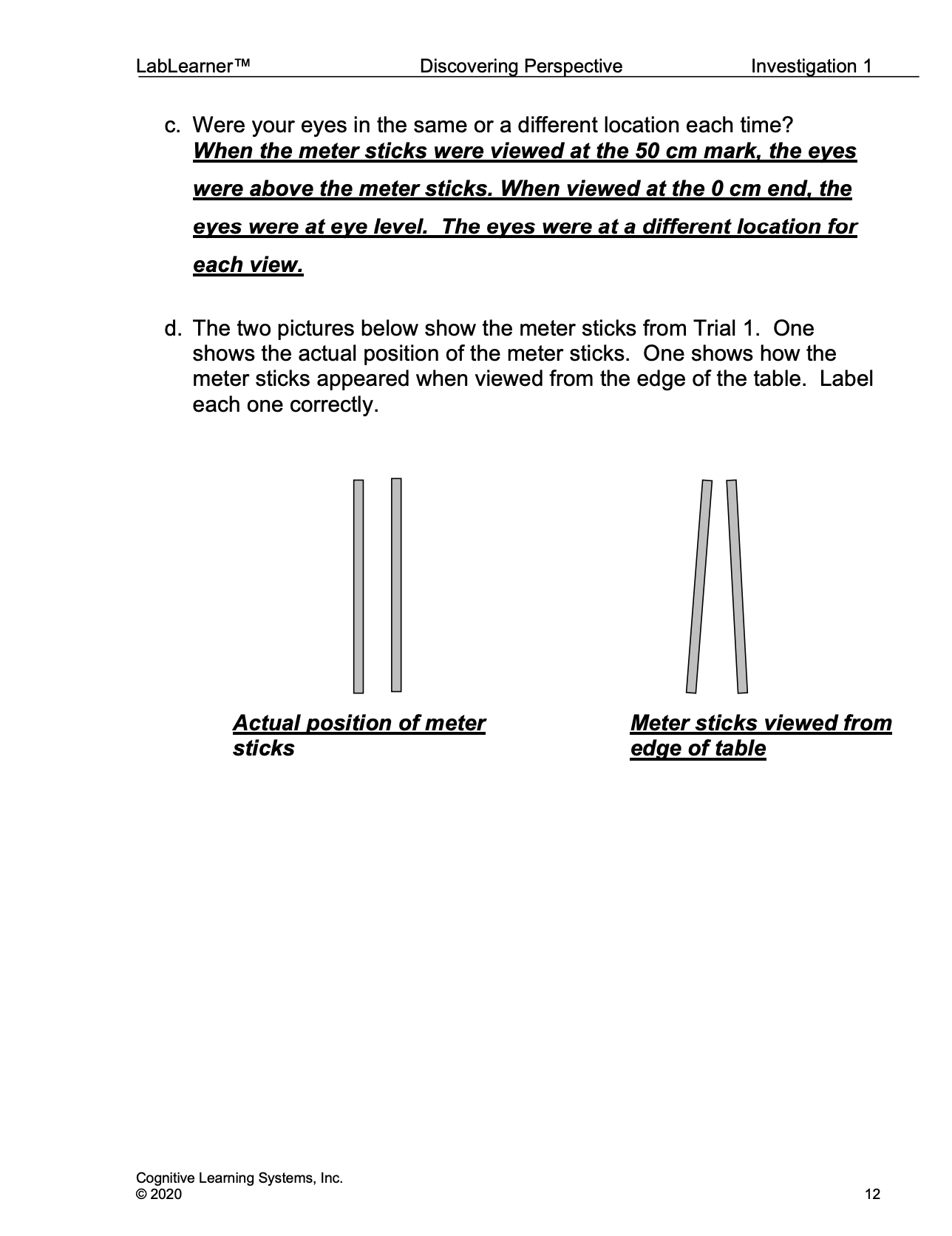
The first part of the Trial has been designed so that students realize that the meter sticks are indeed parallel. As such, the distance between the two meter sticks is the same along the length of the meter sticks, including at both ends. However, as students change the point of view and observe the meter sticks at eye level from one end of the table, they should discover that the distance between the meter sticks appears smaller at the end farthest from their eyes.
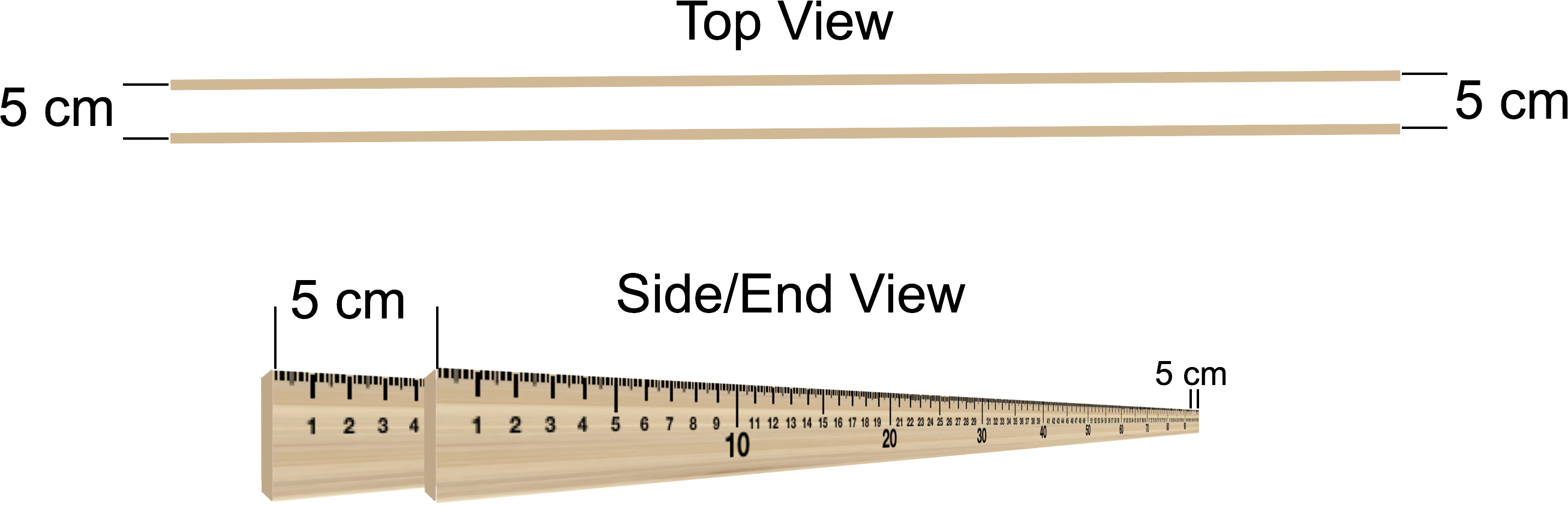
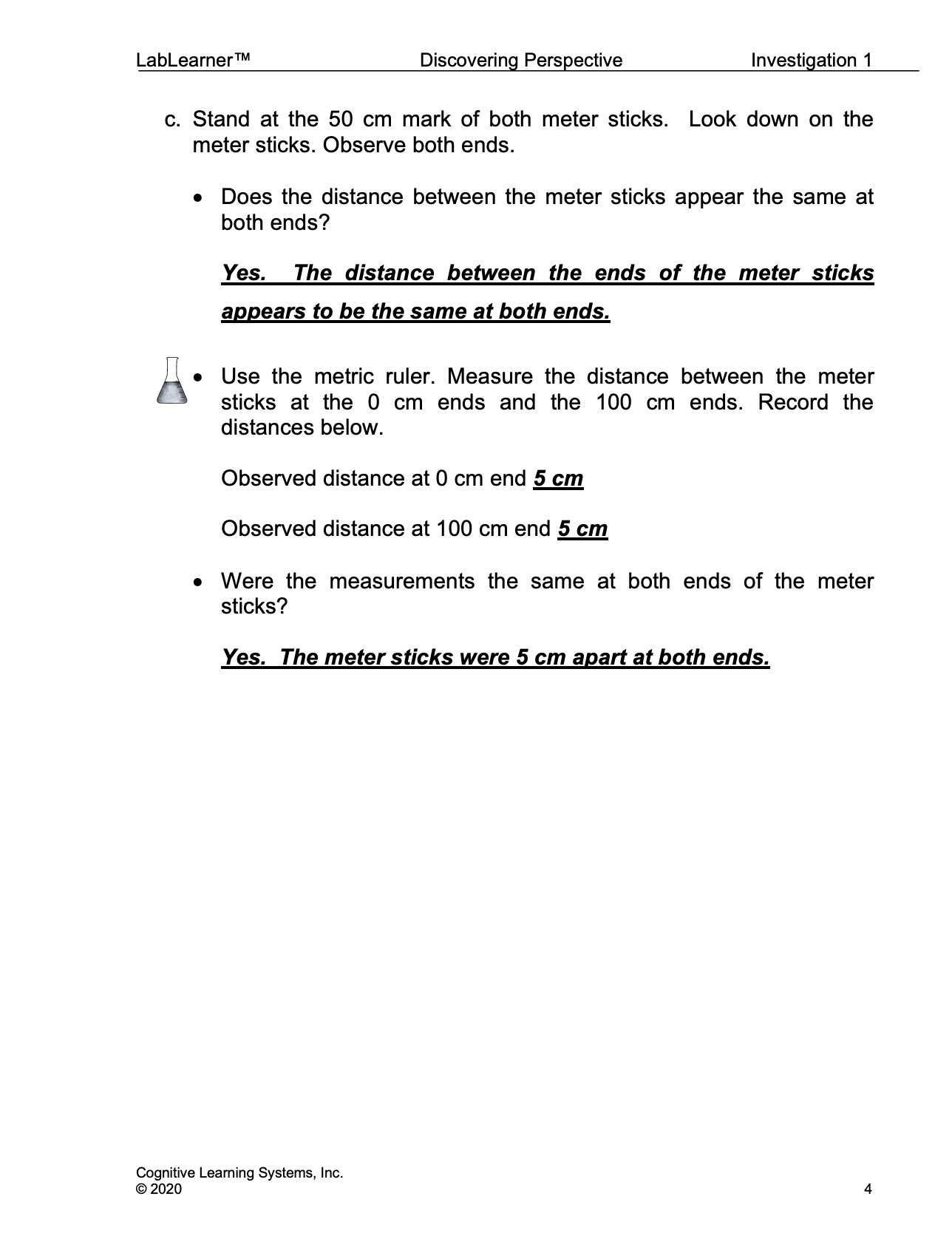
Students will collect data to support their observations by using a metric ruler to measure the distance between the meter sticks at both the 0 and 100 cm ends. These measurements will be taken when the meter sticks are viewed from above and from one end.
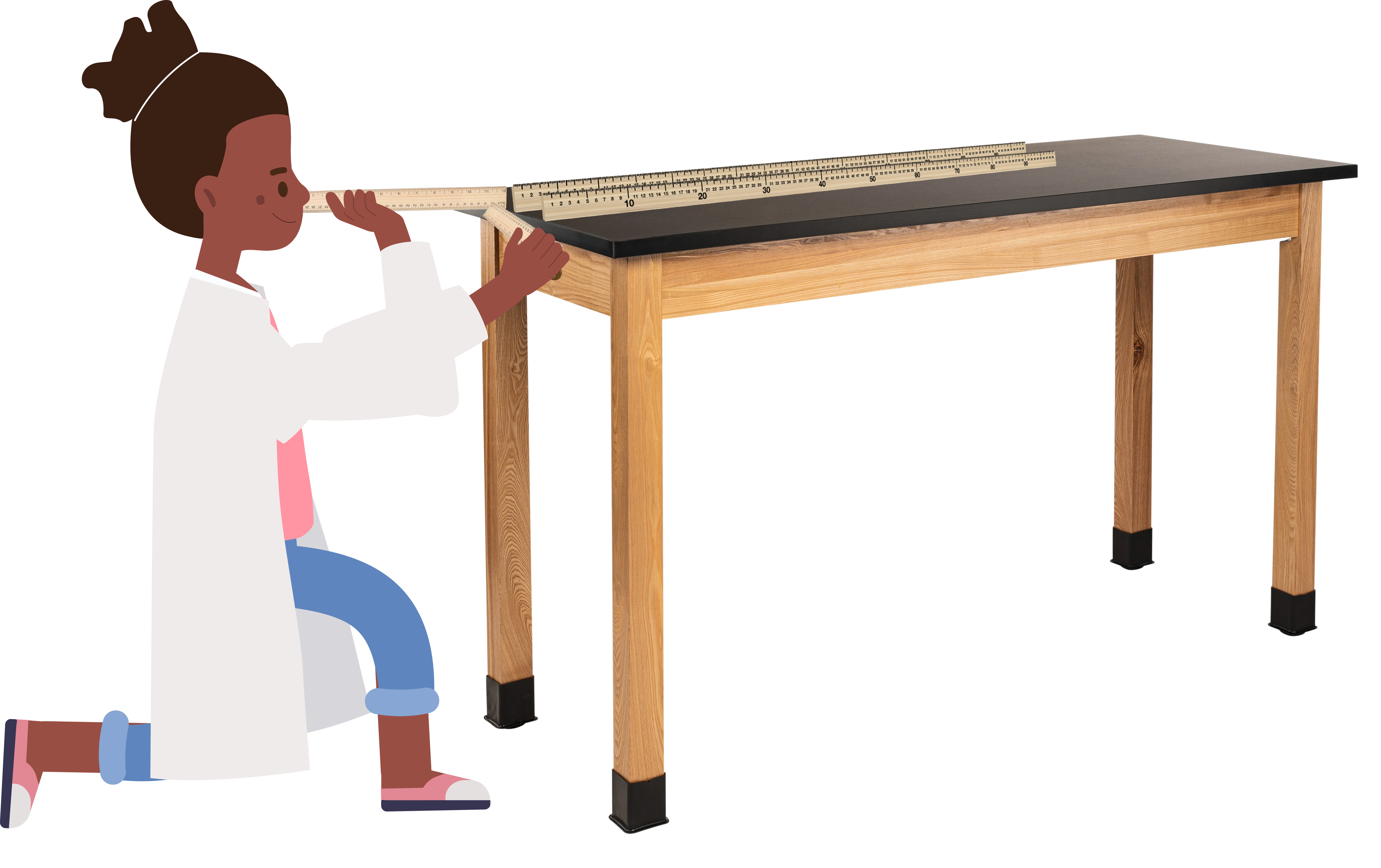
During their Post-Lab discussion, students will be asked to consider why the meter sticks appear to narrow when viewed from one end. During this analysis, they should integrate their observations from Trial 1 with those from Trial 2. In doing so, they will discover that the appearance of narrowing at the far end of the meter sticks occurs because of changes in the field of view at the near and far ends of the meter sticks.
As students complete this Trial, ask them to consider the following question:
How does your point of view affect how objects appear?
Trials 2 and 3
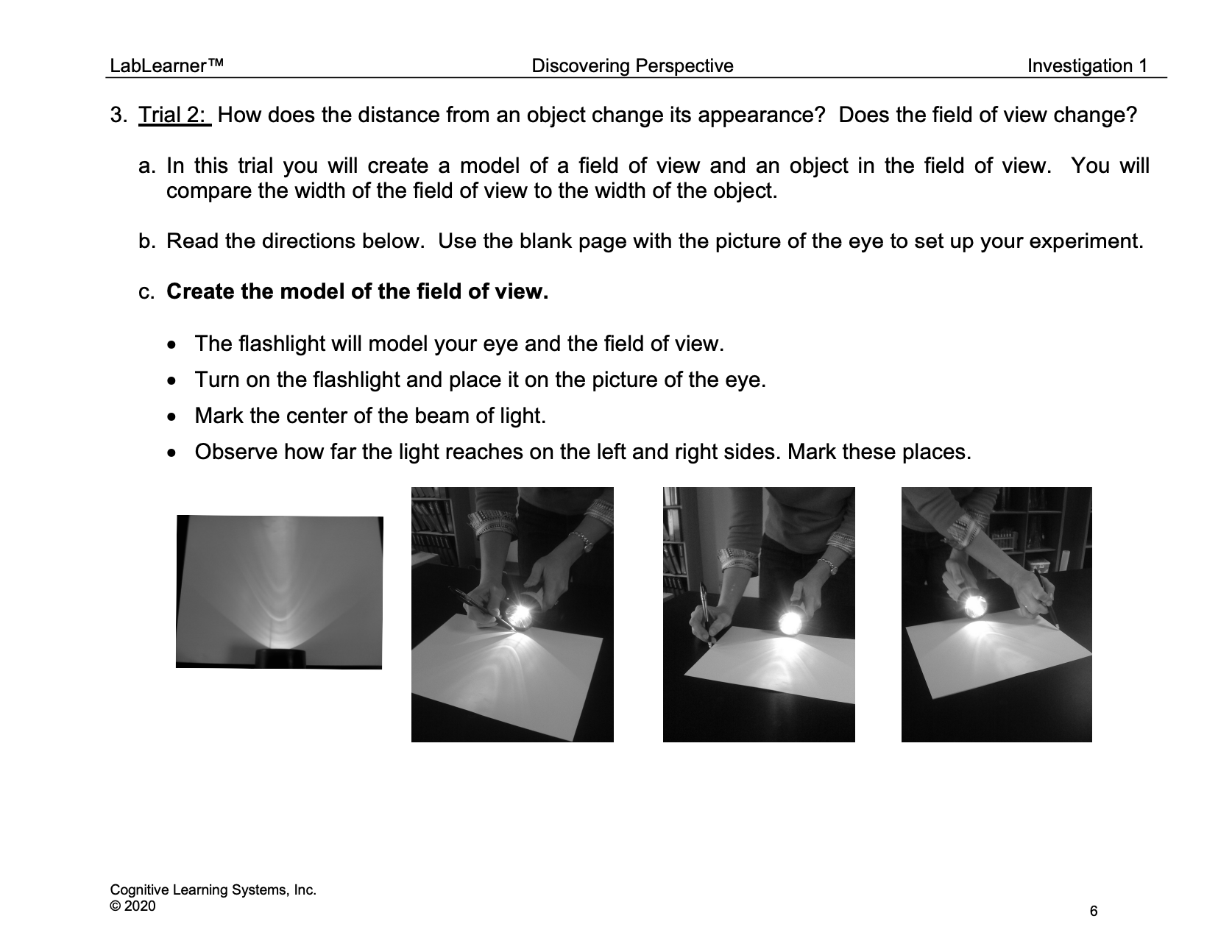
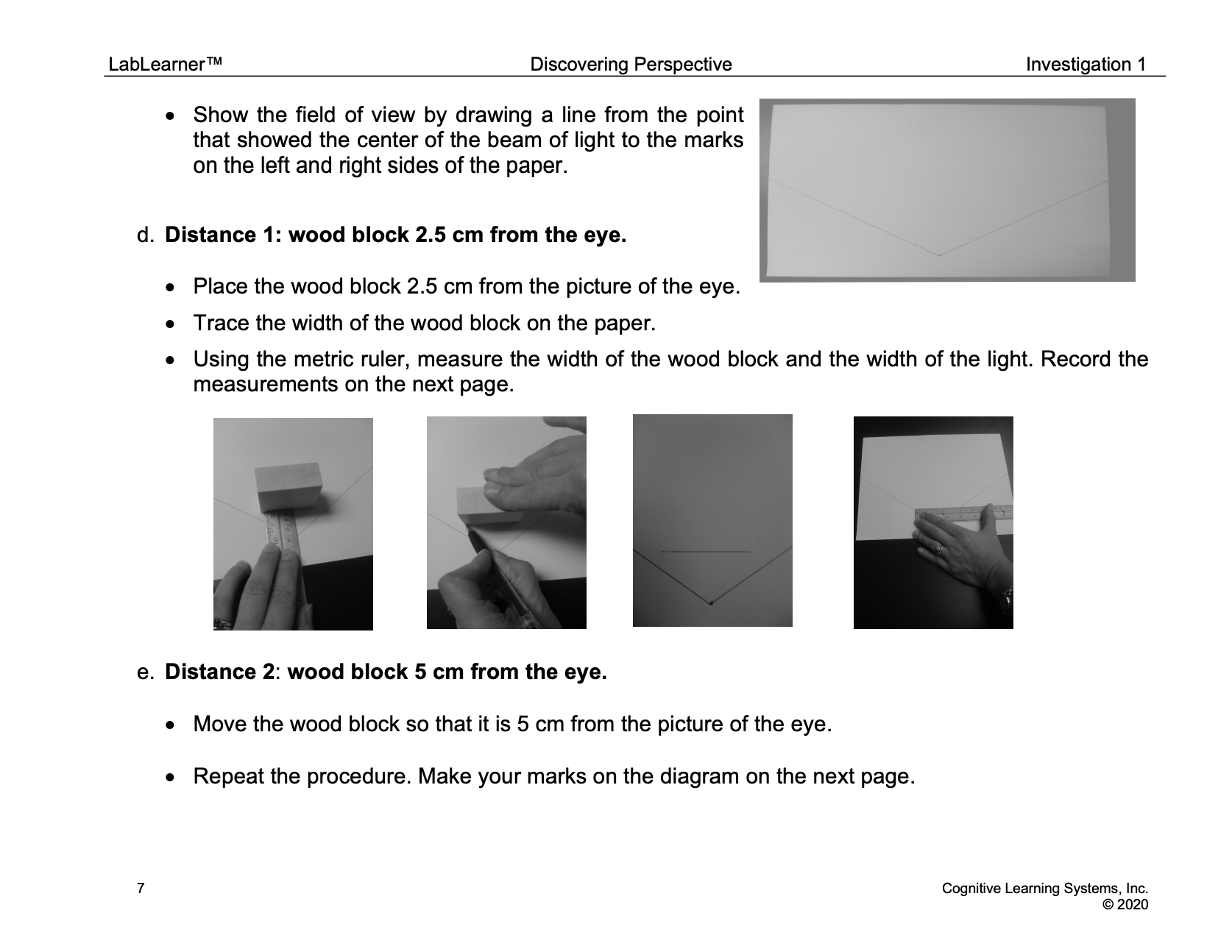
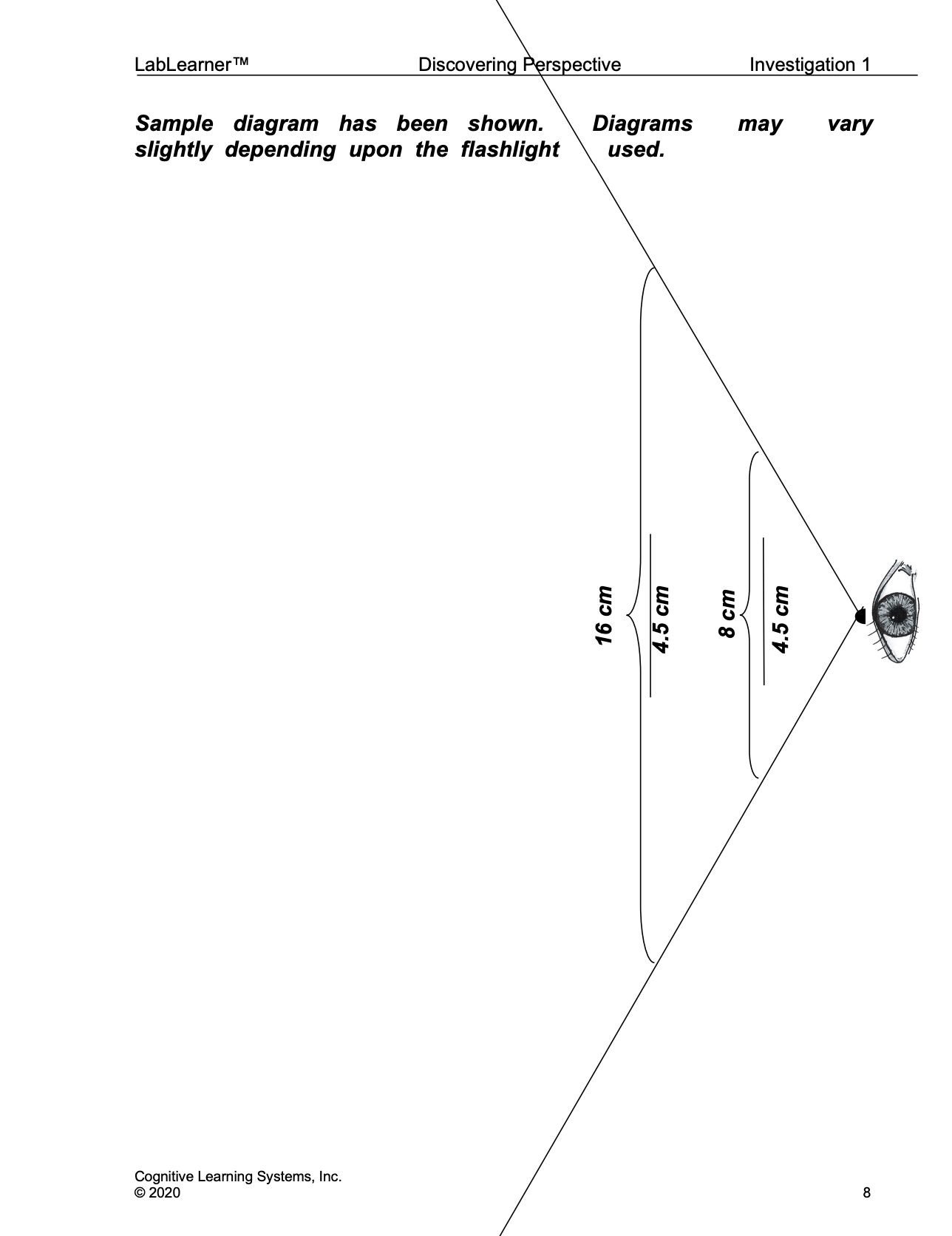
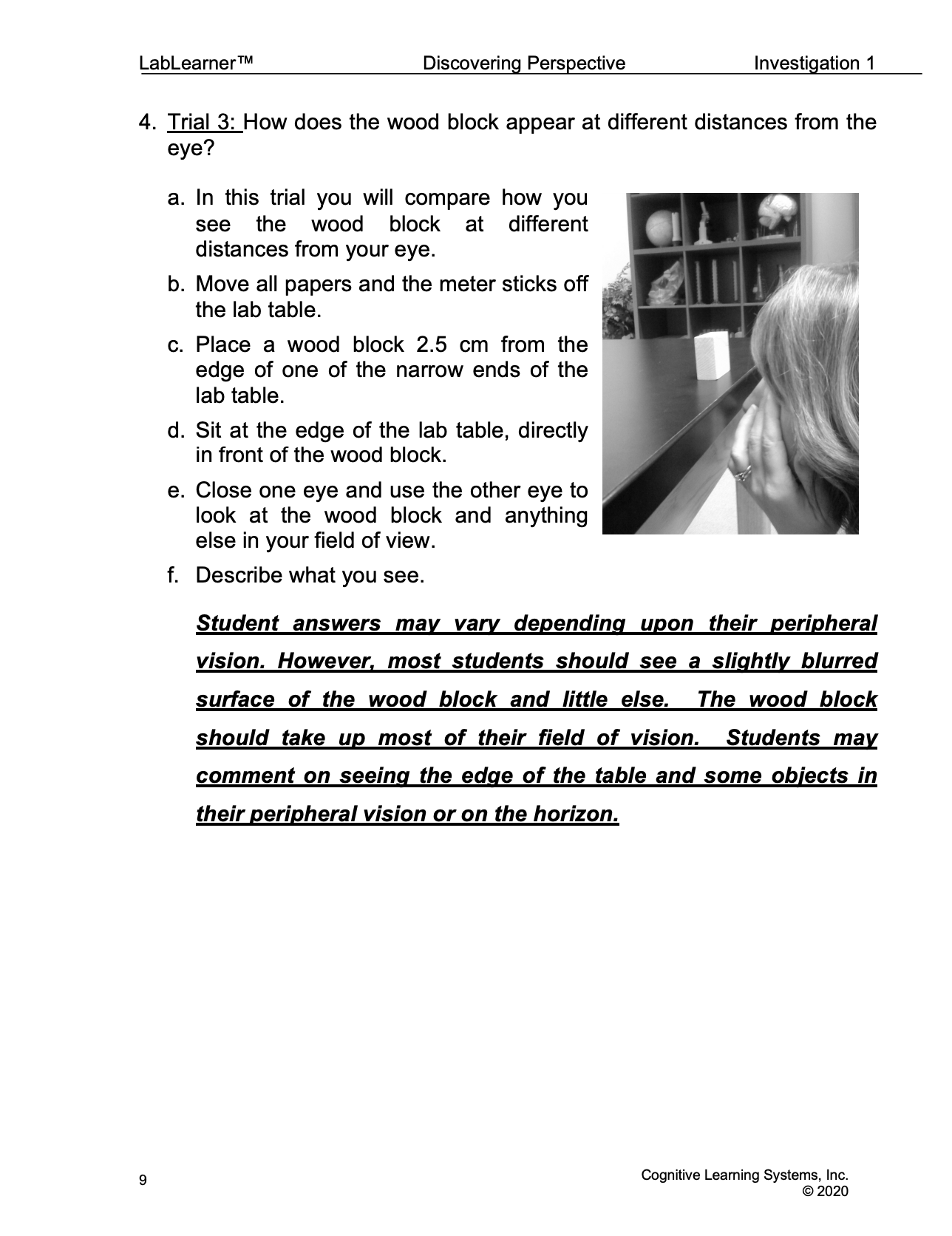
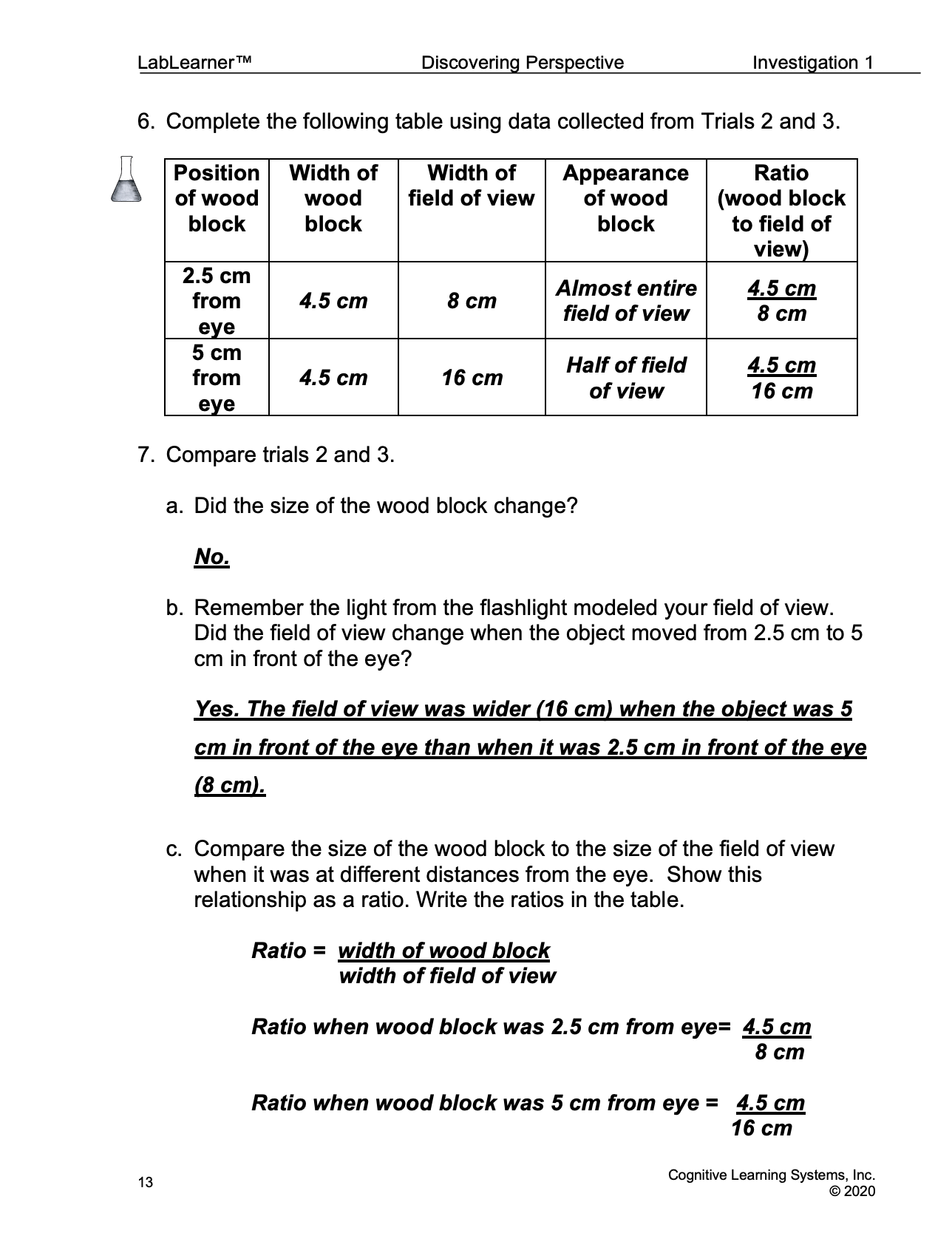
In Trials 2 and 3, students will investigate how the distance from which an object is viewed changes its appearance and how a person’s field of view (vision) changes when viewing near and far objects. In Trial 2, students will create a model of a person’s field of view using a wood block and flashlight. The light shining from the flashlight models the field of view of the eye. The wood block serves as an object in that field of view.
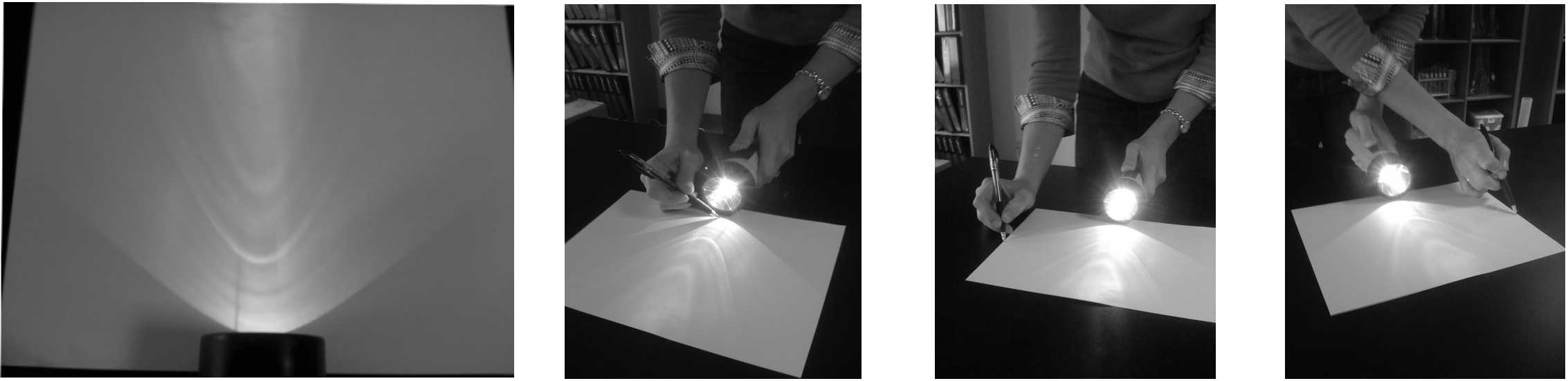
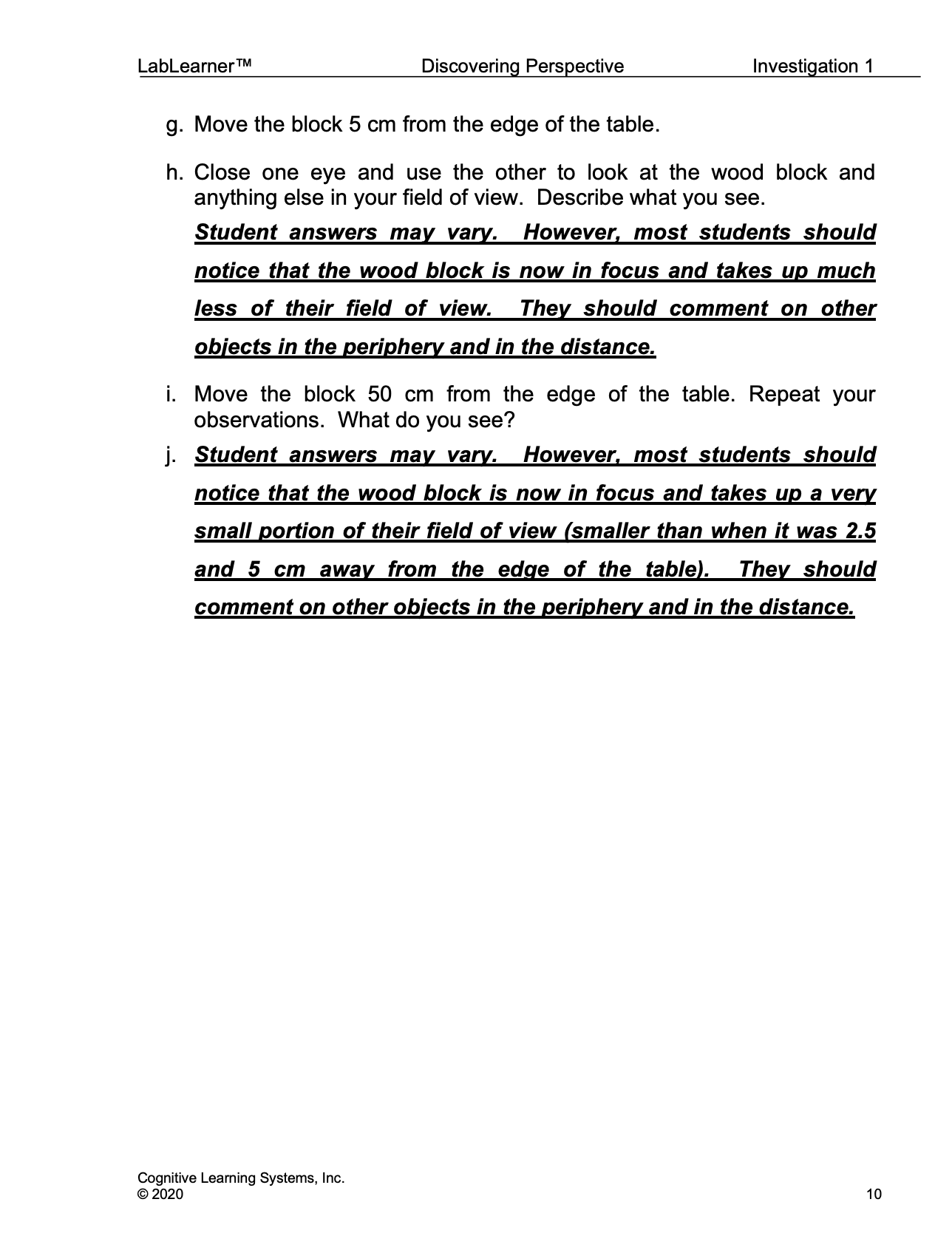
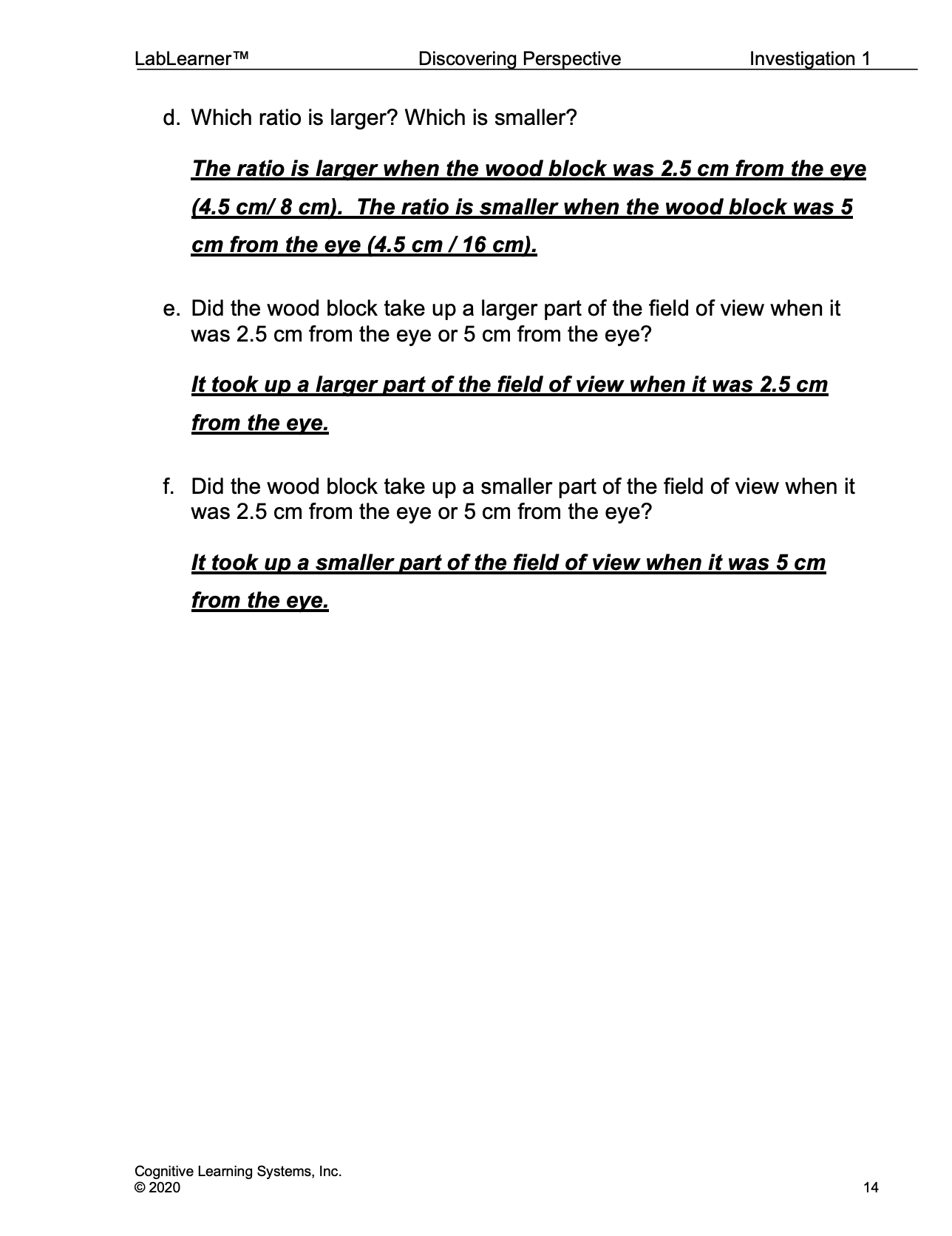
As students complete their experiment, they should discover that as an object is moved farther from the eye, a person’s field of view widens but the width of the object does NOT change. As a result, the object takes up less and less of the field of view as it is moved farther from the eye. In Trial 3, students will illustrate this by looking at a wood block when it is moved different distances from their eyes.
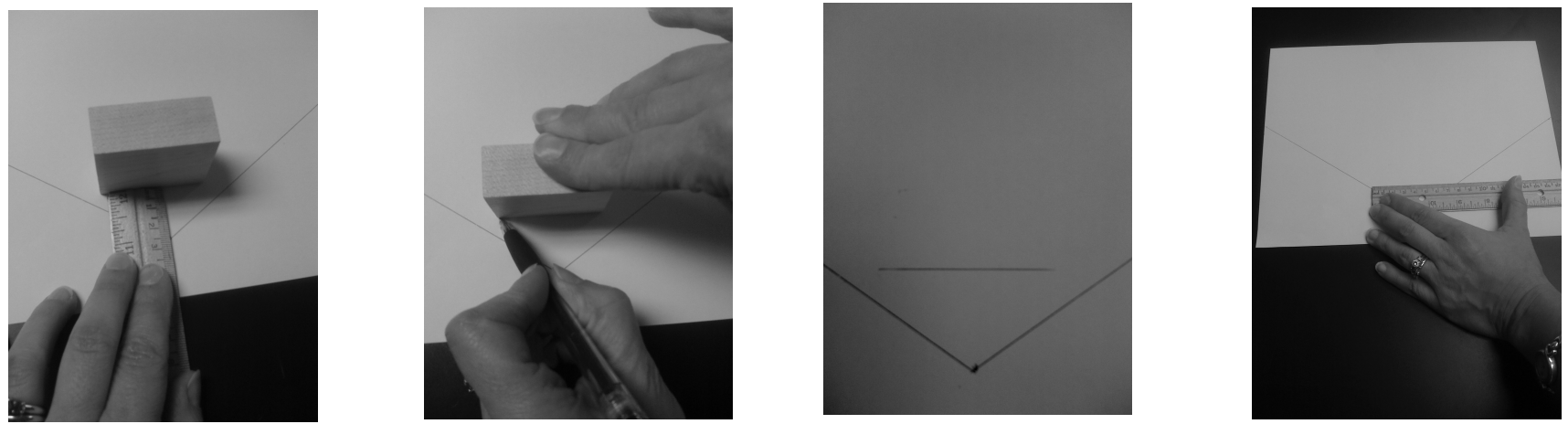
When the results of these trials are combined with those from Trial 1 in the Post-Lab, students should begin to understand that objects in the distance appear narrower because they take up a smaller portion of a person’s field of view (vision). This is the reason that railroad tracks or parallel lines on a road appear to merge in the distance. This phenomenon involves both the images that are formed on the eye’s retina and the interpretation of the images by the brain.
Students should consider the following questions:
How does distance from an object change its appearance? Does the field of view change?
KEYS
CLEAN UP
Let students know your expectations for clean-up. Ask them to clean up.