Teacher Portal:
The Human Body
Investigation 5 – PostLab
ASK WHY
The human body is organized into systems that are made up of many parts and that these systems each perform both individual and complementary functions that occur at the same time in the body.
BRANCH OUT
Biomedical research scientists study the function of normal and diseased body systems. They study the human body at the systems level, the cell level, and the molecular level. Great medical advances have come from the understanding of the human body discovered through biomedical research.
PRINT IT
Use your browser to download a printable PDF as help during the slide presentation and to make additional notes. In your browser, go to File > Print and then choose to save as PDF.
NAVIGATE IT
Once the slide presentation is launched
- use your left and right arrows to advance or go back in the slide presentation, and
- hover your mouse over the left edge of the presentation to get a view of the thumbnails for all the slides so that you can quickly move anywhere in the presentation.
- Click HERE to launch the slide presentation for the CELL.
SHARE IT
SLIDE BODY-5post-1
This is the final PostLab lesson in the CELL The Human Body. Therefore, there are several review items included that recap the entire CELL.
Which body system did you investigate? Students investigated the digestive system.
What is the major function of the digestive system? Students should indicate that the digestive system breaks down food and moves it through the body.
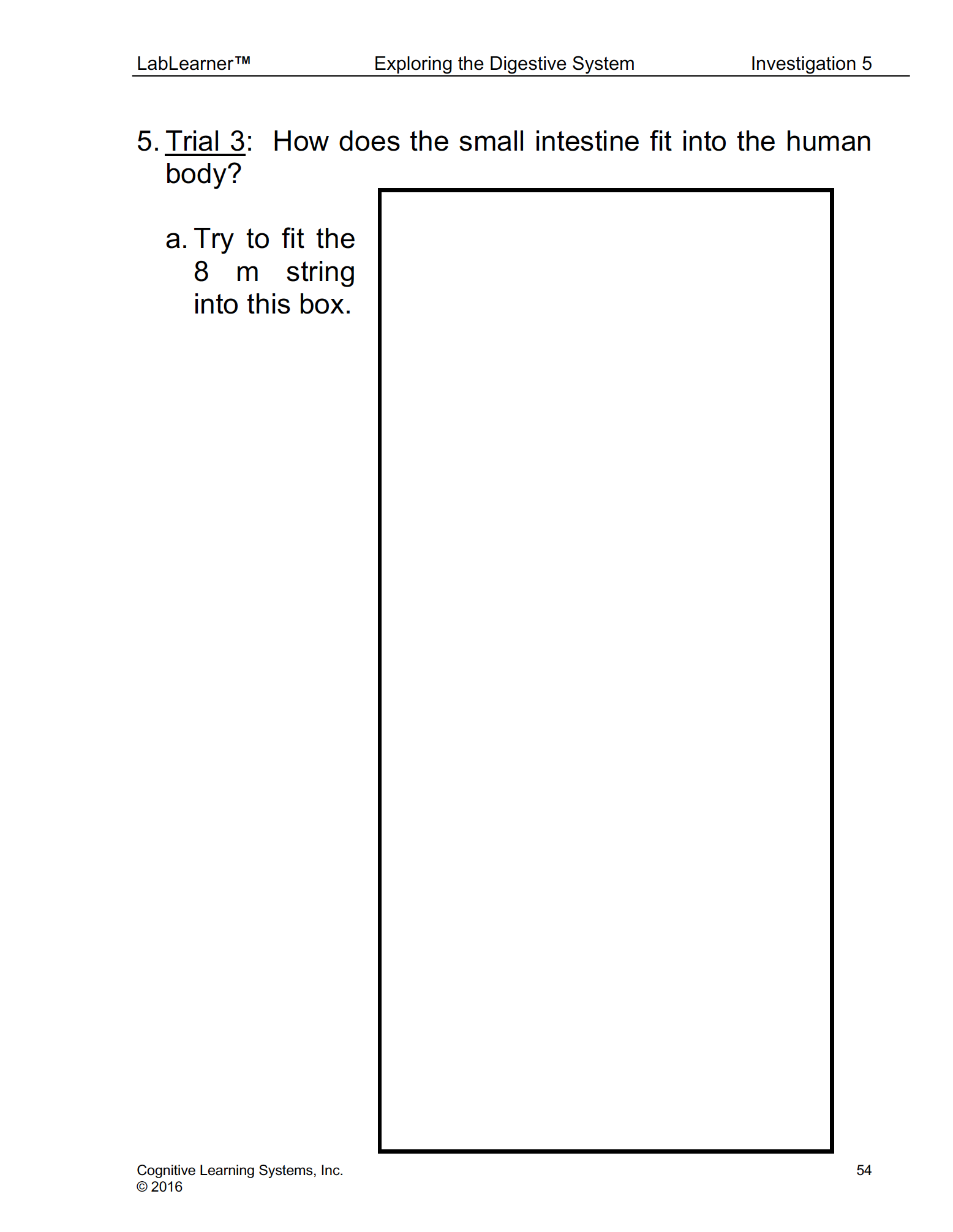
Describe one experiment performed in the lab of this investigation. Student answers may, of course, vary. Students may describe the experiment in which they examined the mouth, teeth, tongue, and swallowing. Students may also recall the experiment where they measured the length of the entire digestive system. The students also folded an 8 m string and fit it into a rectangle and then measured the thickness or diameter of the small and large intestines.
______________________________________________
SLIDE BODY-5post-2
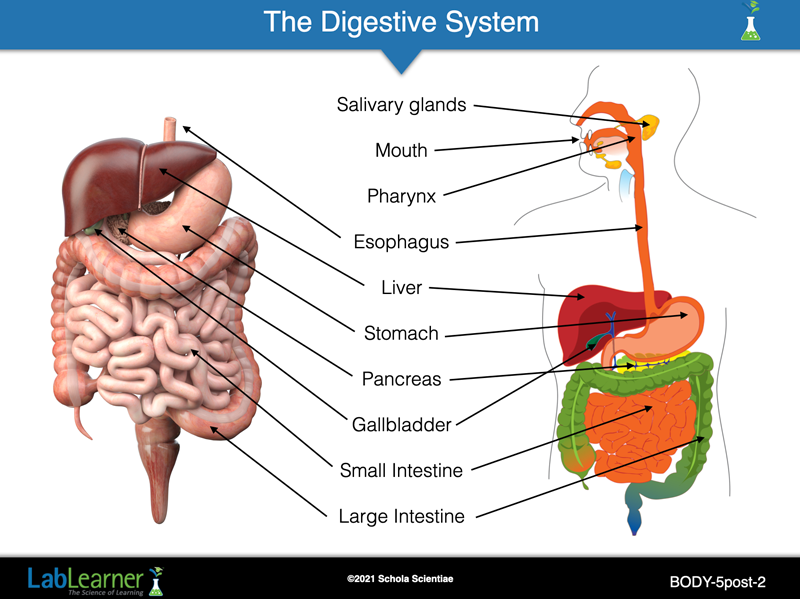
Teacher Note: This slide is animated. The teacher may wish to begin at the top of the list of body parts (Salivary glands) and ask students where they are located on each of the drawings.
The liver, pancreas, and gall bladder are also parts of the digestive system. How do they help digestion? Students should indicate that the liver sends bile to the gallbladder. Bile is a liquid that helps digestion. The gallbladder sends the bile to the small intestine. The pancreas sends digestive juices (enzymes) that help digestion to the small intestine. The bile and enzymes mix with the food in the small intestine and help with digestion.
______________________________________________
SLIDE BODY-5post-3
From Trial 1:
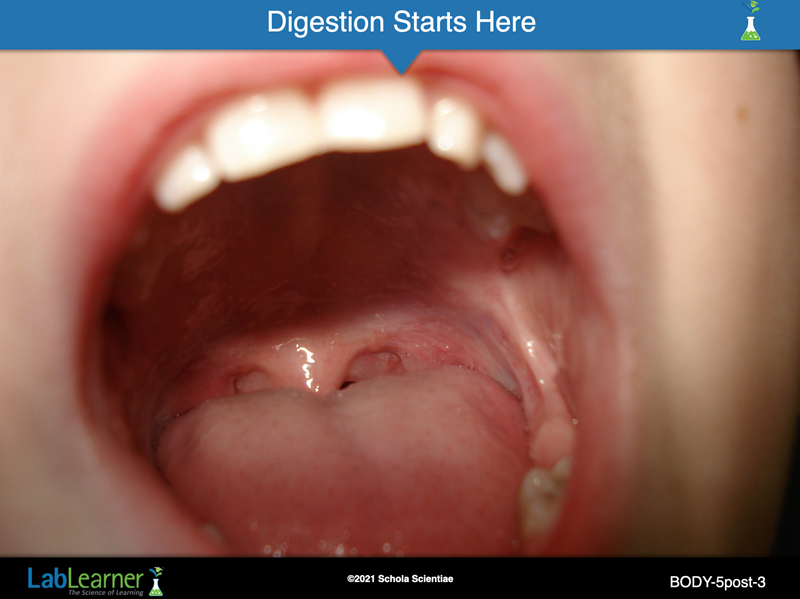
This slide shows a closeup of a human mouth.
What structures involved in digestion can you see in this picture? Students should identify the tongue, teeth, and the wetness of saliva.
What function do these structures perform in digestion?
Tongue: Moves food in the mouth and determines the taste.
Teeth: Cuts and tears at food material to break it into small pieces that can be swallowed.
Saliva (Salivary glands): Lubricates food materials and begins the chemical digestion process.
Which part of the digestive system does the food enter after it leaves the mouth? Students should indicate that food enters the esophagus after it leaves the mouth.
How do you move the food into your esophagus? Students should indicate that the food is pushed into the esophagus by the tongue when swallowing.
How does the food move down the esophagus? Student answers may vary. Encourage students to realize that the esophagus is made of muscle. As the muscle contracts and relaxes, food is pushed down the esophagus.
______________________________________________
SLIDE BODY-5post-4
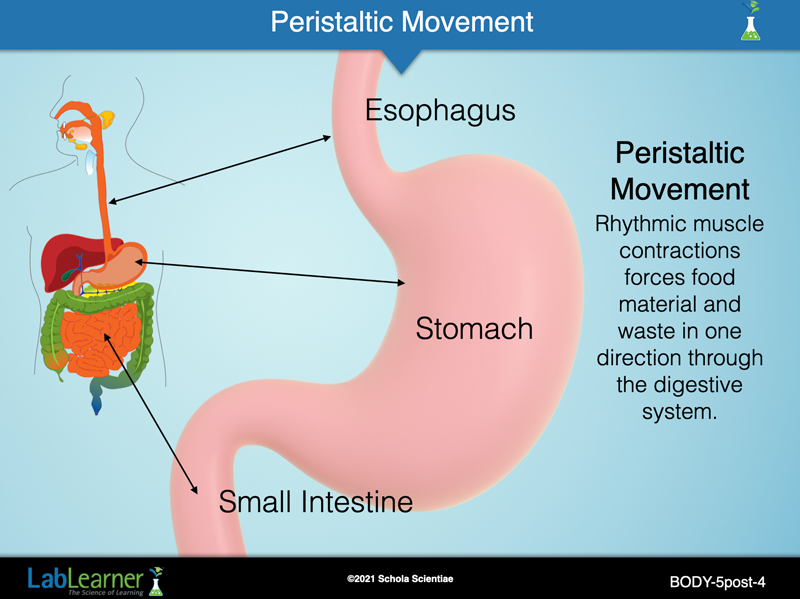
Once swallowed, how does the food move down the esophagus? Student answers may vary. Encourage students to realize that the esophagus is made of muscle. As the muscle contracts and relaxes, food is pushed down the esophagus. This is referred to as peristaltic movement.
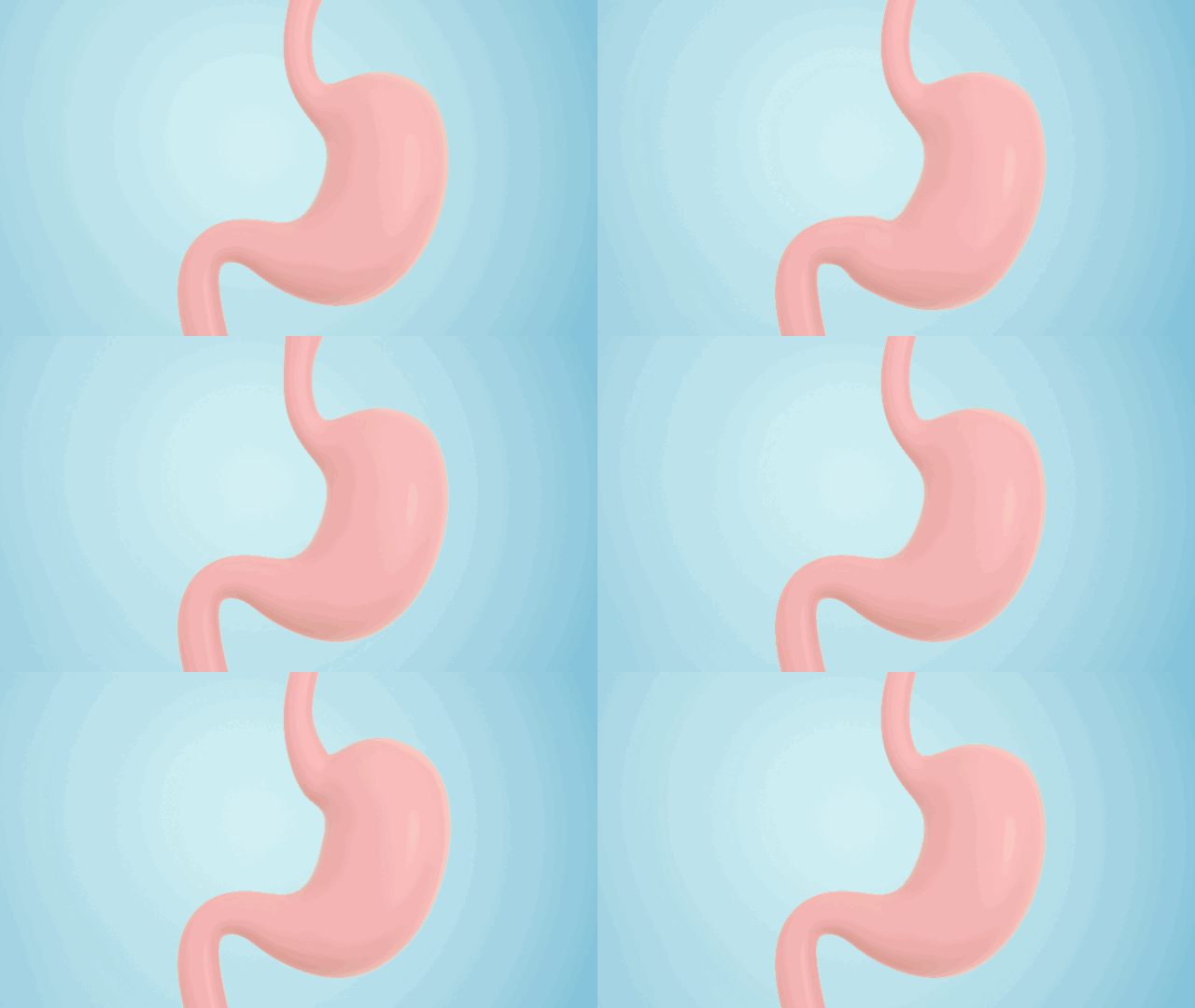
Notice in the animation, peristaltic muscle contractions move the injected food material throughout the entire digestive system; down the esophagus, through the stomach, down the 8 meters of the small intestine, and finally through the 1 meter of the large intestine and out of the body.
______________________________________________
SLIDE BODY-5post-5
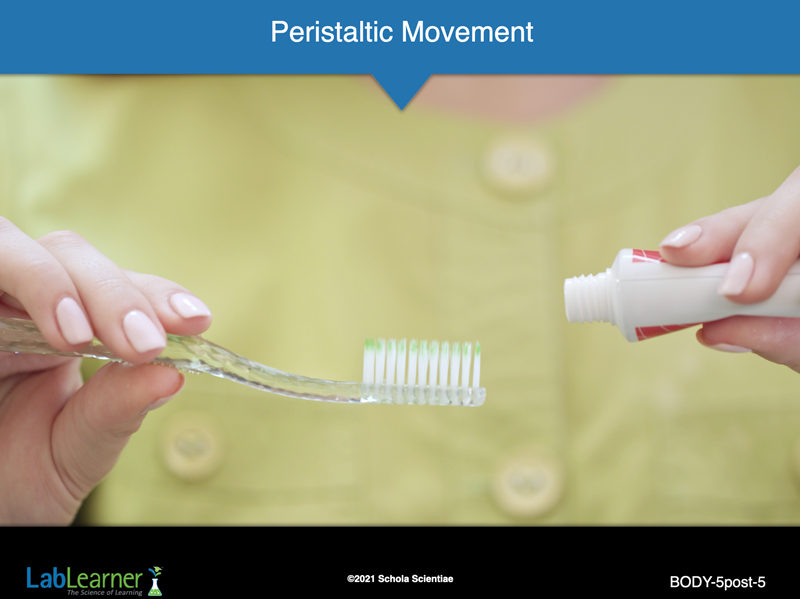
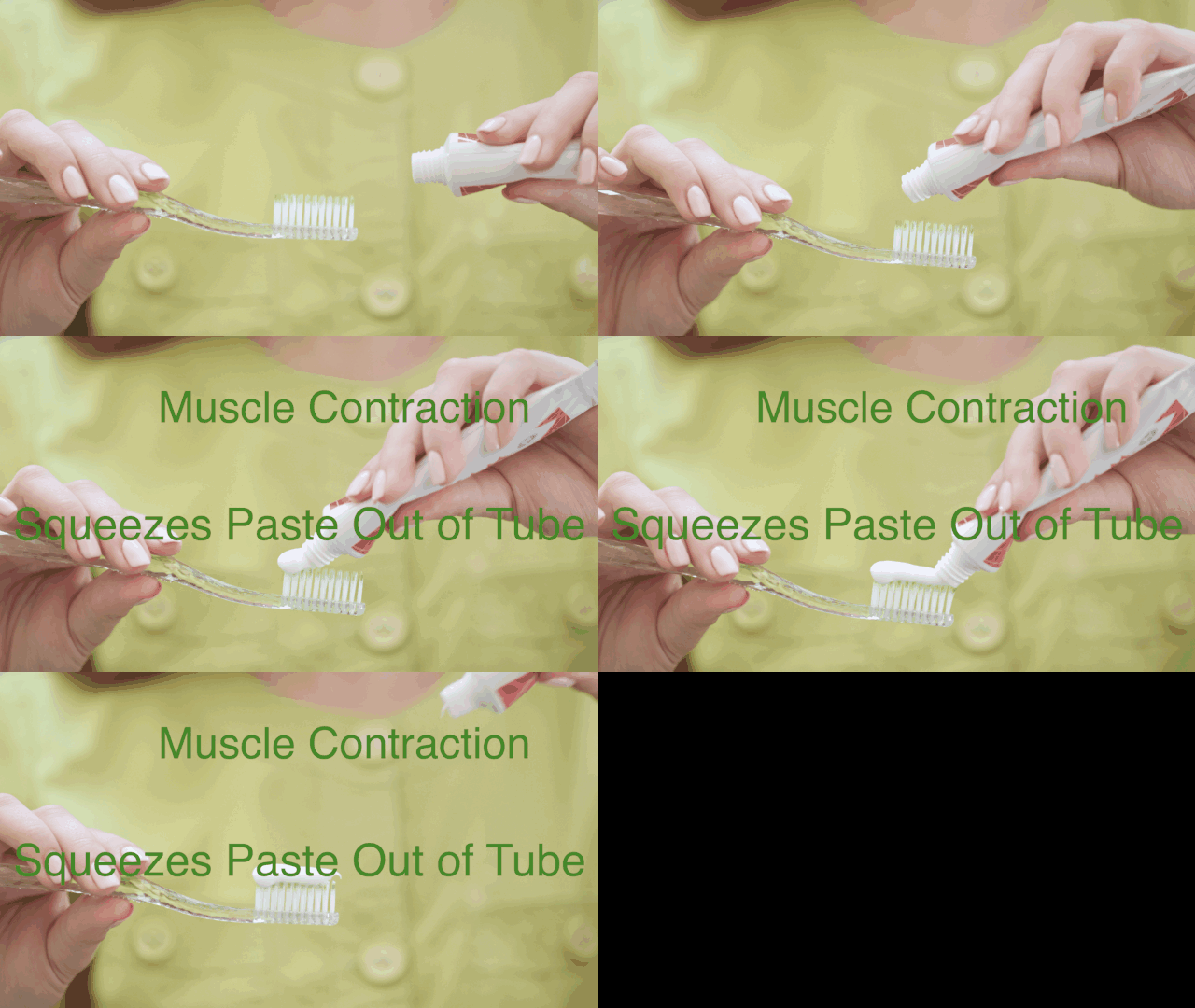
This slide simply compares the peristaltic moment of material through the digestive system to the squeezing of a tube of toothpaste to force the paste out of the tube. In both cases, energy and force are exerted to move the contents forward in a tube.
______________________________________________
SLIDE BODY-5post-6
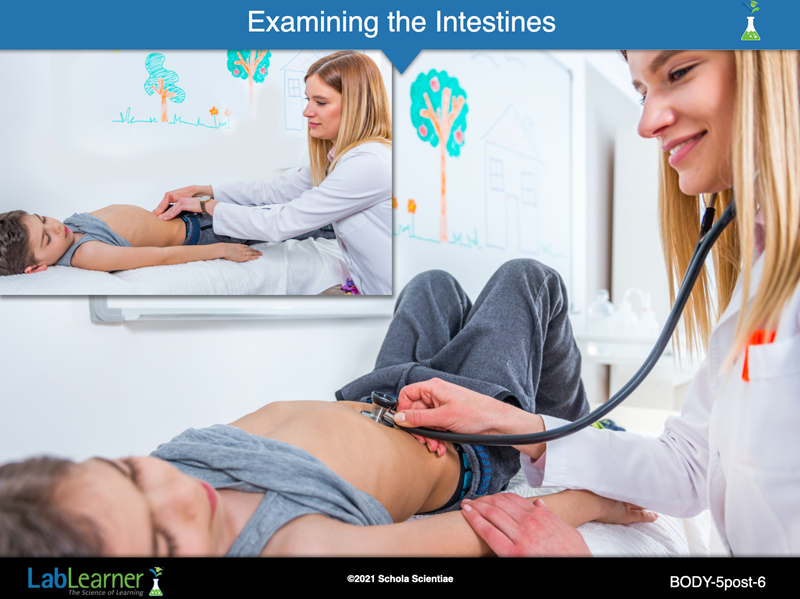
This slide shows an abdominal exam in a doctor’s office. Notice that the physician not only feels the intestines for hard areas that may indicate blockage but also listens to the intestine using a stethoscope.
The sound made by the intestine is caused by the constant peristaltic muscular contractions. Not only does peristaltic movement push and squeeze digesting material along, but gases trapped in the intestine make a gurgling sound that can be heard with the stethoscope. Sometimes our intestinal sounds are so loud that we can hear them without a stethoscope.
If time permits, next time you visit the lab, students may wish to use the stethoscopes to listen to each other’s abdomens.
______________________________________________
SLIDE BODY-5post-7
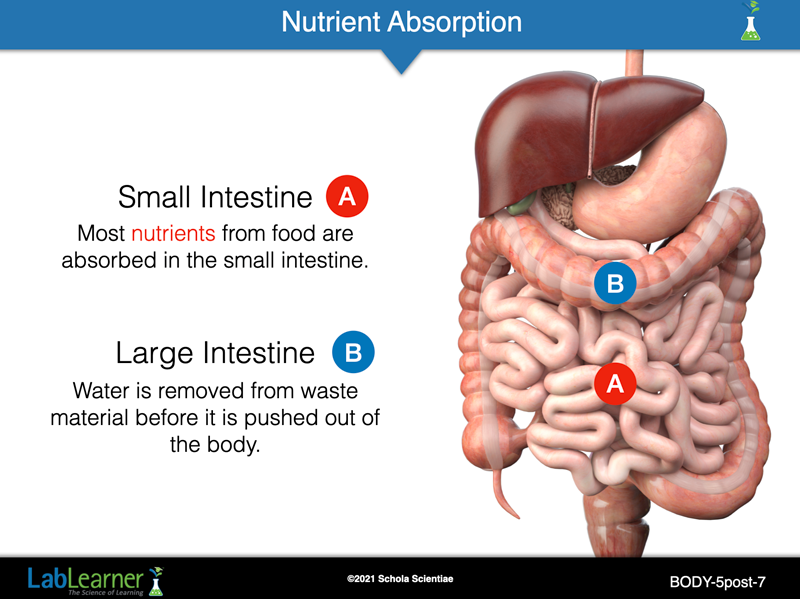
This slide is simply a quick review of the small and large intestine to introduce where nutrient absorption takes place.
______________________________________________
SLIDE BODY-5post-8
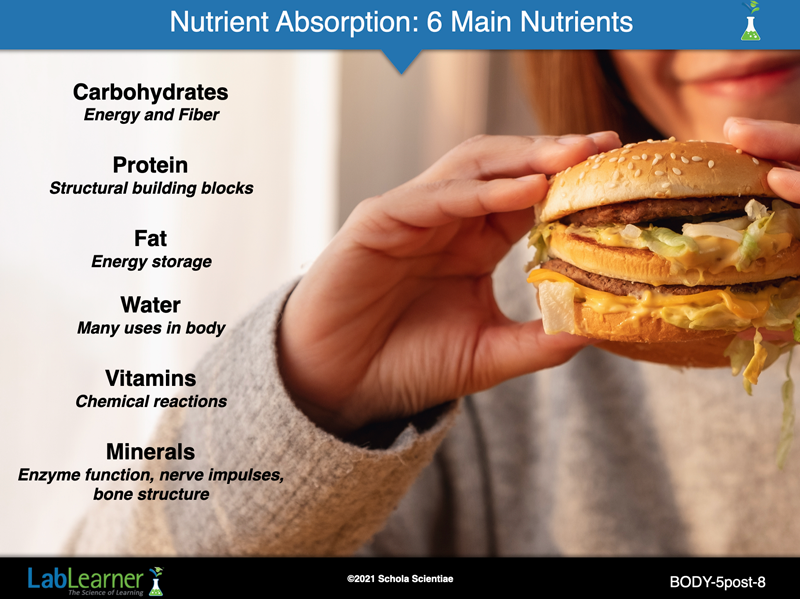
This slide focuses on the concept of nutrients. Nutrients are essentially the components of ingested food that are important for maintaining normal body function, repair, and growth.
There are six major nutrient classes of nutrients listed on this slide. Each of these six nutrient classes is absolutely essential. Sometimes, certain nutrients typically absorbed from the food we consume may not be enough for specific purposes in our body. As a result, supplements are often taken. Examples of nutrient supplements are vitamin and mineral tablets or gummies. Protein supplements are also consumed by some people, particularly when involved in muscle-building workout protocols.
______________________________________________
SLIDE BODY-5post-9
From Trial 2 and 3:
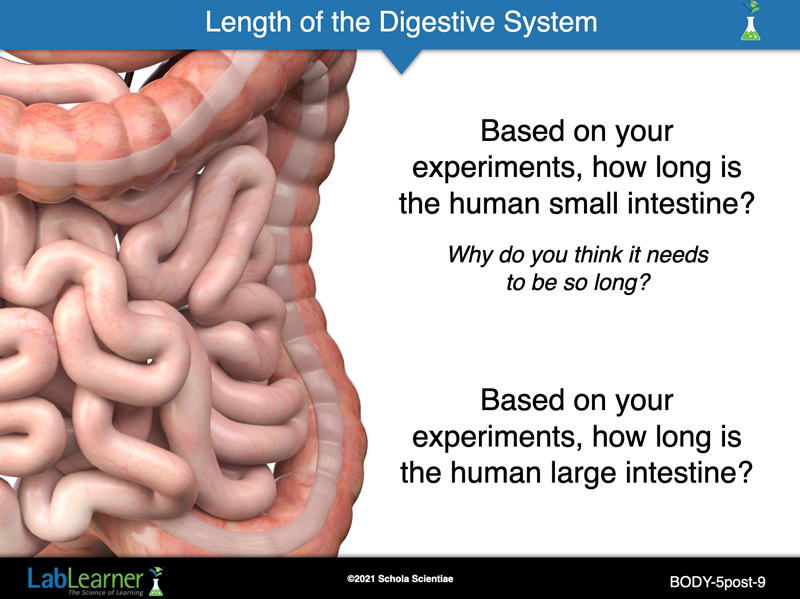
How did you measure the entire length of the digestive system? Students should indicate that they used a string, ruler, and meter stick to measure the length.
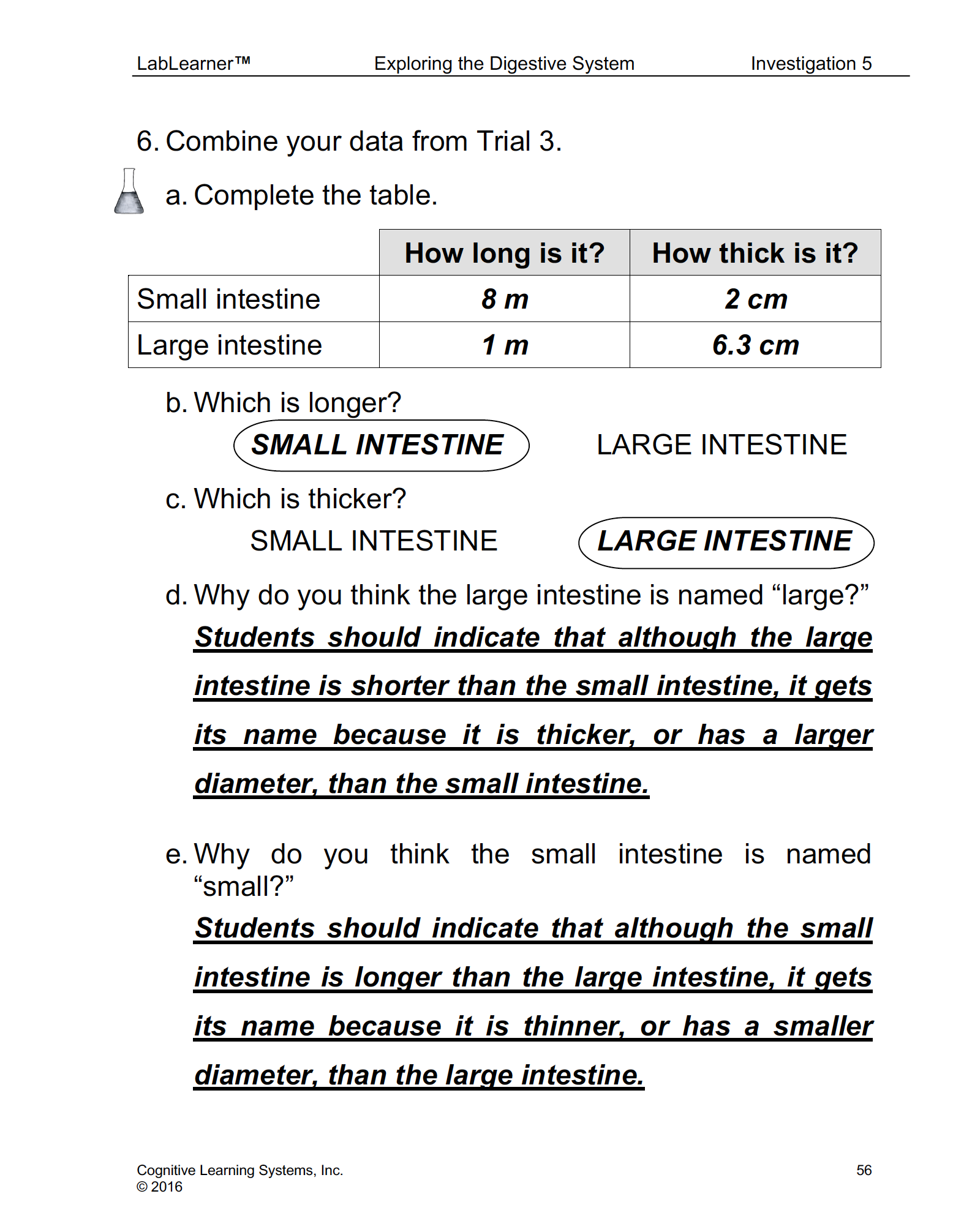
How long was it? Students should indicate that the digestive system was approximately 9 m 50 cm long.
How do you think the entire length of the digestive system can fit into the human body? Students should indicate that some of the parts of the digestive system are folded so that they can fit into a smaller space.
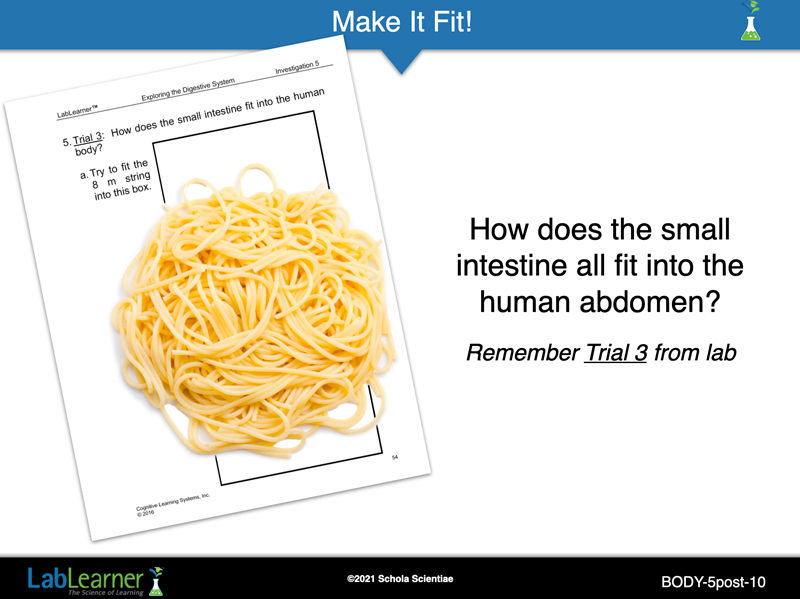
How was this modeled? Students modeled this by folding an 8 m piece of string and placing it inside of a rectangle. The string modeled the small intestine and the rectangle modeled the amount of space the small intestine takes up in the human body.
______________________________________________
SLIDE BODY-5post-10
From Trial 3:
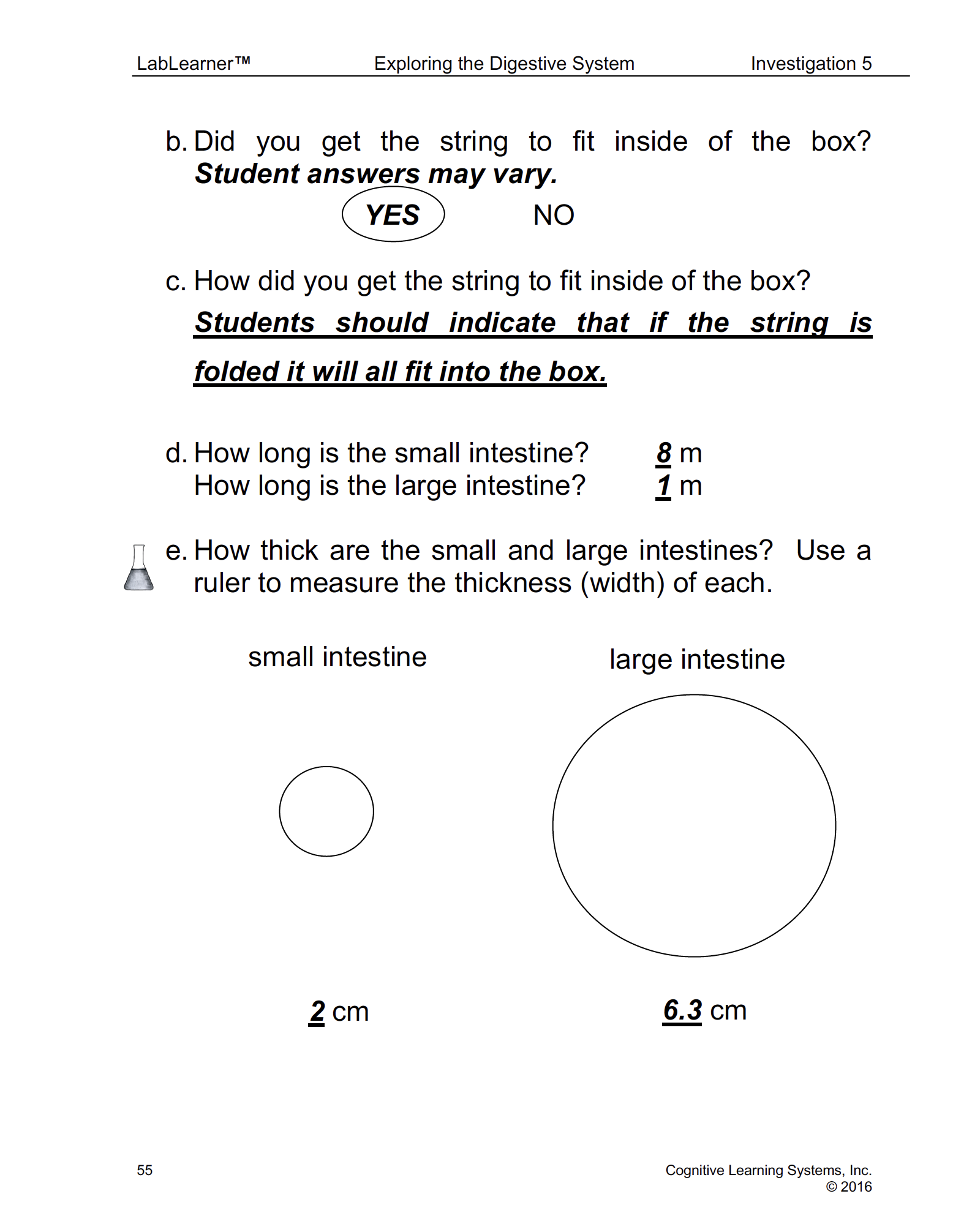
Did you get the string to fit inside of the box? How? Encourage students to record their answers in problems 5b and 5c of their SDRs. Students should indicate that they did get the sting to fit inside of the box by folding it.
______________________________________________
SLIDE BODY-5post-11
From Trial 3:
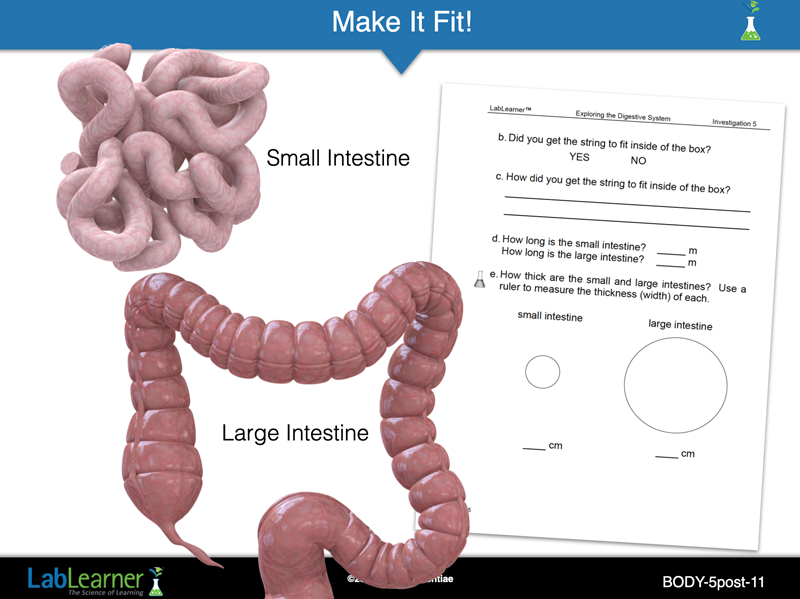
Did you get the string to fit inside of the box? How? Encourage students to record their answers in problems 5b and 5c of their SDRs. Students should indicate that they did get the sting to fit inside of the box by folding it.
Direct students to use the metric ruler to measure the thickness, or diameter, of each. Encourage students to record their answers in problem 5e of their SDRs.
______________________________________________
SLIDE BODY-5post-12
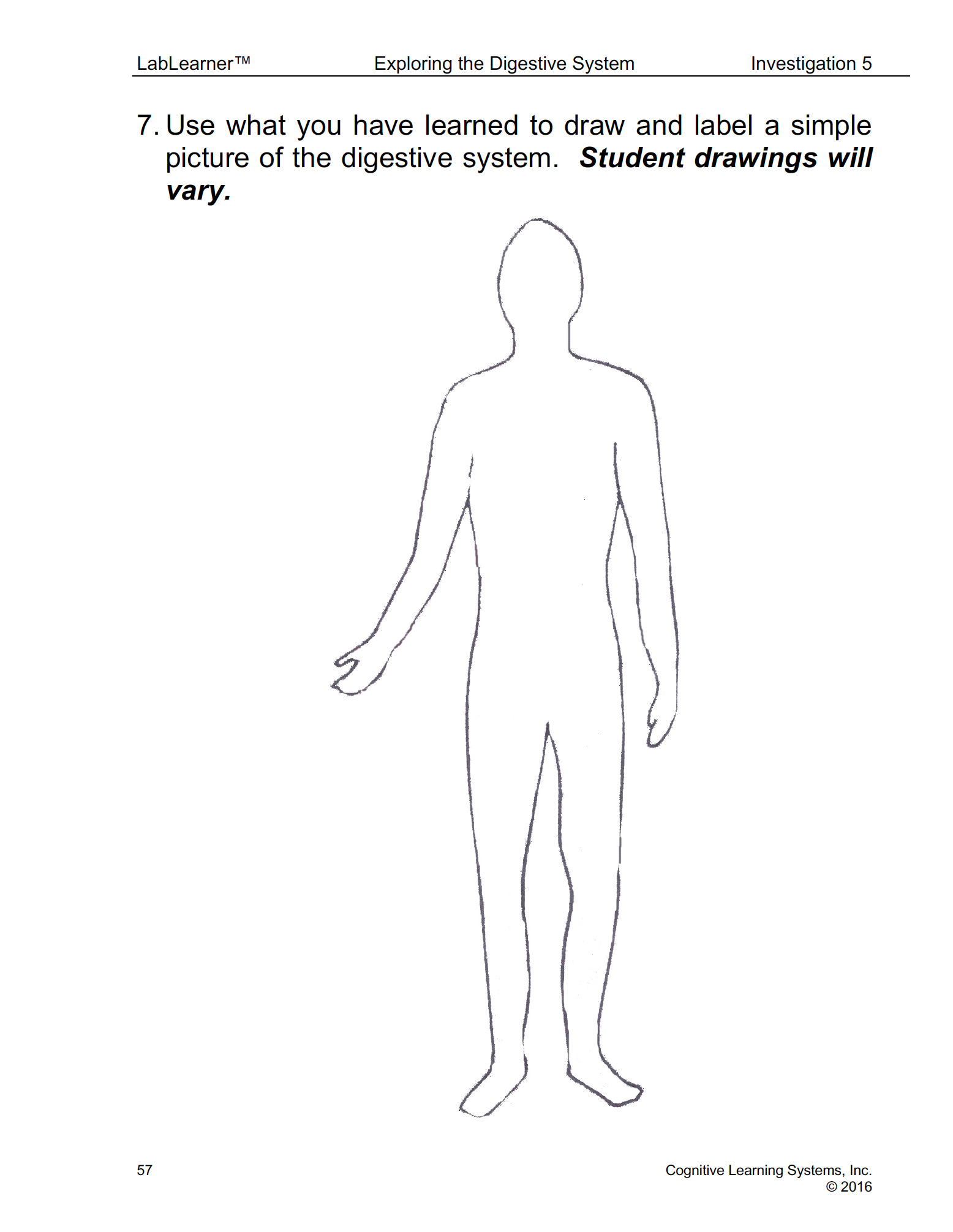
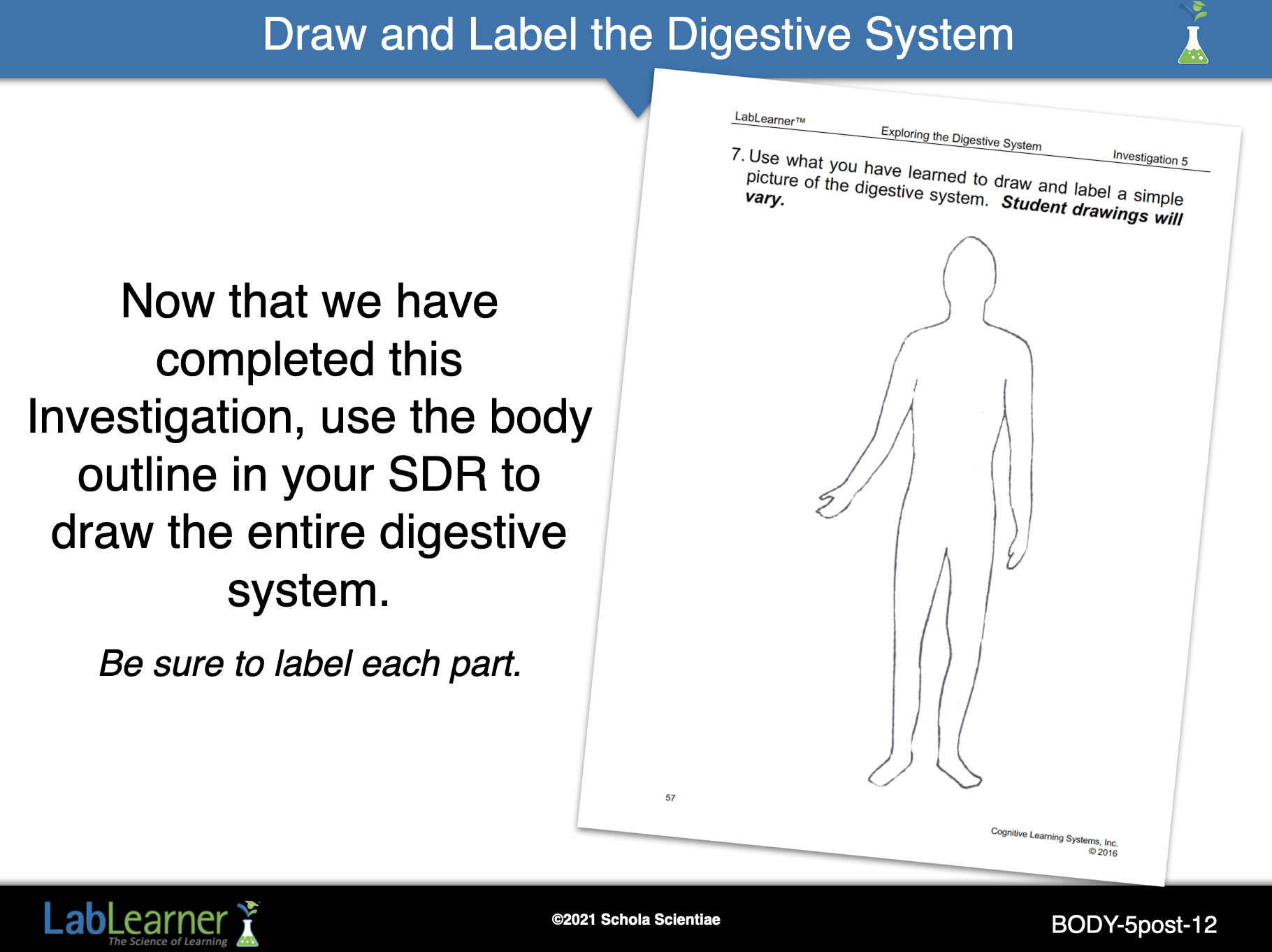
Use the body outline in the SDR to draw and label all of the parts of the digestive system.
______________________________________________
SLIDE BODY-5post-13
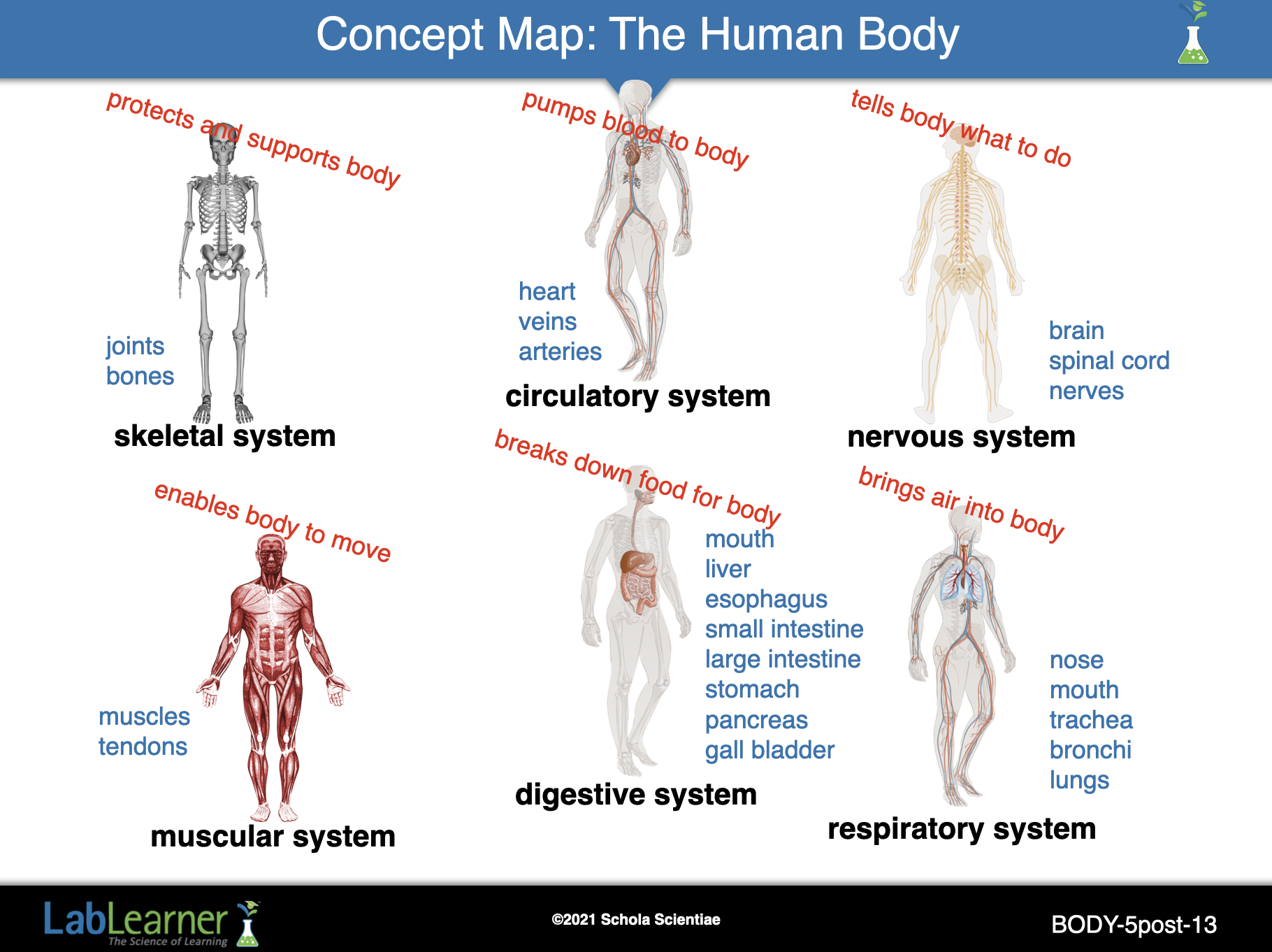
Remind students about the concept map they have been constructing during this entire CELL. Tell students that after learning something new, it is a good idea to reflect so that you can organize what you have learned. This means it is more likely that the information will be remembered in the future. Guide students in completing the concept map focused on the human body.
How many systems did you examine during this CELL? Students should indicate that the concept map shows that they examined six systems.
Which systems are made up of many parts? Students should indicate that the concept map shows that all systems, and the parts they are made up of, work together.
______________________________________________
KEYS