Teacher Portal:
Exploring Density
Investigation 4 – Lab
 BE PREPARED
Supplies and Equipment:
Class Materials:
- 1 liter pitcher
- 1 triple beam balance 1000 ml water
- 550 g of clay
Group Materials:
- 1 metal cube
- 1 woodblock
- 1 piece of black obsidian pitchstone 1 metric ruler
- 1 triple beam balance
- 1 1000 ml graduated cylinder
- 1 liter pitcher
- 1 weigh dish
- 1000 ml water
- 1 calculator
- 4 paper towels
Demonstration Materials:
- 1 metal cube
- 1 metric ruler
- 1 1000 ml graduated cylinder
- 500 ml water
Individual Materials:
- 1 Student Data Record
Teacher Preparation:
1. Fill one liter pitcher with 1 liter of water.
2. Make 5 clay balls that each weighs 20 g. Use a triple beam balance to measure the mass of each ball.
3. Make 5 clay balls that each weighs 90 g. Use a triple beam balance to measure the mass of each ball.
4. Divide the class into five cooperative groups.
Instruction:
1. Direct each student group to obtain the following necessary materials from the distribution center: one (1) metal cube, one (1) woodblock, one (1) piece of obsidian pitchstone, one (1) metric ruler, one (1) triple beam balance, one (1) liter graduated cylinder, one (1) liter pitcher, one (1) weigh dish, one (1) calculator, one (1) 20 g clay ball, one (1) 90 g clay ball, and four (4) paper towels. Direct one student from each group to fill the liter pitcher with 1000 ml of water.
GET FOCUSED
Investigation Four gives students yet more practice performing density calculations.
INVESTIGATE
 Using a Mathematical Formula to Determine Volume
In this Investigation, students will use two methods to determine the density of five solid objects: metal cube, woodblock, pitchstone, and two clay balls.
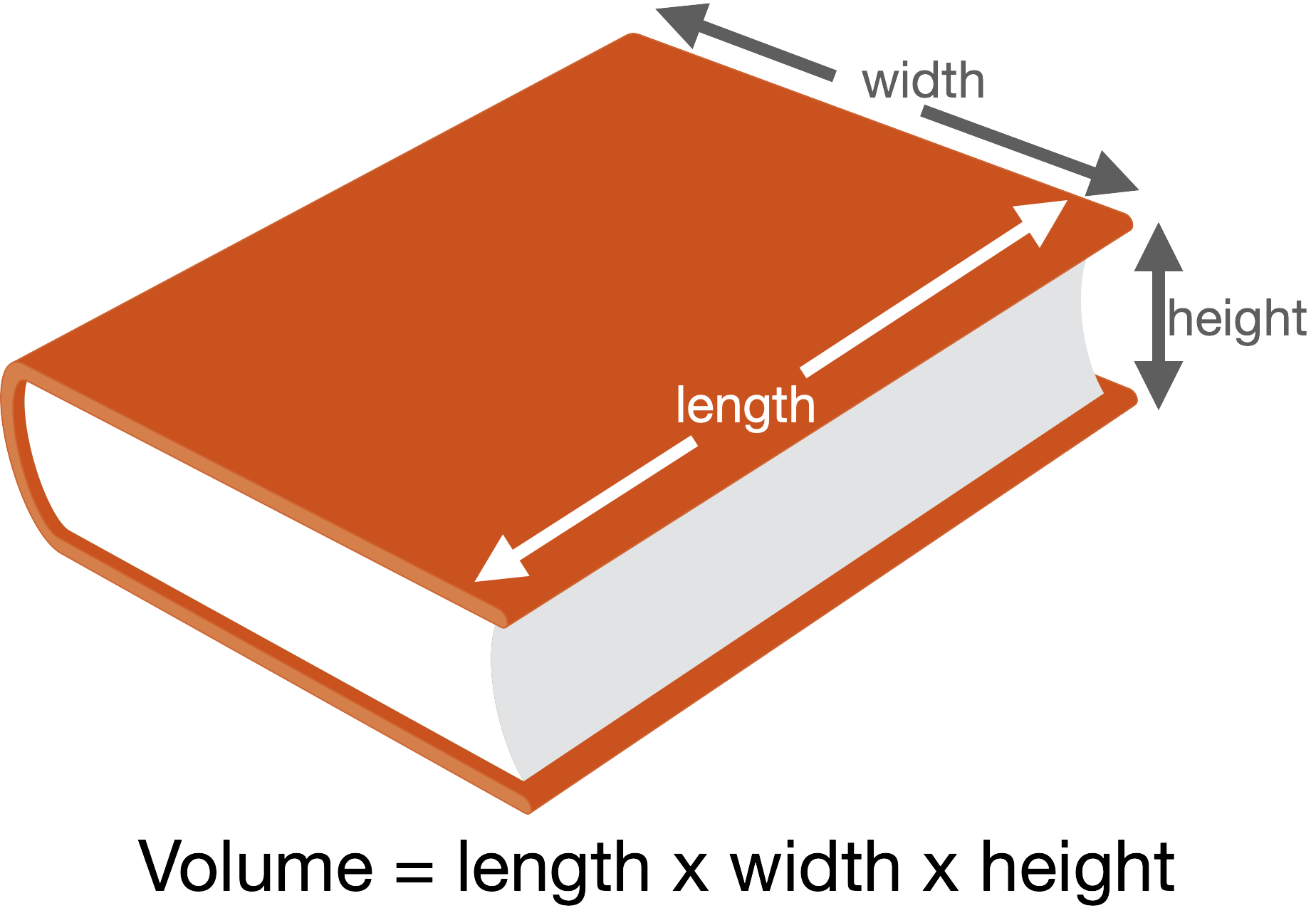
To calculate the volume of a solid object, students will first use the formula,
volume = length × width × height
or
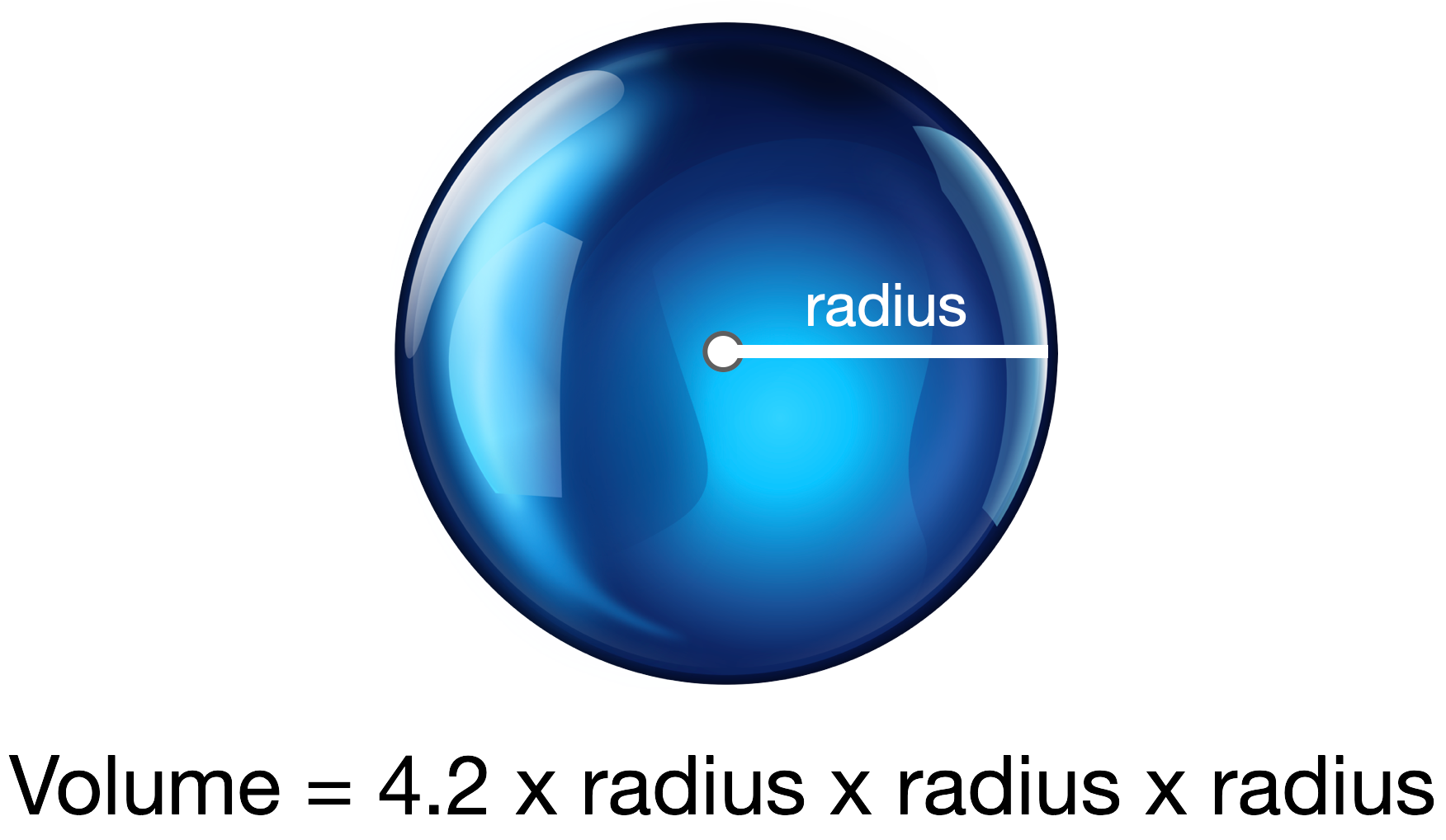 volume of sphere = 4.2 × radius × radius × radius
Next, students will determine the mass of the solid object using the triple beam balance.
Density will then be calculated by inserting the values for volume and mass into the equation,
density = mass ÷ volume
 Using Volume Displacement to Determine Volume
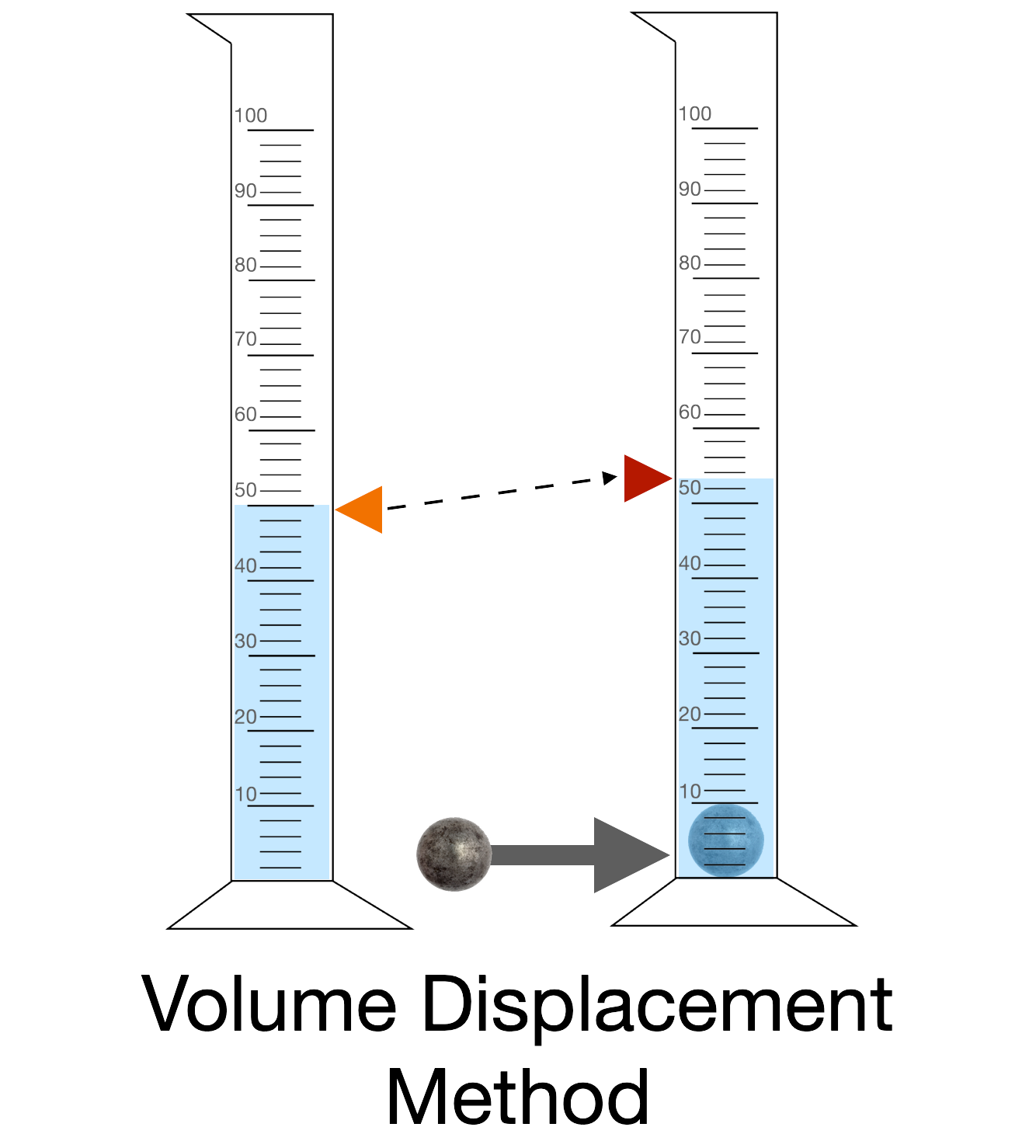
A second method that students will use to determine density is called the volume displacement method. In this method, students will drop an object of a known mass into a known volume of water and observe the change in the volume of the water.
Students will then determine density using the formula, density = mass ÷ volume. Through Trials 1 – 4, students will discern that the formula for calculating volume, the volume displacement method, or both methods will accurately calculate the density of solid objects. In Trial 4, students will determine the density of two clay balls each with a different volume. Students will discover that the density of a solid is constant. Students will perform these Trials to answer the following questions:
Can the density of all solid objects be measured using the formula for measuring volume?
Can the density of all solid objects be measured using the volume displacement method?
Does changing the size of a solid change the density of that solid?
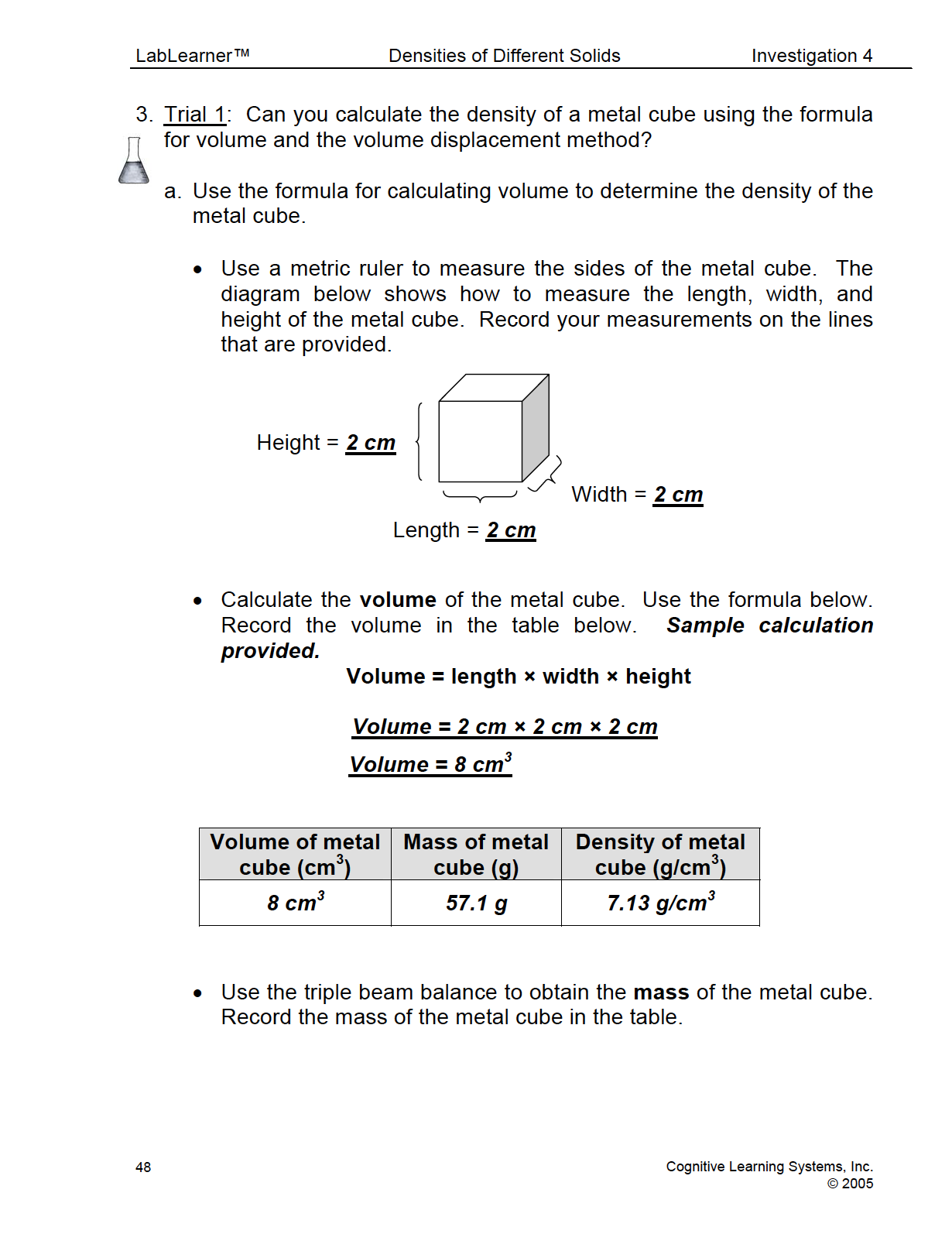
Trial 1
During this Trial, students will follow along with an instructor demonstration of how to use the formula for measuring volume and volume displacement method to calculate the density of a metal cube.
To use the formula for measuring volume, students will first measure the length, width, and height, in centimeters, of the metal cube and then multiply the three dimensions to obtain the volume in cm3.
Students will then use the triple beam balance to measure the mass of the metal cube. The volume and mass will then be applied to the formula,
density = mass ÷ volume
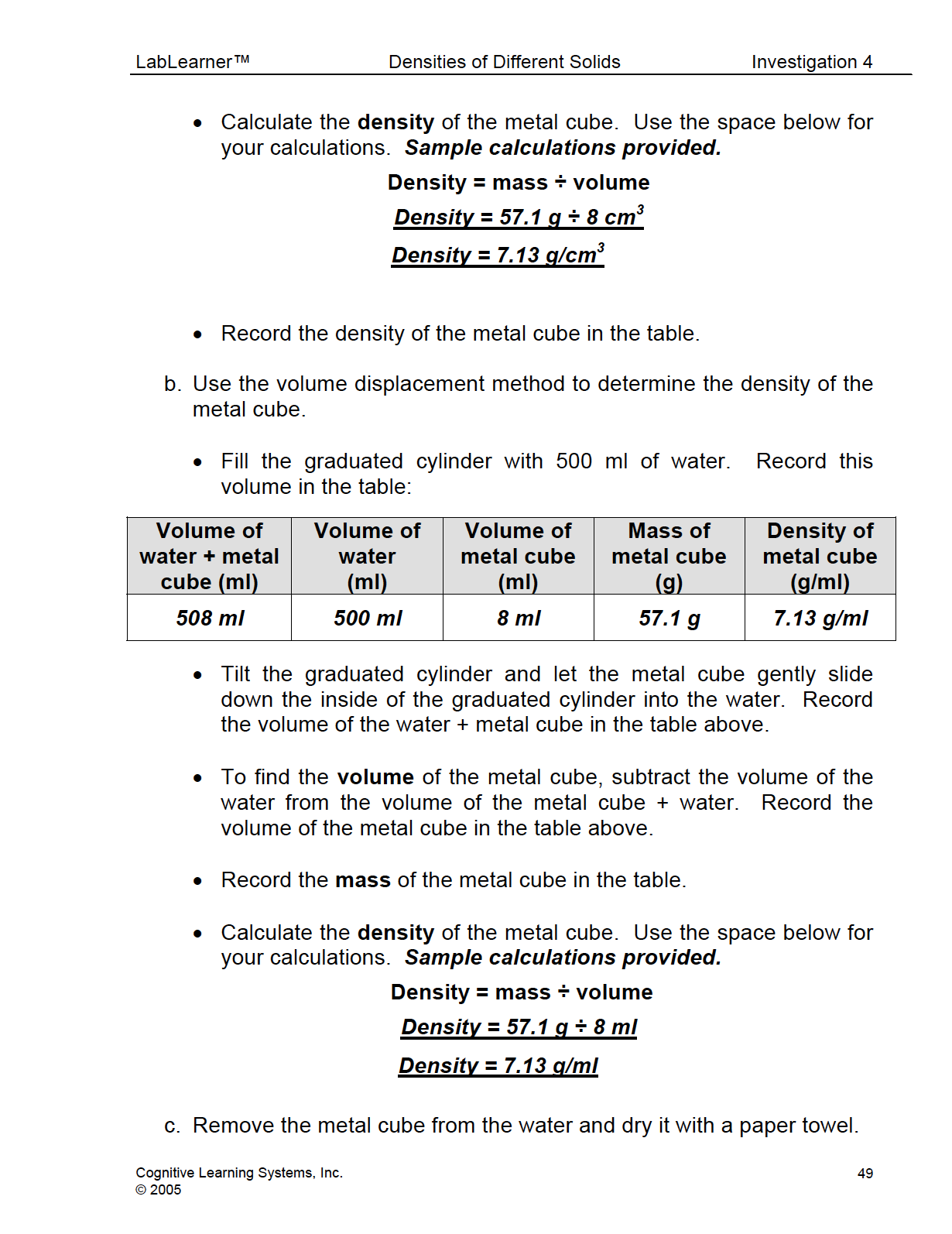
To use the volume displacement method, students will slide the metal cube into a graduated cylinder containing 500 ml of water. The volume of the metal cube is equal to the change in the level of the water in the graduated cylinder.
Students will use this information to calculate the density using the formula, density = mass ÷ volume. Students should discover that the volumes determined from the formula for volume and the volume displacement method are equal. As students perform this Trial they should consider the following questions:
Can the density of the metal cube be measured using the formula for measuring volume?
Can the density of the metal cube be measured using the volume displacement method?
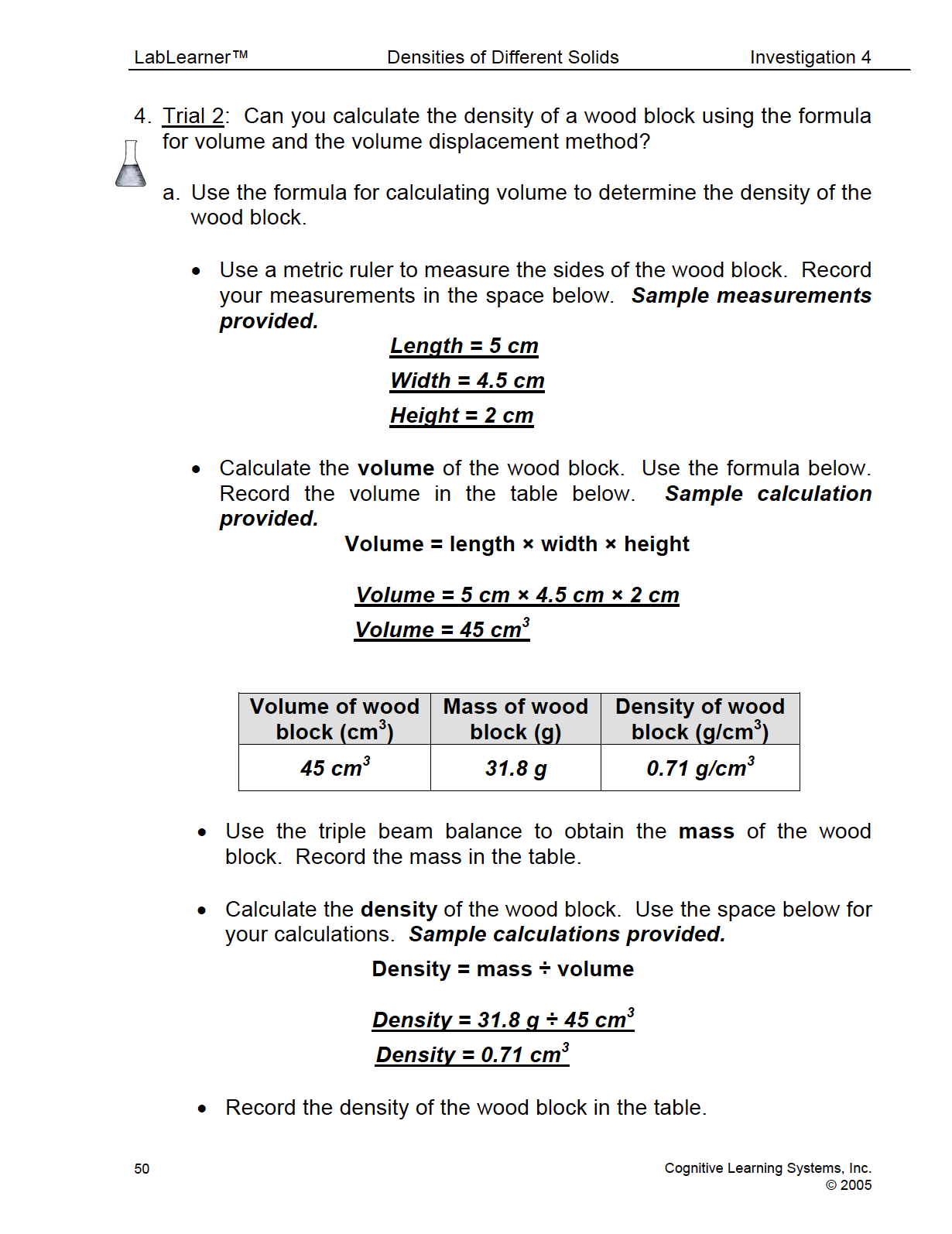
Trial 2
During this Trial, students will calculate the density of a woodblock. Students will first use the formula for measuring volume, by measuring the length, width, and height, in centimeters, of the woodblock and then multiply the three dimensions to obtain the volume in cm3.
Students will then use the triple beam balance to measure the mass of the woodblock. The volume and mass will be applied to the formula, density = mass ÷ volume.
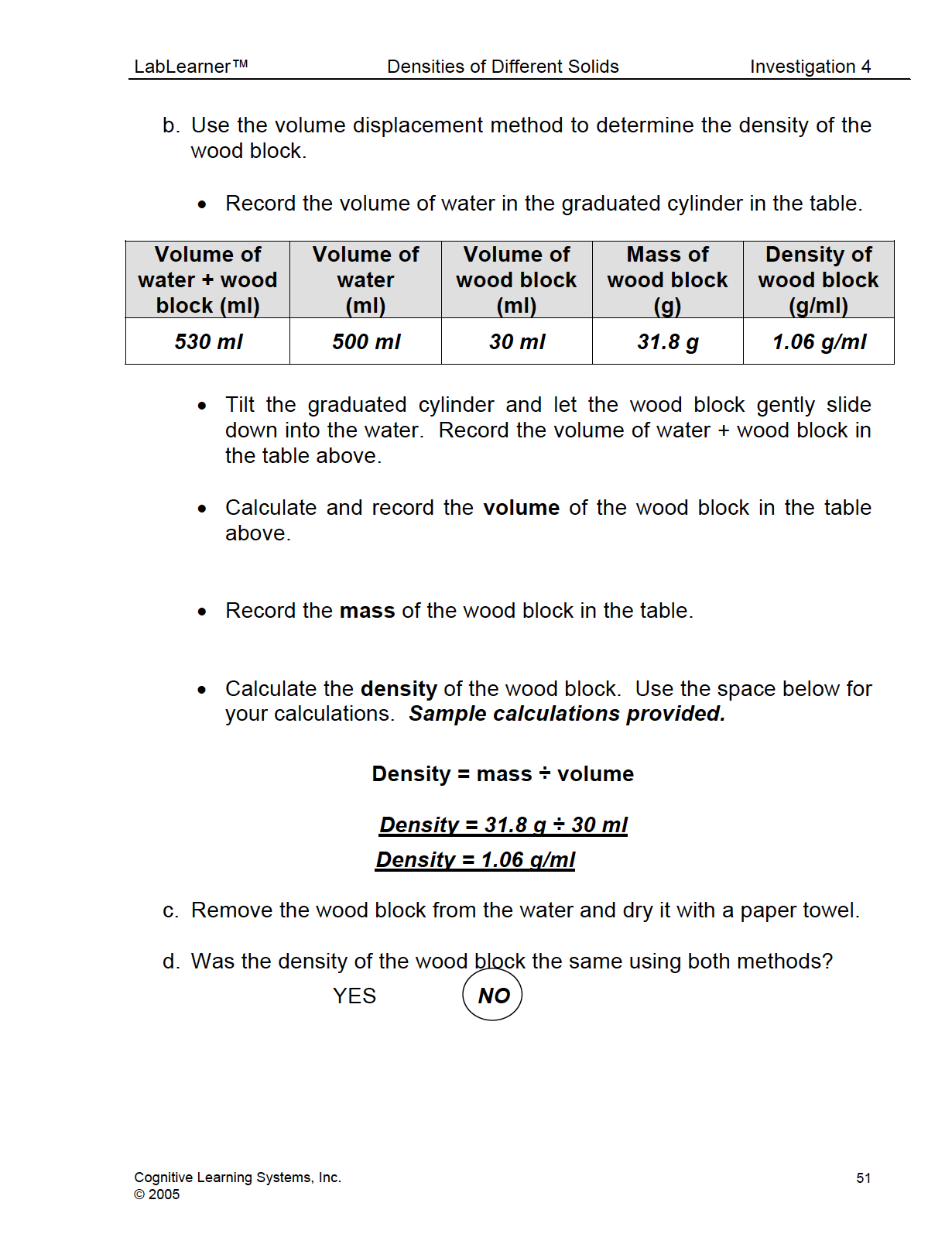
Second, students will try to calculate the density of the woodblock using the volume displacement method. Students will slide the woodblock into a graduated cylinder containing 500 ml of water and will observe that the woodblock floats. Students will discover that the densities calculated for the woodblock using both methods are not the same.
The information from this Trial should help students to discern that if a solid object floats, its density cannot be accurately determined using the volume displacement method. As students perform this Trial they should consider the following questions:
Can the density of the woodblock be measured using the formula for measuring volume?
Can the density of the woodblock be measured using the volume displacement method?
Trial 3
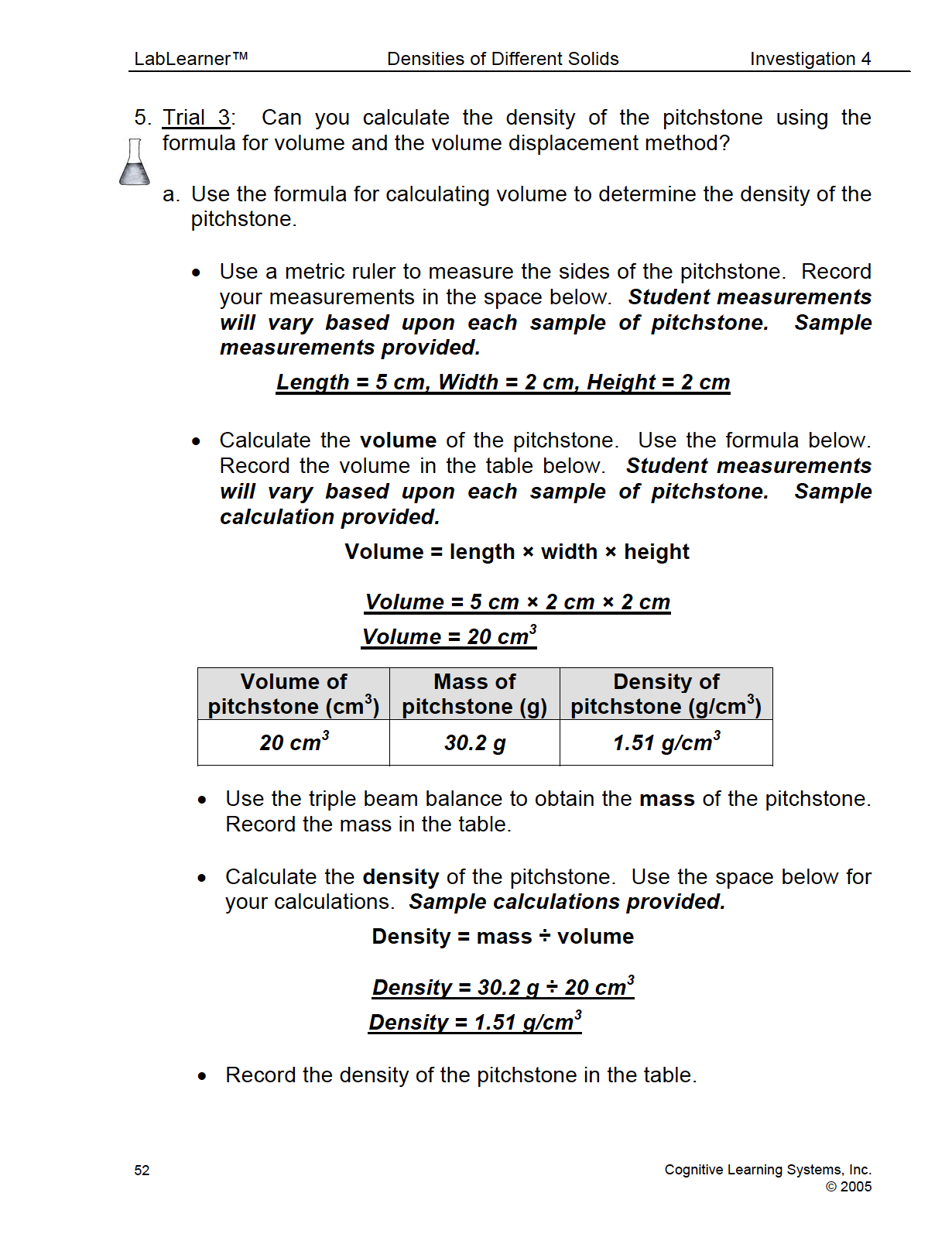
In this Trial, students will calculate the density of a piece of black obsidian pitchstone. Students will first use the formula for measuring volume, by measuring the length, width, and height, in centimeters, of the black obsidian pitchstone and then multiply the three dimensions to obtain the volume in cm3.
Students will then use the triple beam balance to measure the mass of the obsidian pitchstone. The volume and mass will be applied to the formula, density = mass ÷ volume.
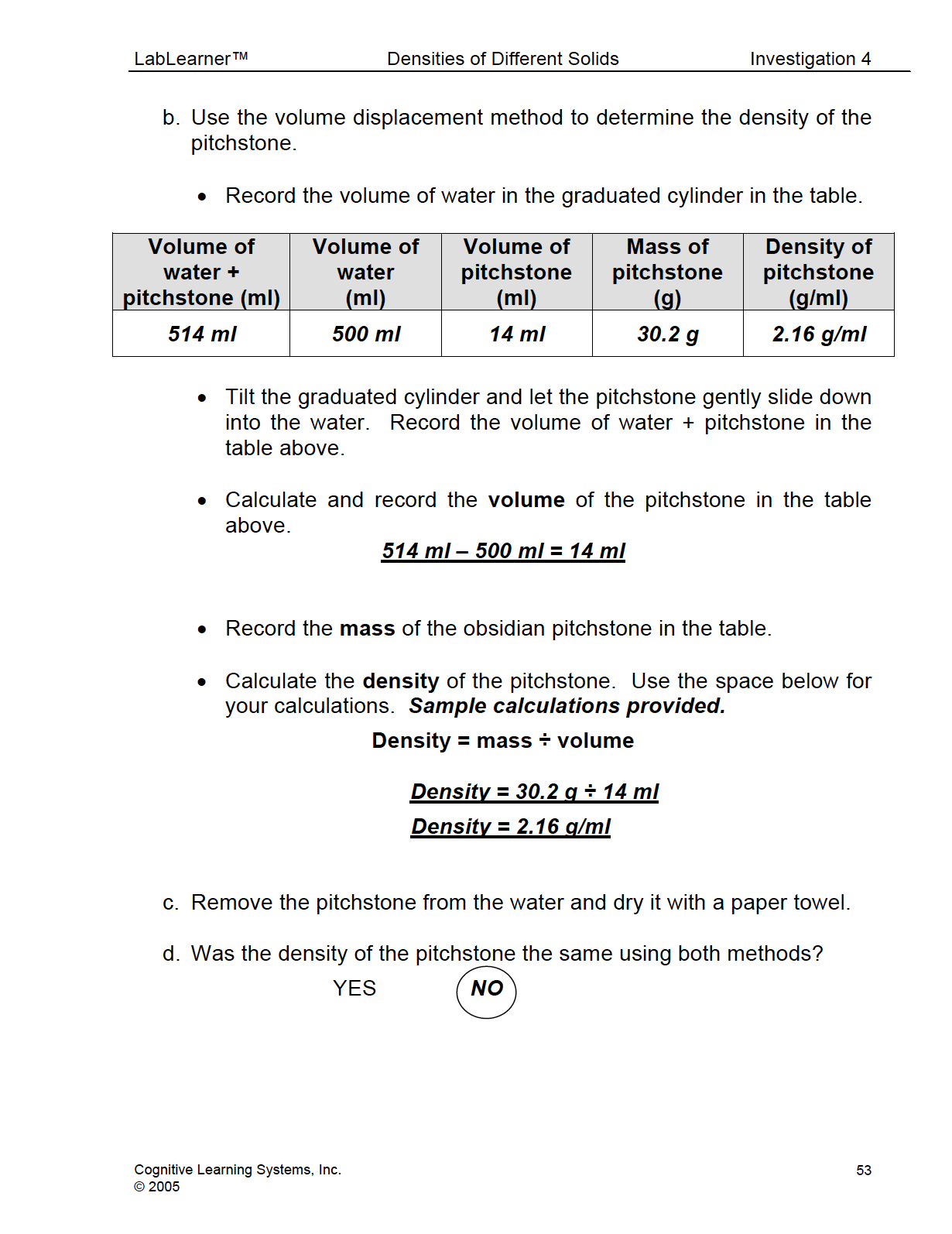
Second, students will calculate the density of the black obsidian pitchstone using the volume displacement method. Students will slide the obsidian pitchstone into a graduated cylinder containing 500 ml of water. The volume of the black obsidian pitchstone is equal to the change in the level of the water in the graduated cylinder. Students will use this information to calculate the density using the formula, density = mass ÷ volume.
Students will discover that the densities calculated for the black obsidian pitchstone using both methods are not the same. The information from this Trial should help students to discern that if a solid object has an irregular shape, its density cannot be determined using the formula for measuring volume. As students perform this Trial they should consider the following questions:
Can the density of the pitchstone be measured using the formula for measuring volume?
Can the density of the pitchstone be measured using the volume displacement method?
Note: In this trial, students will be using pieces of black obsidian pitchstone. This is a type of black, opaque volcanic glass. It will be referred to as “pitchstone” on the Student Data Record.
Trial 4
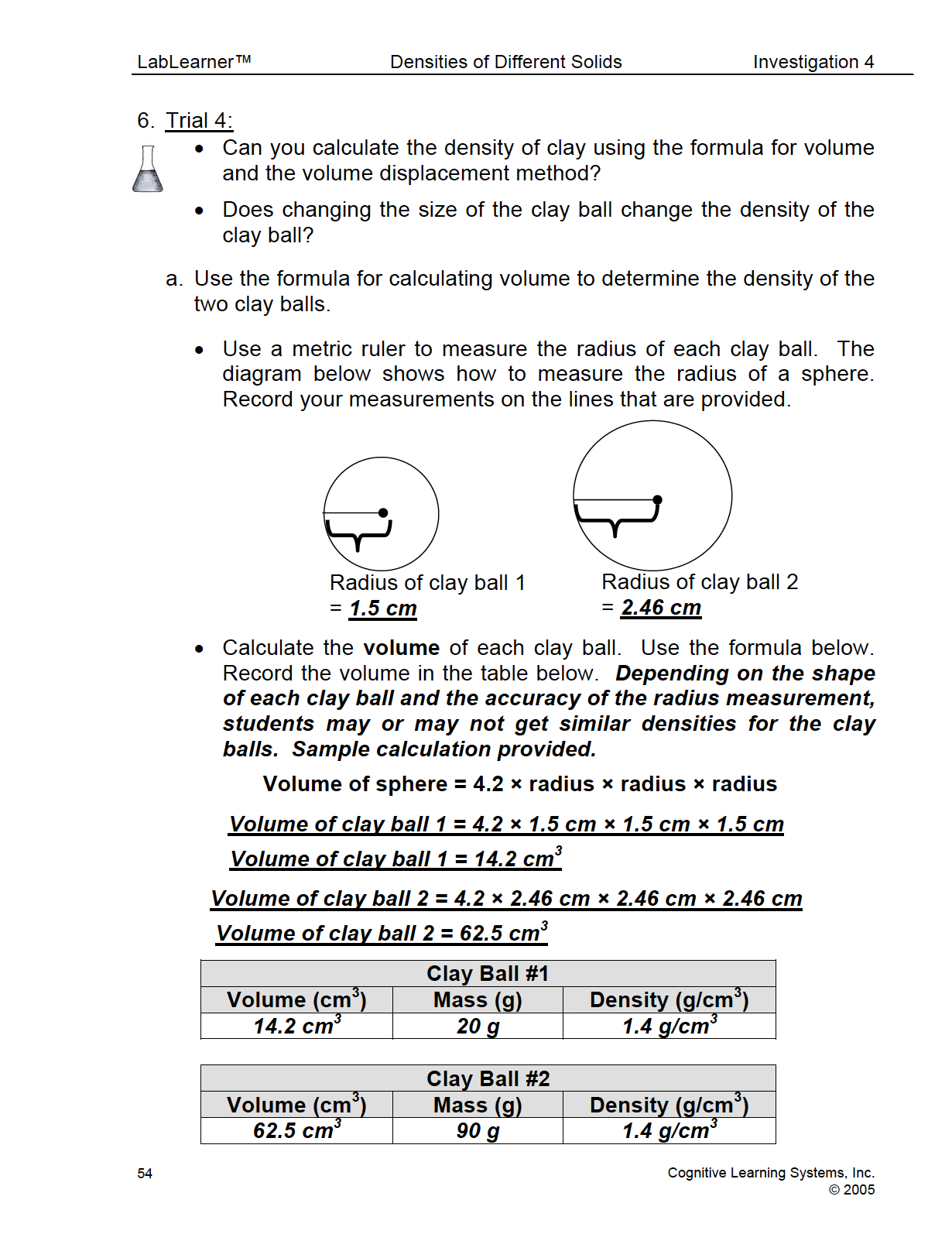
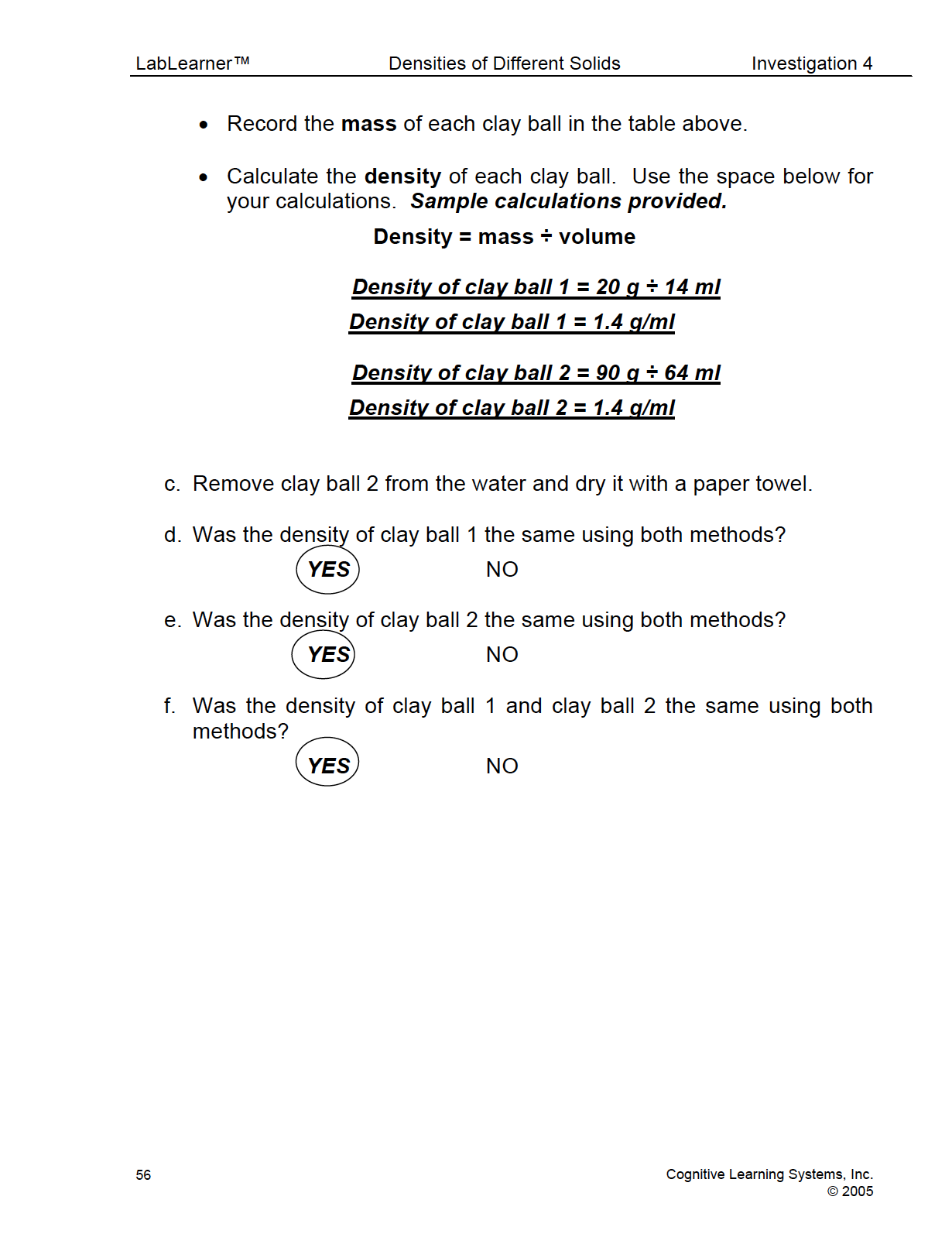
In this Trial, students will use the formula for measuring volume and volume displacement method to calculate the density of two clay balls. To use the formula for measuring volume, students will first measure the radius of each sphere and apply it to the following equation to determine the volume of a sphere: volume of sphere = 4.2 × radius × radius × radius.
Students will then use the triple beam balance to measure the mass of each of the clay balls. The volume and mass will be applied to the formula, density = mass ÷ volume.
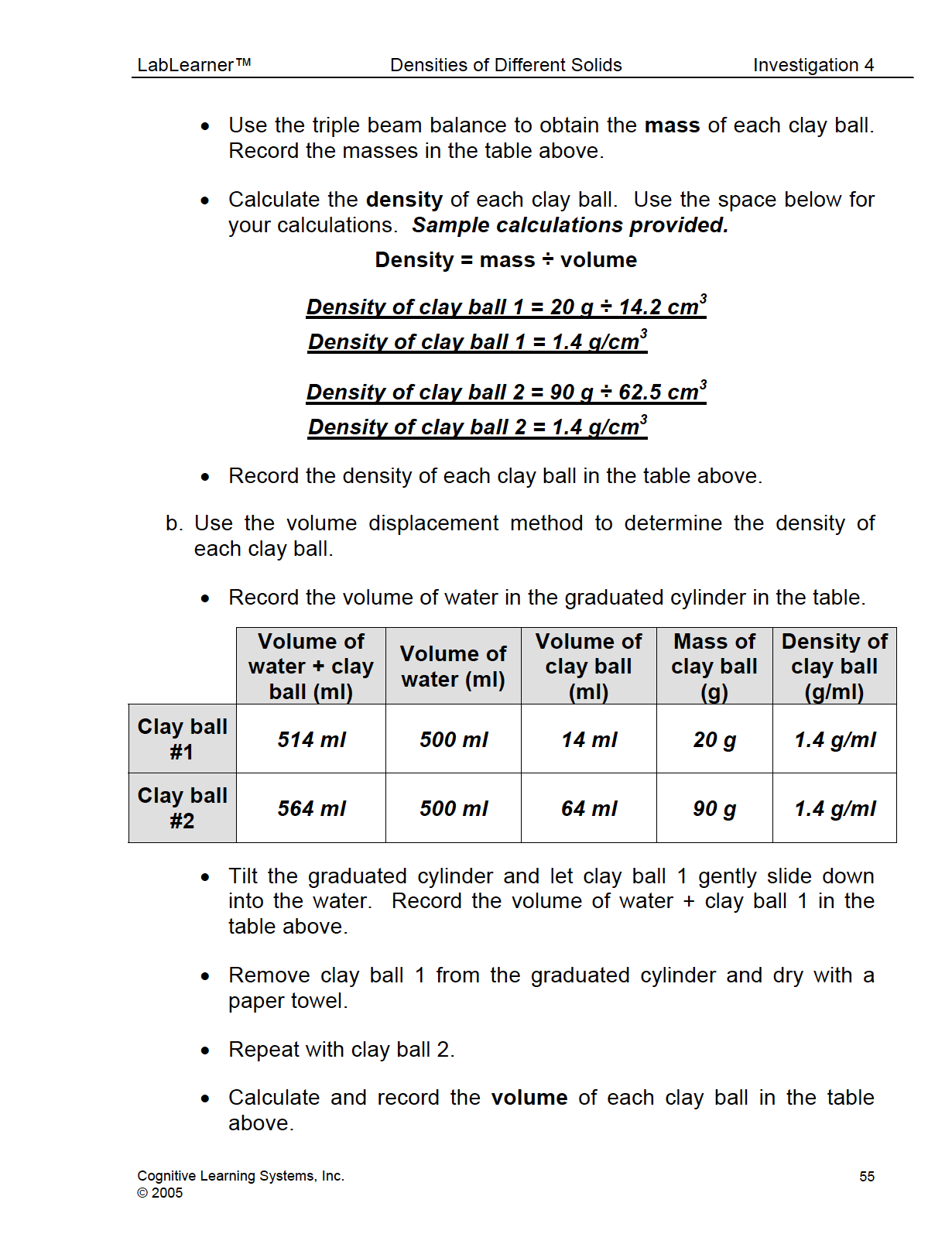
To use the volume displacement method, students will slide the first clay ball into a graduated cylinder containing 500 ml of water. The volume of the first clay ball is equal to the change in the level of the water in the graduated cylinder.
Students will remove the first clay ball from the graduated cylinder and repeat the steps using the second clay ball. Students will use this information to calculate the density using the formula, density = mass ÷ volume.
Through this Trial, students should discern that although the size of a solid is changed, its density does not change. As students perform this Trial they should consider the following questions:
Can the density of the clay balls be measured using the formula for measuring volume?
Can the density of the clay balls be measured using the volume displacement method?
Does changing the size of the clay ball change the density of the clay ball?
CLEAN UP
Let students know your expectations for clean-up. Ask them to clean up.
KEYS