
Teacher Portal:
Investigating Heat
Investigation 5 – Lab
 BE PREPARED
| Class materials: |
|
| Group materials: |
|
| Individual Materials: |
|
Teacher Preparation
1. Fill five (5) liter pitchers with hot tap water adjusted to between 40 and 46 oC. Place one pitcher on each lab table.
2. Place one triple beam balance on each lab table.
3. Place remaining supplies at a central distribution point.
4. Divide students into five cooperative groups.
Instruction
Direct each student group to obtain the following necessary materials from the distribution point: one (1) 100 ml graduated cylinder, four (4) empty 400 ml beakers, one (1) empty 100 ml beaker, five (5) thermometers, and two (2) stopwatches.
GET FOCUSED
- As students perform their lab experiments, they should keep the following questions in mind:
How does the mass of a liquid affect its rate of heat transfer?
How does the surface area of a liquid affect its rate of heat
transfer to air?
INVESTIGATE
The average rate of heat transfer in liquids is affected by many factors. In Trials 1 and 2, students will explore the effect of mass and the surface area in contact with air on the rate of heat transfer in water. Because both variables can have an effect at the same time, students will test each variable separately while holding the other variable constant to eliminate any additive or conflicting effects.
Trial 1
As the mass of a liquid increase, the rate at which it transfers heat to its surroundings decreases. This is a result of an increase in the distance which molecules must travel from the center of the sample to the outer edges where heat transfer to other substances occurs. Thus, if all other factors are similar between two samples of liquid, the sample with the larger mass will retain its starting temperature longer than the sample with the smaller mass. In general terms, this means that if hot, the larger sample will take longer to cool, and if cold, it will take longer to heat than the sample with the smaller mass. In this Trial, students will explore how the mass of water affects the rate at which heat is transferred from the water to the air.
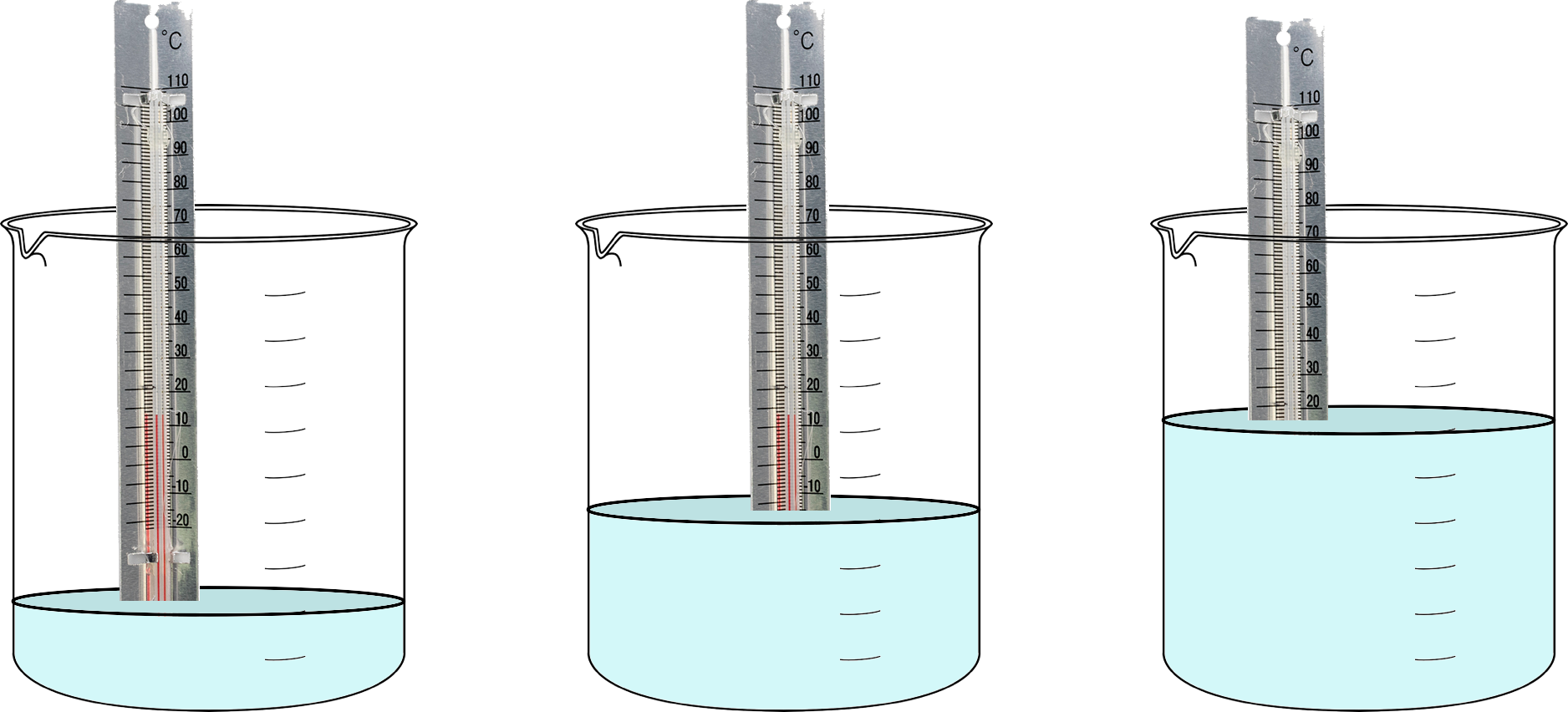
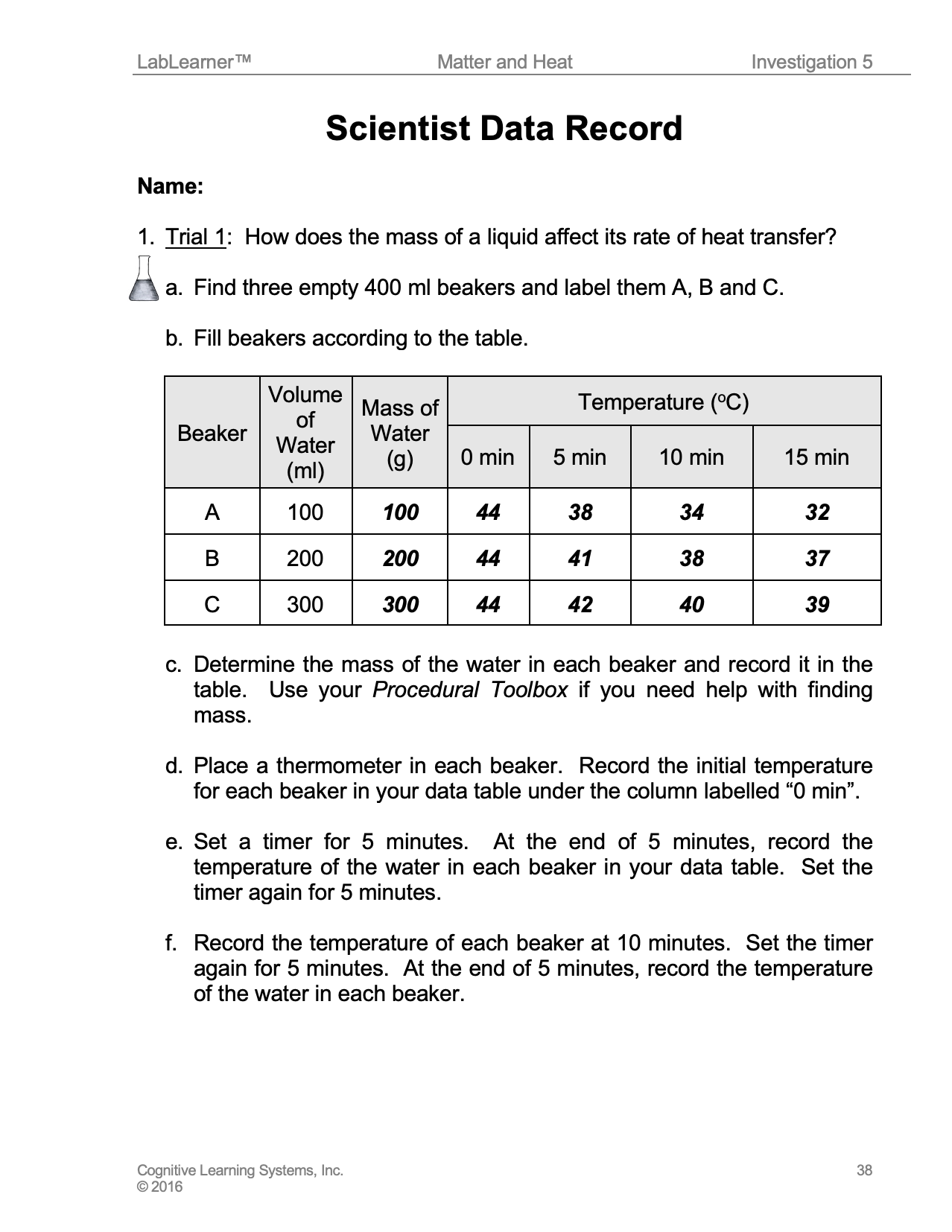
Students will be asked to determine the mass of three volumes of hot water. All samples will be placed into identical beakers so that the surface area of the water which is in contact with air is held constant. Students will measure the temperature of the water in each beaker prior to starting a timer. Students will again measure the temperature of the water at various time points over a fifteen-minute time period and calculate the rate of heat transfer for each sample. Students will discover that when the type of matter, container size (surface area in contact with air), and the initial water temperature are held constant, the average rate of heat transfer is dependent upon the mass of the matter being studied. This Trial answers the question:
How does the mass of a liquid affect its rate of heat transfer?
Trial 2
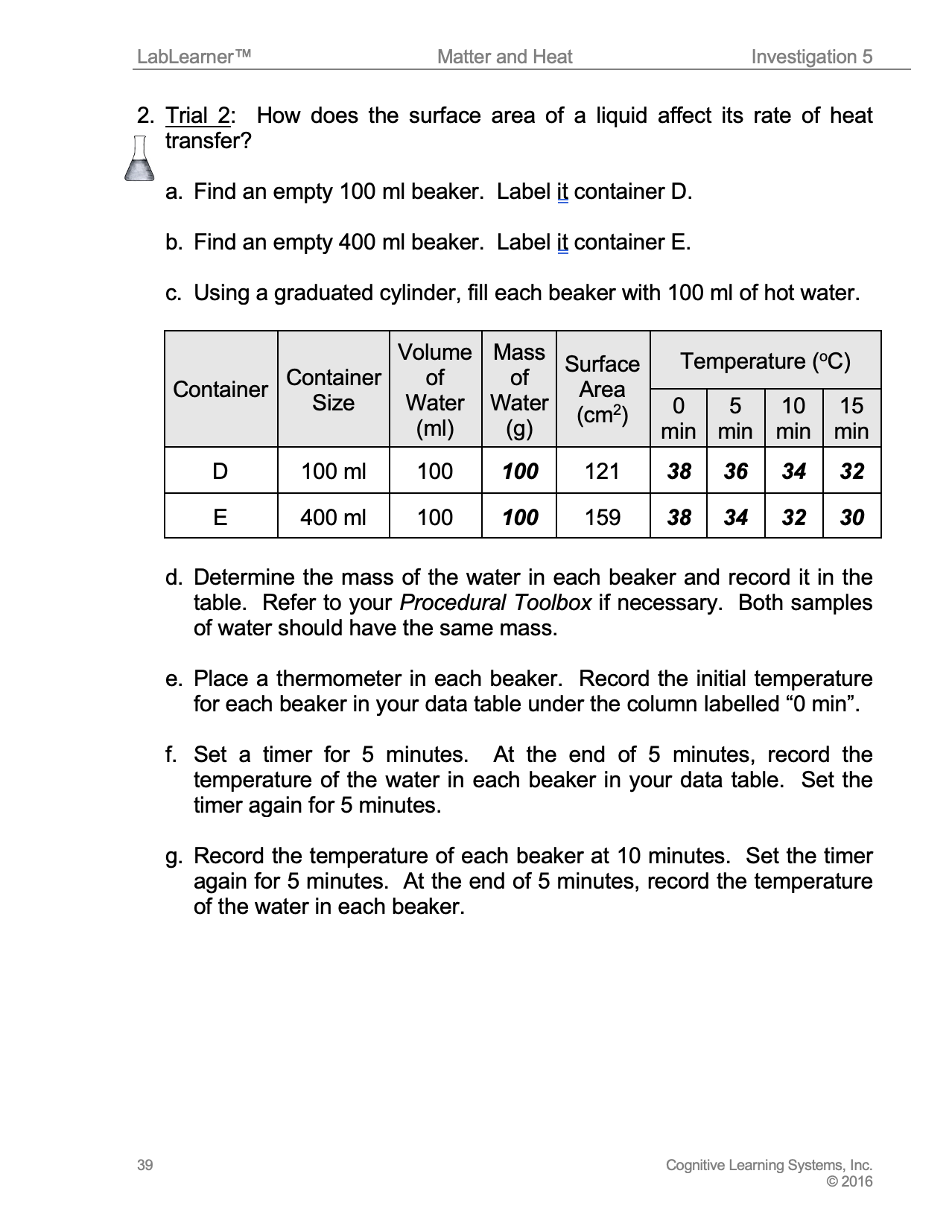
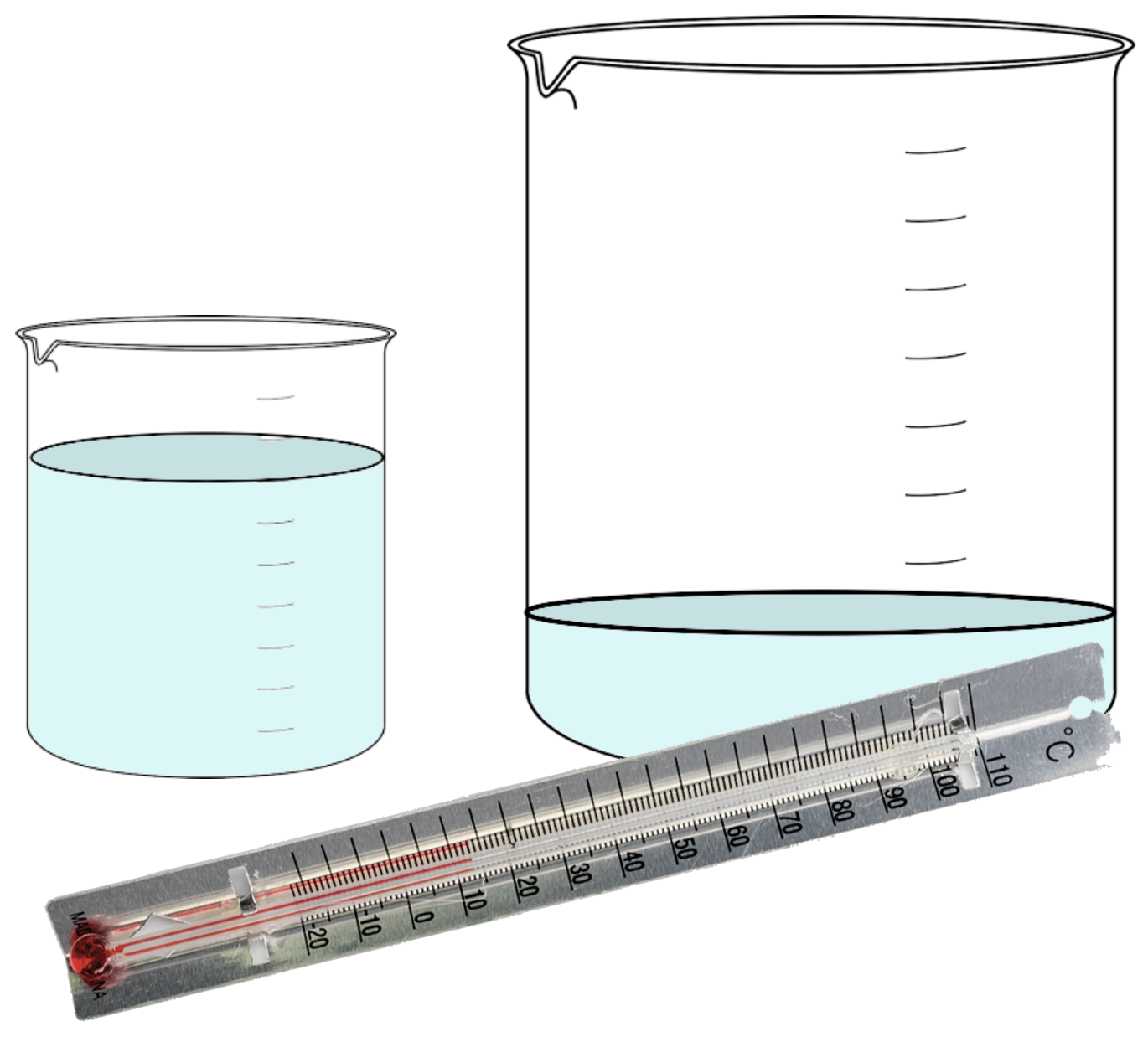 The rate of heat transfer of a liquid is also affected by the amount of surface area in contact with other substances. In this Trial, students will investigate the effect of varying the surface area of water in contact with air by varying the size of the container.
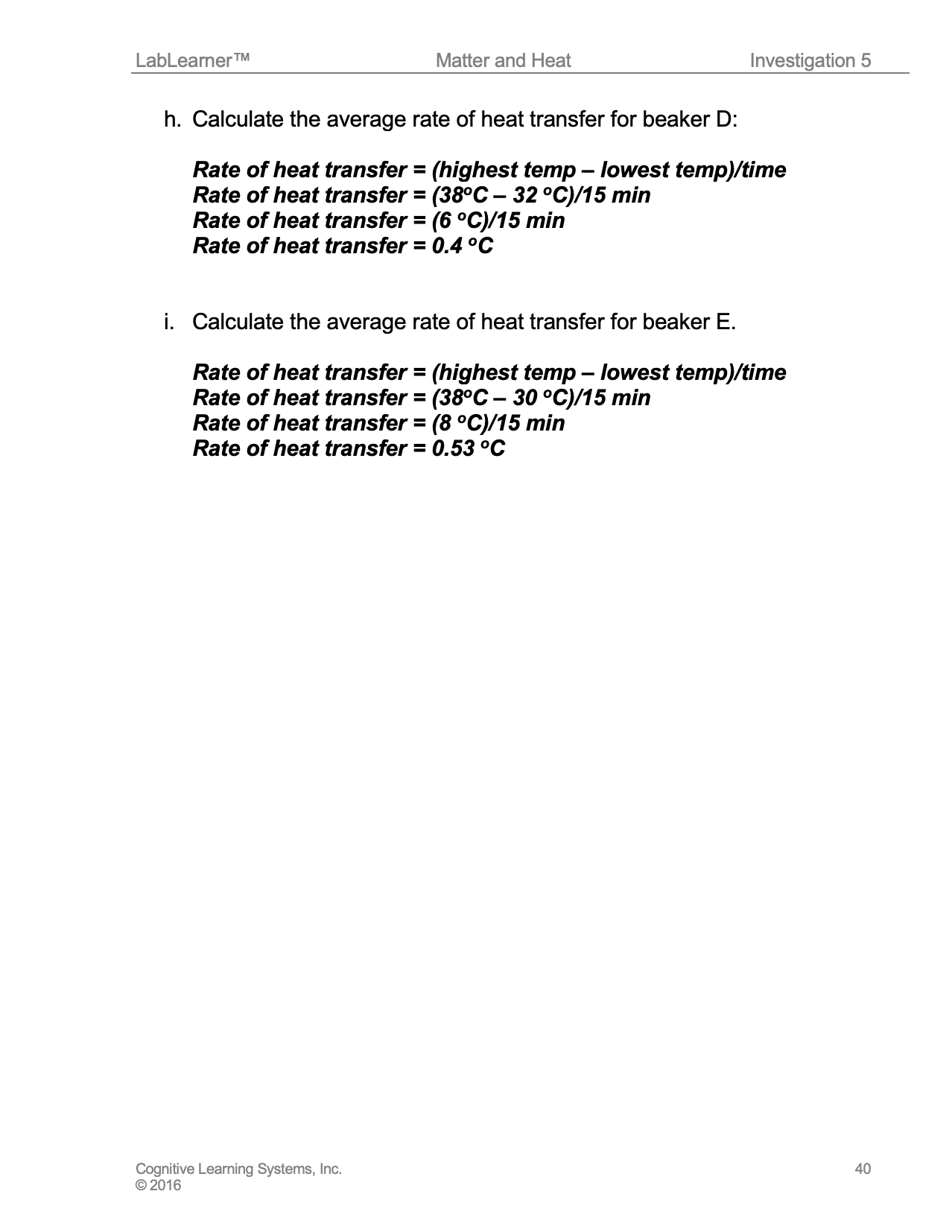
Because the mass of the water also affects the rate of heat transfer, students will examine the rate of heat transfer of two equal masses of water when placed in two containers with very different surface areas: a 100 ml beaker and a 400 ml beaker. Students will measure an initial temperature before starting a timer, then take additional temperature measurements at various times over a fifteen-minute period. Students will use this data to calculate the rate of heat transfer for each sample.
Students will discover that when two samples of water with the same mass and initial temperature have different surface areas, the rate of heat transfer increases as the surface area of the water in contact with air increases. Thus, they will find that heat is transferred more quickly from the water in the 400 ml beaker because of its larger surface area. This trial answers the question:
How does the surface area of a liquid affect its rate of heat transfer to air?
KEYS
CLEAN UP
Let students know your expectations for clean-up. Ask them to clean up.