Teacher Portal:
Investigating Heat
Investigation 4 – PostLab
 PRINT IT
Use your browser to download a printable PDF as help during the slide presentation and to make additional notes. In your browser, go to File > Print and then choose to save as PDF.
NAVIGATE IT
Once the slide presentation is launched
- use your left and right arrows to advance or go back in the slide presentation, and
- hover your mouse over the left edge of the presentation to get a view of the thumbnails for all the slides so that you can quickly move anywhere in the presentation.
- Click HERE to launch the slide presentation for the CELL.
SHARE IT

SLIDE VHEAT4-post-1
In this Investigation, students continued their study of heat. They focused on how the body controls its temperature. They also did an experiment to explore the Joules-Thompson effect.
______________________________________________
SLIDE VHEAT4-post-2
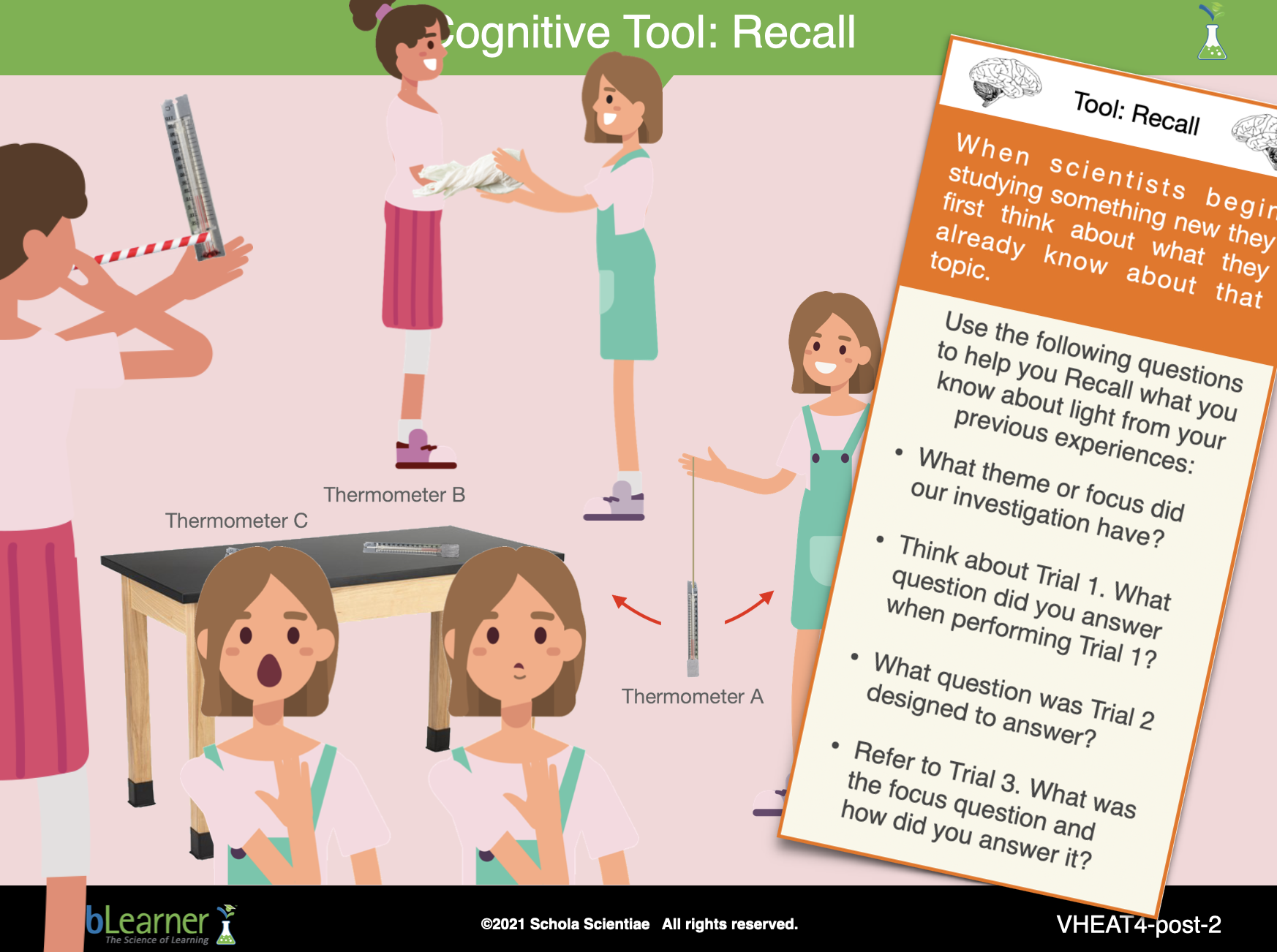
A. Begin this part of the investigation by reviewing the experiments students performed in the lab. Ask the following questions to promote discussion of the experiments.
1. Ask students: What theme or focus did our investigation have? Students investigated heat and the body.
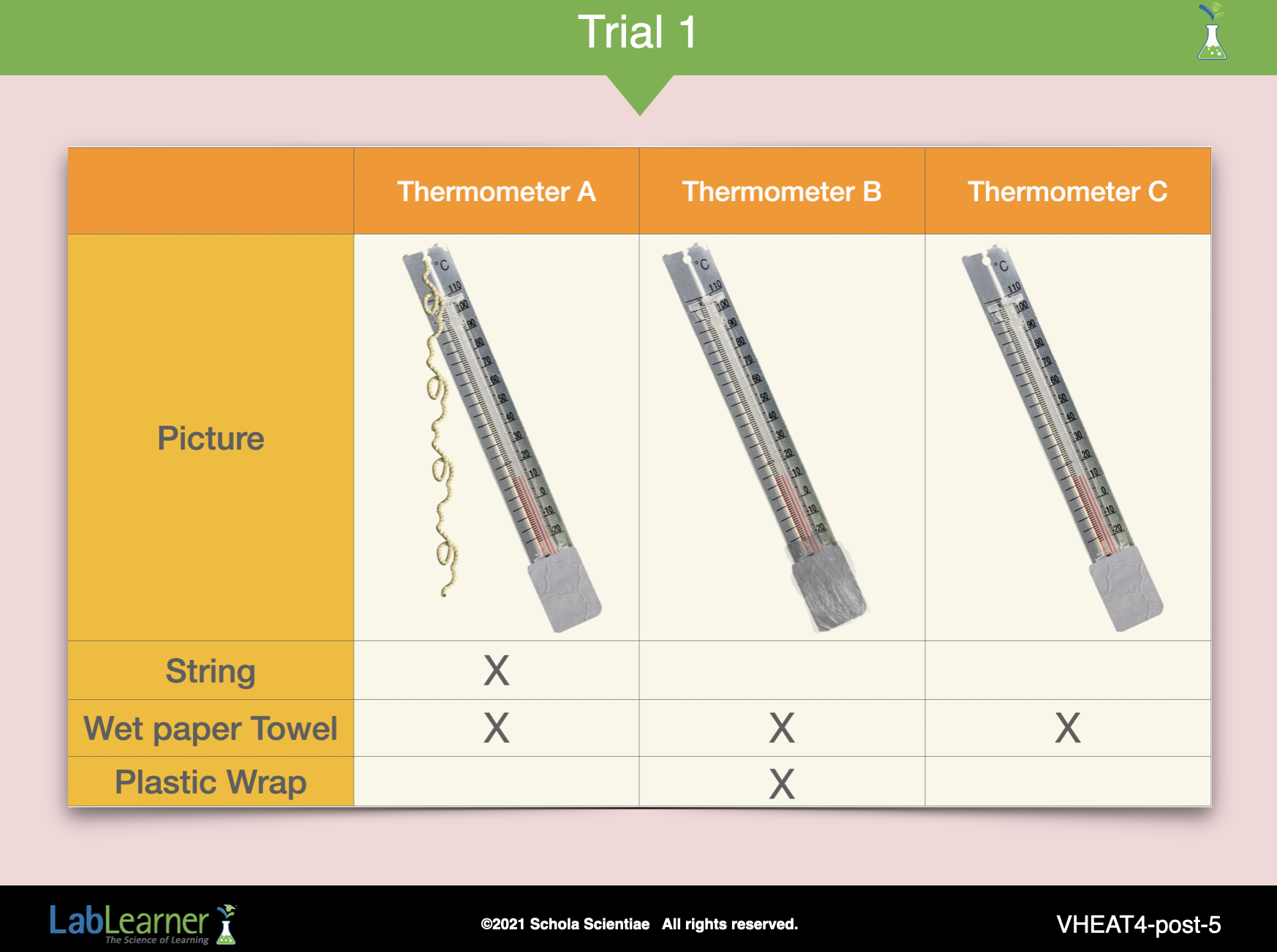
2. Ask students: Think about Trial 1. What question did you answer when performing Trial 1? How did you answer this question? Students investigated the question: How can you decrease the temperature of a wet paper towel? To answer this question, they investigated three wet paper towels, each wrapped around the bulb of a thermometer. Thermometer A was attached to a string and gently swung back and forth through the air. The paper towel wrapped around Thermometer B was covered with plastic wrap. Thermometer C was allowed to sit on the table without being disturbed. The initial temperatures on each paper towel were read and recorded. Five minutes passed, and the final temperature on each paper towel was recorded.
3. Ask students: What question was Trial 2 designed to answer? Trial 2 was designed to answer the question: How does exposing the body to air affect the temperature of the skin? To answer this, students placed a grocery bag over their hand for 10 minutes. After 10 minutes, students observed the feel and temperature of their hand.
4. Ask students: Refer to Trial 3. What was the focus question and how did you answer it? During Trial 3, students answered the question: How can you change the temperature of the air exhaled from your lungs? Students first changed the shape of their mouths and observed the subsequent change of the temperature of their breath on their hand. Students then blew through a straw onto the bulb of a thermometer. They recorded the temperature after blowing, then blew through the straw again, this time decreasing the space through which the air passed by gently pinching the end of the straw. After recording the temperature after the straw was pinched, students compared the two temperatures.
______________________________________________
SLIDE VHEAT4-post-3
B. Begin analysis of Trial 1 and 2 by instructing students to recall from the PreLab lesson the discussion of the body’s response to heat.
1. Ask students: What is one major response our body has to being overly warm? Student answers may vary, but encourage students to recall that perspiration is one of the body’s responses to being overheated.
2. Tell students that perspiration is one of the body’s ways of cooling itself. To answer how perspiration causes cooling, encourage students to analyze their results from Trials 1 and 2.
______________________________________________
SLIDE VHEAT4-post-4
C. Ask students to recall Trial 1.
1. During Trial 1, students created a model. Tell students to refer to Problem 1 in their Student Data Record:
Ask students: How was Trial 1 a model? What was modeled in the Trial? Trial 1 was a model of a person’s skin after he or she has perspired. Each wet paper towel was a model of skin.
2. Tell students that in order to understand this experiment more fully, they must think back to what they know about the properties of water. Ask students the following questions to review.
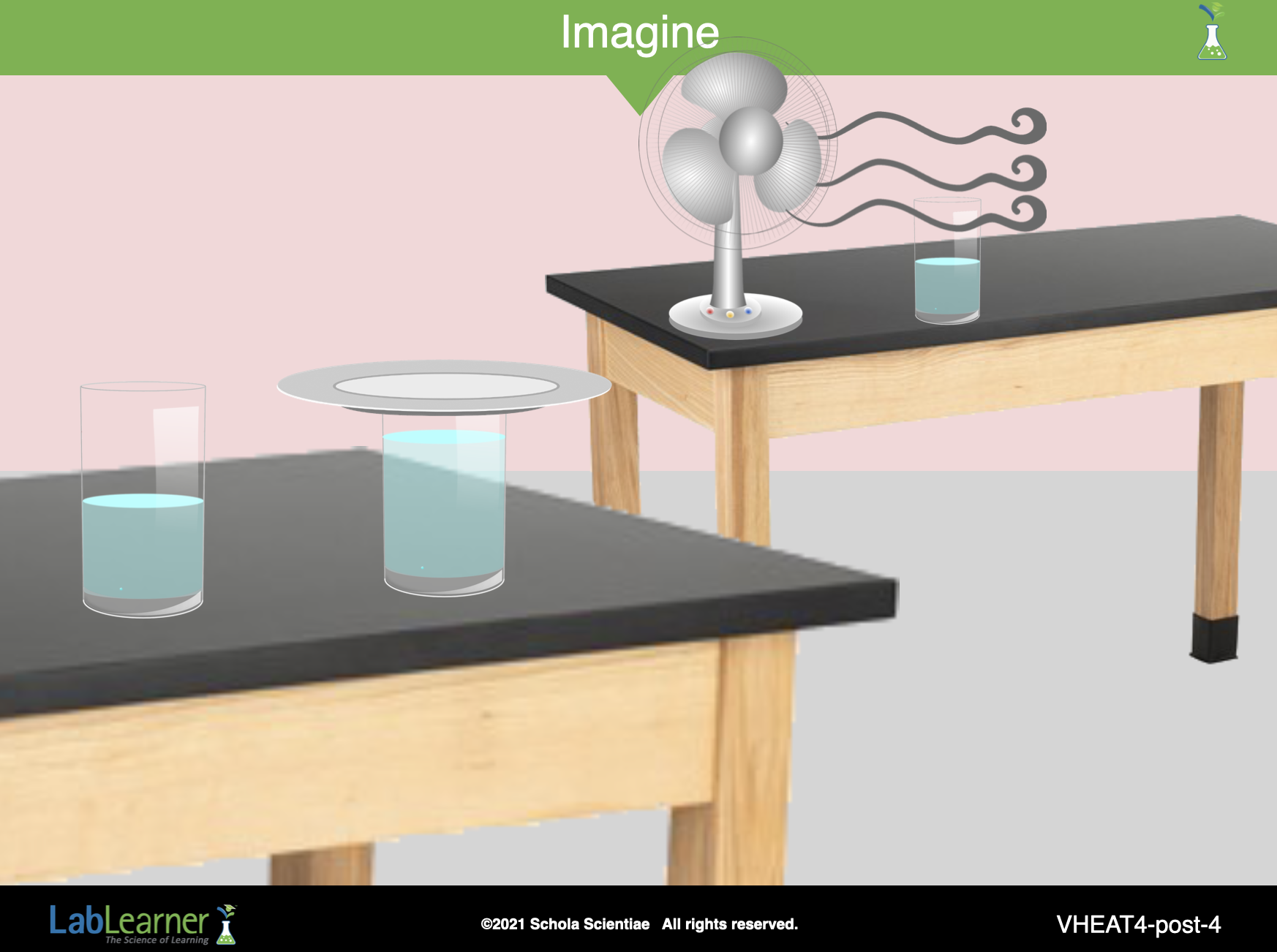
a. Encourage students to imagine a glass of water. Ask students: What happens to the glass of water if it is left out on the counter for several days? Student answers will vary, but students should suggest that the water will begin to evaporate.
b. Tell students to imagine that the same glass of water was left out on the counter, but this time it was covered.
Ask students: What would happen to the glass of water? Would it be any different than the uncovered glass? Students should suggest that the water in the glass would evaporate more slowly than the water in the uncovered glass.
c. Tell students to again imagine the glass of water. This time the glass is again uncovered but sitting directly in front of a large fan. Ask students: What would happen to the glass of water? How would it be similar or different from the other two glasses? The water in the glass would evaporate more quickly than the water in either of the other two glasses.
d. Tell students that this same phenomenon took place in the wet paper towels.
______________________________________________
SLIDE VHEAT4-post-5
3. After students have discussed the glasses of water and evaporation,
Ask students: Each thermometer was treated a little differently in Trial 1. What were you varying in this Trial and how did you vary it? Students were varying the rate of evaporation of the water on each paper towel.
4. Remind students that the three paper towels represented skin damp with perspiration.
Ask students: If the three paper towels represented skin damp with perspiration, what did the gentle swinging and the plastic wrap represent? The paper towel wrapped around Thermometer A was able to swing in the air, which increased evaporation. Students may have experienced evaporation of dampness on their skin in a similar way if they have been in the breeze on a hot day. The wind increases evaporation and allows a person to feel cooler.
The paper towel wrapped around Thermometer B was covered with plastic wrap, which slowed evaporation. Students may recall wearing clothing that would not allow air to penetrate to the skin. For example, some raincoats or ponchos are made from plastic or vinyl that cannot be penetrated. This allows a person to stay dry in the rain, but if the person becomes warm and begins to perspire, the perspiration remains on the skin and does not evaporate. The person may feel very warm and damp.
5. Ask: How did the rate of evaporation affect the temperature of the three paper towels? Student answers will vary.
Conduct the following exercise to aid students in answering this question:
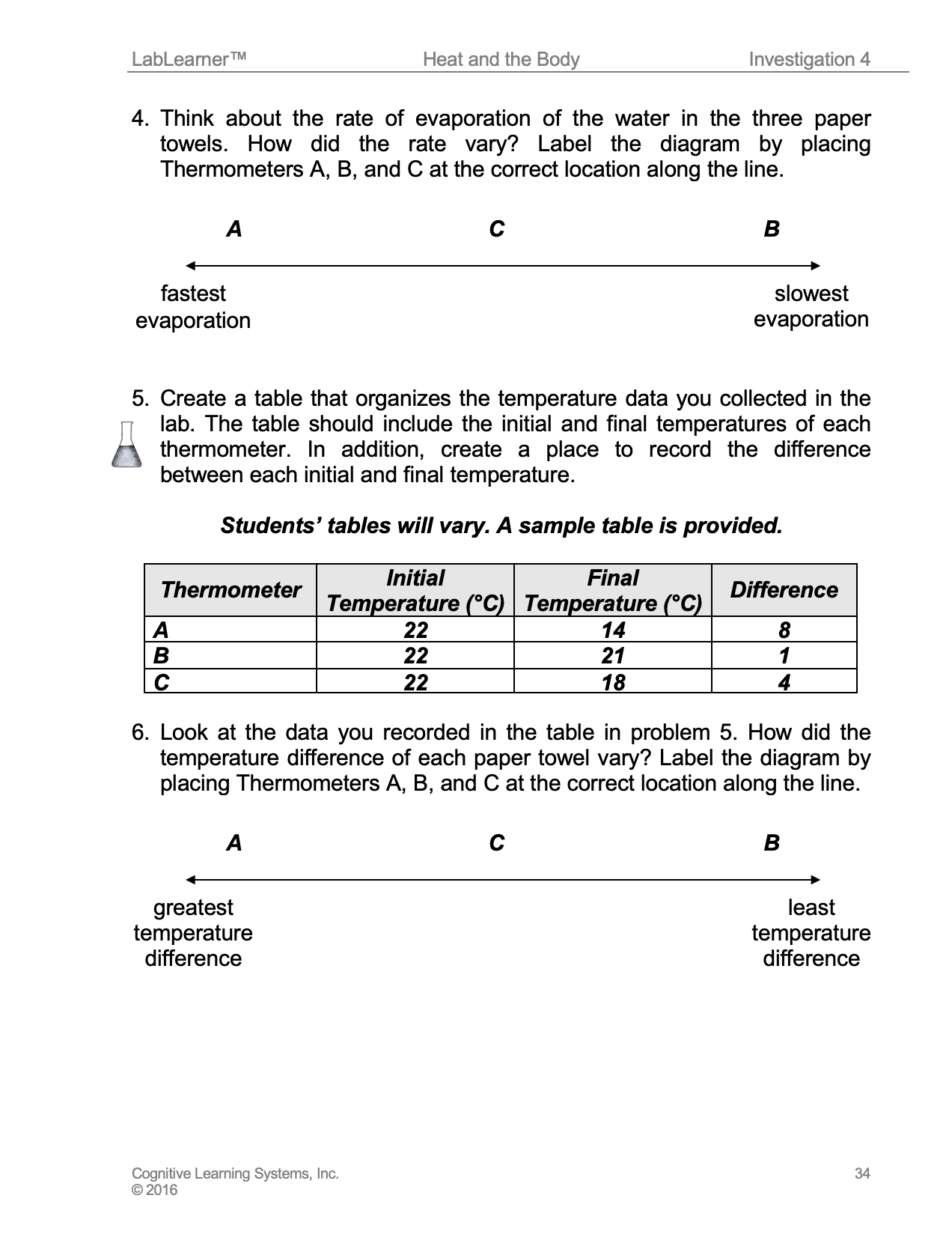
a. Tell students to work with a partner to complete Problem 4 in their Student Data Record. To do this, students must think about the rate of evaporation of the water in the three paper towels. Encourage students to compare the rate based on their previous knowledge of and the discussion of the glass of water. Students should then label the diagram by placing Thermometers A, B, and C at the correct location along the line in Problem 4.
b. After students have completed Problem 4, read aloud the directions to Problem 5.
“Create a table that organizes the temperature data you collected in the lab. The table should include the initial and final temperatures of each thermometer. In addition, create a place to record the difference between each initial and final temperature.”
Tell students that they will work with their partner to create a Data Table using the data recorded in Trial 1. Remind students that Creating and Completing a Data Table is a tool from the Procedural Toolbox. Students may use the tool if necessary when completing the Table.
c. Instruct students to study the data recorded in the Table.
Ask students: How did the temperature difference of each paper towel vary? Students should indicate that Thermometer A had the greatest decrease in temperature while Thermometer B had the least.
d. Instruct students to record this information on the diagram in Problem 6 in their Student Data Record.
e. Ask students: How did the rate of heat transfer differ for each paper towel?
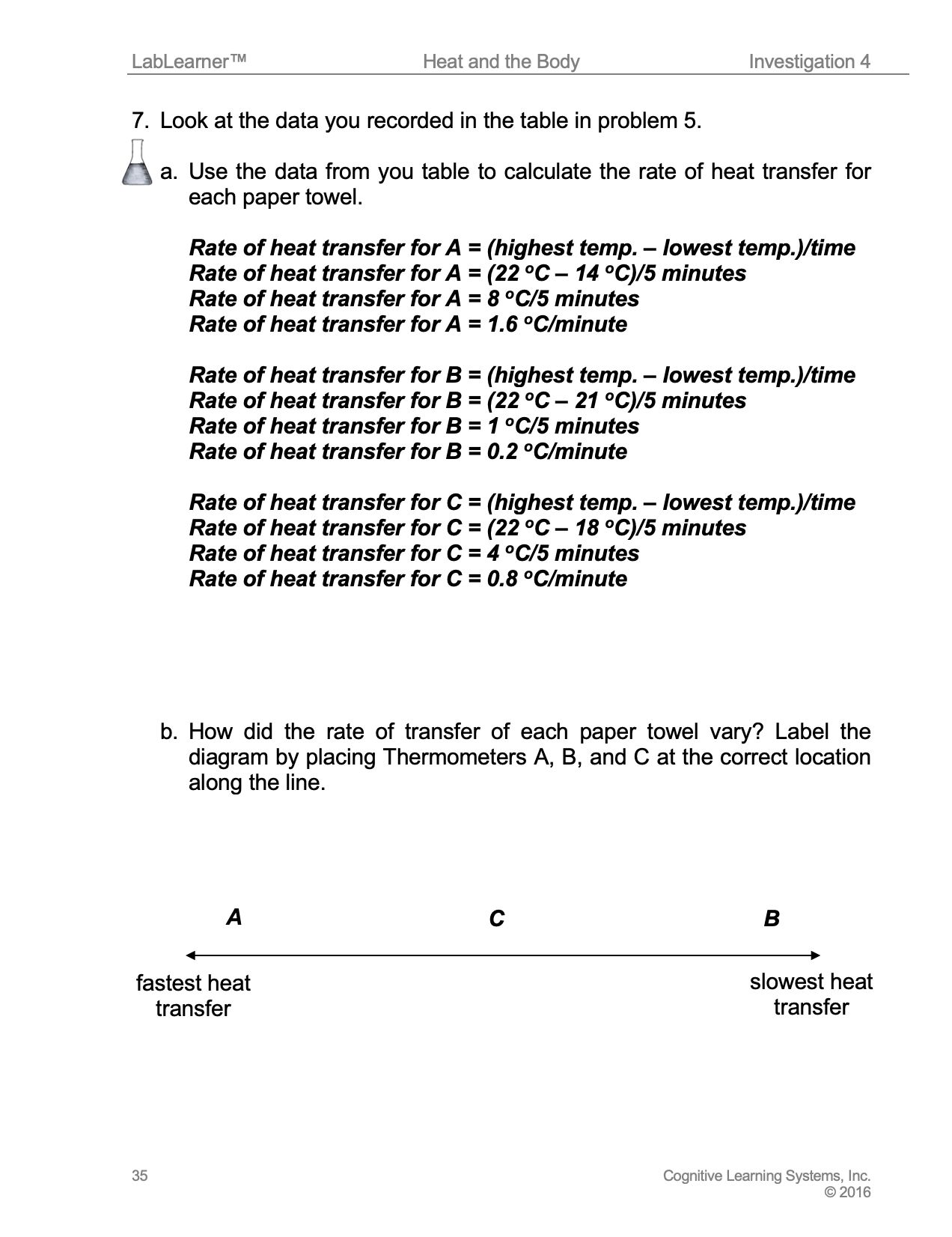
How can you determine the answer to your question? Students should indicate that because Thermometer A had the greatest decrease in temperature in the five minute period, it will likely have the greatest rate of heat transfer. Students should suggest that they could calculate rate of heat transfer for each towel by subtracting the lowest temperature from the highest temperature and dividing the result by the time over which the change occurred.
f. Direct students to calculate the rate of heat transfer in Problem 7a and use their results to complete the diagram in Problem 7b in their Student Data Records.
______________________________________________
SLIDE VHEAT4-post-6
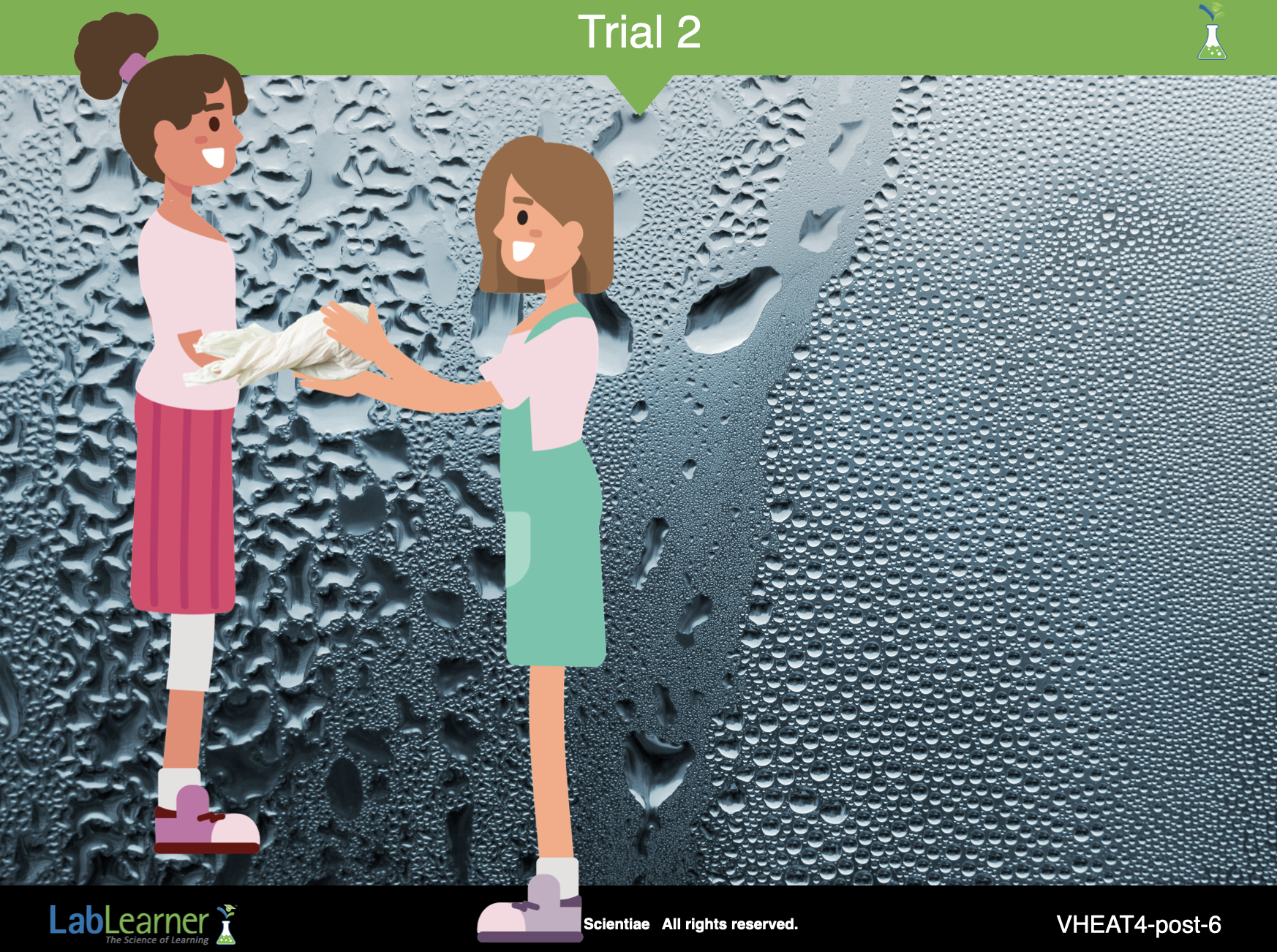
D. Tell students that Trial 2 was based on the same concepts of evaporation and cooling. Ask students the following questions to aid in the analysis of Trial 2.
1. Ask students: What question did we ask in Trial 2? Students were asked the question: How does exposing the body to air affect the temperature of the skin?
2. Ask students: Based on your observations during Trial 2, how would you answer the question? The hand that was not covered with the bag and was exposed to air remained dry and at a normal temperature. The hand that was covered became damp and warm.
3. Ask students: Based on the conclusions from Trial 1, how would you explain this? Through the experiments with the three wet paper towels in Trial 1, students concluded that evaporation causes cooling and drying. The bag not covered was exposed to the air, which encouraged evaporation, cooling, and drying of the hand. The hand covered with the bag was not as exposed to air, and it became damp and warm due to the lack of evaporation.
______________________________________________
SLIDE VHEAT4-post-7
D. Tell students that Trial 2 was based on the same concepts of evaporation and cooling. Ask students the following questions to aid in the analysis of Trial 2.
1. Ask students: What question did we ask in Trial 2? Students were asked the question: How does exposing the body to air affect the temperature of the skin?
2. Ask students: Based on your observations during Trial 2, how would you answer the question? The hand that was not covered with the bag and was exposed to air remained dry and at a normal temperature. The hand that was covered became damp and warm.
3. Ask students: Based on the conclusions from Trial 1, how would you explain this? Through the experiments with the three wet paper towels in Trial 1, students concluded that evaporation causes cooling and drying. The bag not covered was exposed to the air, which encouraged evaporation, cooling, and drying of the hand. The hand covered with the bag was not as exposed to air, and it became damp and warm due to the lack of evaporation.
______________________________________________
SLIDE VHEAT4-post-8
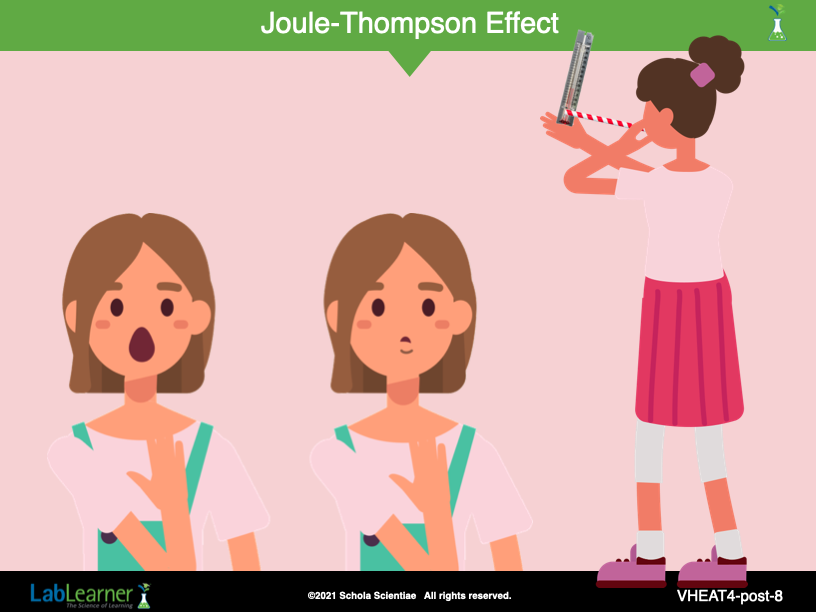
F. As students have learned, the body works at maintaining a constant internal temperature. However, in Trial 3, students were able to alter the temperature of the air exiting their bodies. Begin discussion of this phenomenon by asking the following questions:
1. Tell students to refer to Problem 3 in their Student Data Record.
Ask students: How were you able to change the temperature of the air exiting your body? Students should recall two ways of decreasing the temperature of the exhaled air. First, students pursed their lips and made the opening through which the air was forced very small. Then, students blew through a thermometer as they pinched the end, creating a small opening through which the air was able to pass.
2. Ask students: Do you see any similarities between these two methods of cooling the air? Student answers may vary. Encourage students to see that both methods required a reduction of the size of the opening through which air passed.
3. Tell students to refer to the definition for the Joule-Thompson effect from their Scientist’s Glossary. Tell students that the Joule-Thompson effect explains that as air is compressed and then allowed to expand, its temperature decreases.
Ask students: How were you able to compress the air? Students compressed the air by decreasing the size of the opening through which the air passed.
4. Ask students: When was the air allowed to expand? Air was allowed to expand as it left the students’ mouths or the straw and entered the space around them.
5. Encourage students to think about the conclusions they have drawn thus far.
Ask students: Do you think you were able to change the internal temperature of your body when exhaling air? Student answers will vary. It is very unlikely that students were able to change the temperature inside their bodies when they were exhaling air. Rather, as the Joule- Thompson effect describes, students were able to change the temperature of the air as it exited their bodies by compressing it and then allowing it to expand.
______________________________________________
SLIDE VHEAT4-post-9
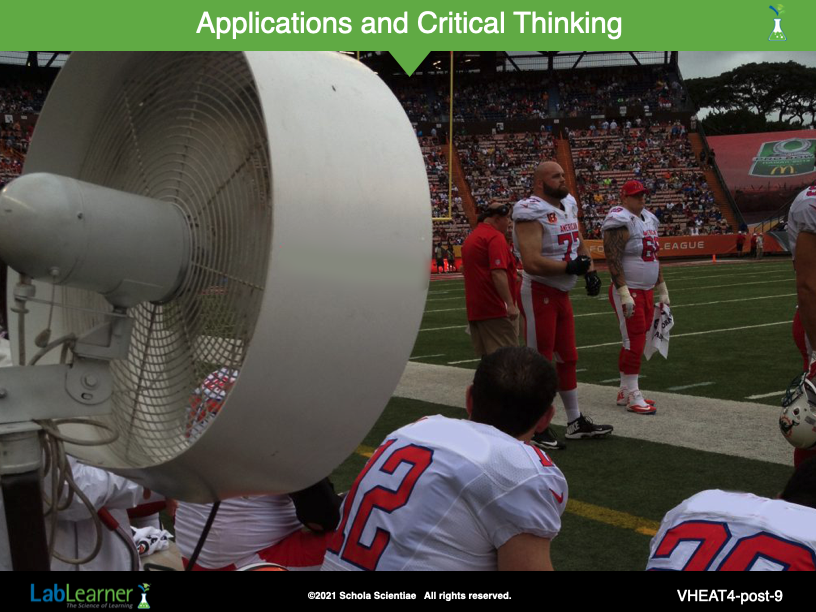
G. As a class, briefly summarize the conclusions drawn from the experiments performed in the lab. Ask the following questions to guide students in their summaries:
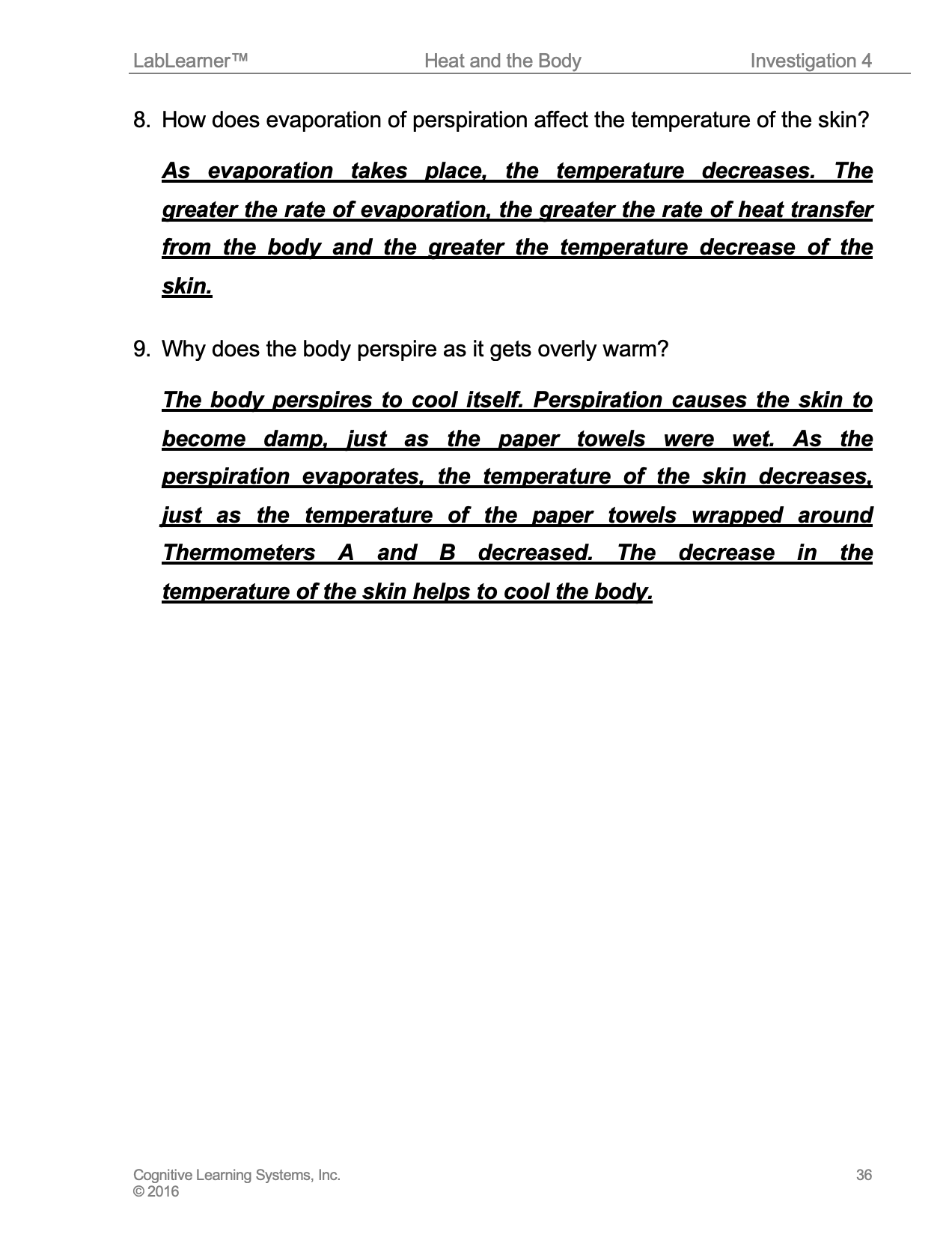
a. Ask students: What conclusions concerning evaporation and the body were you able to draw from Trials 1 and 2? Students were able to conclude that in an attempt to maintain a constant body temperature, the body begins to perspire when it becomes too warm. As perspiration evaporates from the skin, the body is cooled. The greater the rate of evaporation, the greater the cooling.
b. Ask students: What conclusions concerning the temperature of the air from your lungs were you able to draw from Trial 3? Students were able to conclude that air from the lungs is warm, but by compressing the air they exhale and then allowing it to expand, the temperature of the air can be decreased. This is caused by a scientific phenomenon referred to as the Joule- Thompson effect.
c. Ask students: Are there any other circumstances in which you see evidence of the Joule-Thompson effect? Student answers may vary. Students may have felt the air as it is released from a bicycle tire, a soccer ball, or a basketball. The air released from these objects feels cool. Students may also have observed that the air released from a can of compressed air is cool to the touch.
KEYS: LAB/POSTLAB