
Teacher Portal:
Investigating Heat
Investigation 3 – Lab
 BE PREPARED
| Class materials: |
|
| Group materials: |
|
| Individual Materials: |
|
Teacher Preparation
1. Divide students into five cooperative groups.
2. Fill ten (10) 100 ml beakers with 60 ml of white vinegar.
3. Fill five (5) 50 ml beakers up to the 10 ml mark with baking soda.
4. Cut five (5) 20 cm pieces of plastic wrap.
5. Place all materials at the distribution center.
Instruction
Direct each student group to obtain the following necessary materials from the distribution point: one (1) 400 ml beaker, two (2) 100 ml beakers of white vinegar, one (1) 50 ml beaker of baking soda, two (2) thermometers, one (1) piece of steel wool, one (1) piece of plastic wrap, one (1) timer or stopwatch and two (2) paper towels.
GET FOCUSED
- Students will learn that exothermic chemical reactions relead heat, while endothermic chemical reactions absorb heat.
- Materials that transfer heat easily are called conductors. Materials that are poor conductors of heat are called insulators.
- As students perform their lab experiments, they should keep the following question in mind:
How do materials differ in their ability to transfer heat?
INVESTIGATE
Trial 1
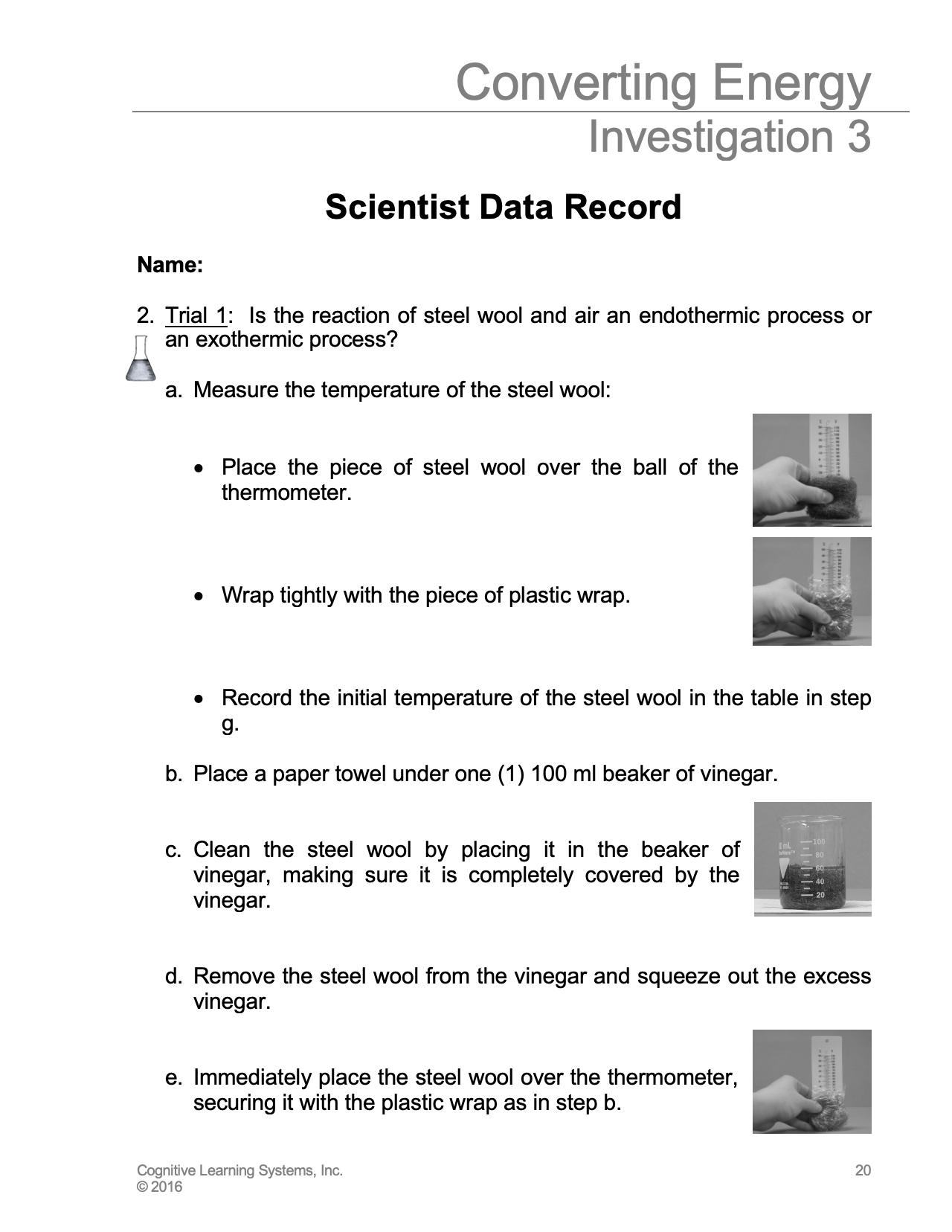
Trial 1 provides students an opportunity to observe an exothermic reaction. Students will saturate a piece of steel wool with vinegar then observe the effects of its exposure to air on the temperature and appearance of the saturated steel wool over a specified time period. Students will observe that steel wool is treated with vinegar and exposed to air rusts due to the reaction of the iron in the steel wool with oxygen in the air.
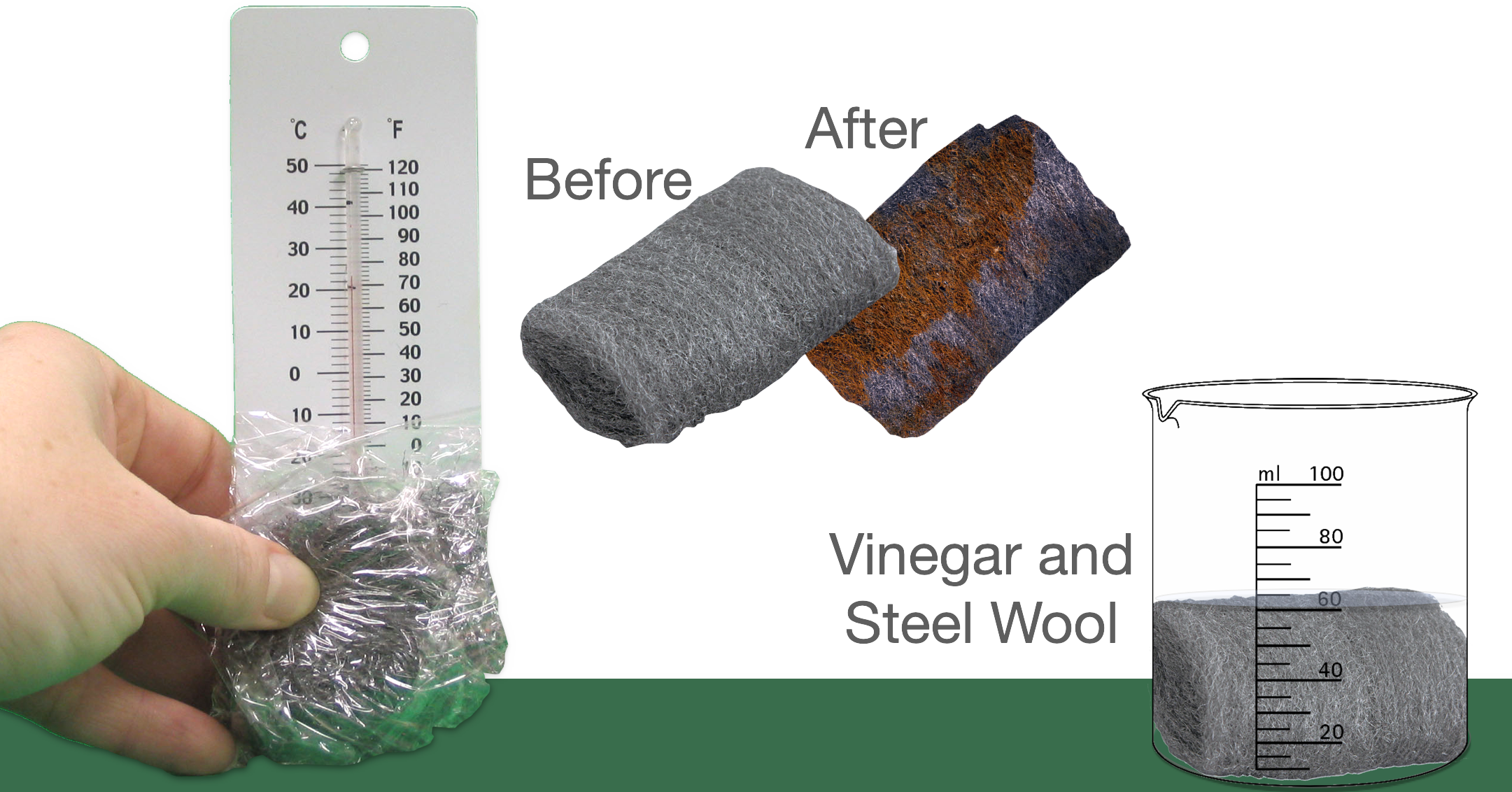
Students should recognize this observation as an unexpected color change, one of the common signs of a chemical change. The vinegar removes the protective coating applied to the steel wool at manufacturing, freeing the iron molecules to react chemically with oxygen in the air, a process known as oxidation. The oxidation of elemental iron in the steel produces iron oxide, commonly known as rust, and heat. By comparing the temperature at various time points, students should observe the release of heat during the exothermic reaction as an increase in temperature over the course of the reaction. This trial answers the question:
Is the reaction of steel wool and air an endothermic process or an exothermic process?
Trial 2
Trial 2 provides students an opportunity to observe an endothermic reaction. Students will add baking soda to white vinegar and observe the effects of this addition on the temperature of the vinegar. Students may have previously explored the reaction of baking soda and vinegar in their investigation of chemical changes. Baking soda (sodium bicarbonate) reacts with vinegar (5% acetic acid) to produce a gas (carbon dioxide), water, and a solid compound called sodium acetate. Students will discover during the course of this Trial that the reaction of baking soda and vinegar not only produces gas (carbon dioxide, CO2) as a result of the reaction but also absorbs heat during the reaction process.
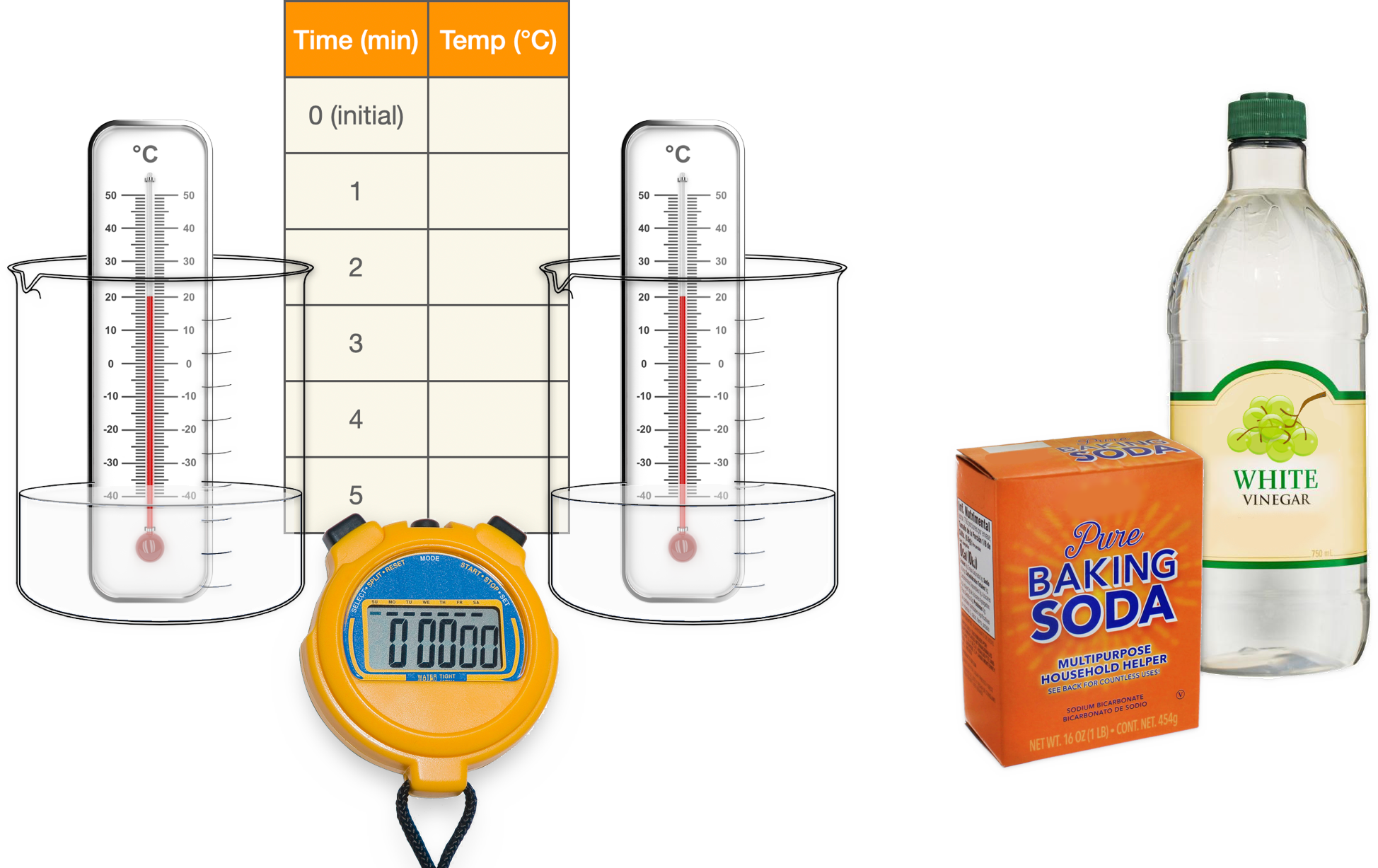
Students should be able to identify the production of gas as one of the signs of chemical change. In addition, by recording the temperature at various times during the reaction, students should observe the absorption of heat by the endothermic reaction as a decrease in temperature from the beginning to the end of the reaction. This Trial answers the question:
Is the reaction of baking soda and vinegar an endothermic process or an exothermic process?
NOTE: The vinegar foams and expands very rapidly beyond the capacity of the 100 ml beaker following the addition of the baking soda. Therefore, students are directed to place the beaker of vinegar inside the 400 ml beaker to contain the overflow to prevent spills and facilitate clean-up.
KEYS
CLEAN UP
Let students know your expectations for clean-up. Ask them to clean up.